



Located at the southern tip of the Balkan Peninsula, Greece is one of the cradles of civilization. Originally settled by the Minoans in Crete, Greece has been a prosperous spot for traders throughout history. It also has been the source of much strategic advantage and conflict. During World War I, Greece fought against Turkey, and during World War II, Greece fought on the side of the Allies. Though 90% of the country’s Jewish population was killed, and its economy demolished by war, Greece was able to recover after WWII with the help of Marshall Plan loans and grants. Greece allied itself with the United States throughout the 1950s, creating tension with its pro-Soviet and communist neighbors. In 1967, a CIA-backed coup helped a Greek military junta come to power, and a secret NATO-sponsored army helped keep them in power. President Bill Clinton later apologized for the US’ role in interfering in Greece’s internal affairs. In 1975, Greece adopted a democratic constitution and elected Andreas Papandreou as prime minister of a center-left government. In the past few decades, Greece has rejoined NATO, joined the European Union, and adopted the euro as its currency.
Lay of the Land: In southeastern Europe, Greece is located at the southern tip of the Balkan Peninsula. The rugged hills of the Peloponnesus in the south are joined to the Greek mainland by the Isthmus of Corinth. The mainland also is mountainous but is relieved by plains in the northeast and fertile valleys between ranges.
Greece was originally settled by the Minoans in Crete from 2700 BC to 1450 BC. The Early Hellenic period, based on the Greek mainland, overlapped with this civilization, lasting from 2800 BC to 2100 BC. The early Greeks were largely traders, using their country’s natural resources, such as timber. Many traders went to Cyprus, Egypt and the Aegean Islands.
(Library of Congress)
The first Greek in America was the sailor Don Teodoro, who sailed with the Spanish explorer Panfilio de Narvaez to America in 1528.
Noted Greek Americans
Music
From 2003 to 2008, US imports from Greece were dominated by drilling and oil field equipment and platforms, which increased from $41.4 million to $267.3 million, but dropped to $227.3 million in 2008. Other imports on the rise included other petroleum products, moving up from $78.6 million to $113 million; dairy products and eggs, rising from $30.3 million to $51.3 million, but falling to $35.3 million in 2008; vegetables and preparations, increasing from $67.5 million to $96.6 million; and tobacco, waxes, and nonfood oils, up from $25.9 million to $32.2 million.
Trade in Goods (Imports, Exports and Trade Balance) with Greece
(US Census Bureau)
US Special Forces Troops Sent to Greece
US commits 400 special forces soldiers to Athens
(by Noelle Knox, USA Today)
According to the State Department Report on Human Rights, “human rights abuses were reported in Greece that included numerous reports of abuse by security forces, particularly of illegal immigrants and Roma; overcrowding and harsh conditions in some prisons; detention of undocumented migrants in squalid conditions; restrictions on freedom of speech; restrictions on non-Orthodox religions; detention and deportation of unaccompanied or separated immigrant minors, including asylum seekers; domestic violence against women; trafficking in persons; limits on the ability of ethnic minority groups to self‑identify; and discrimination against and social exclusion of ethnic minorities, particularly Roma. A large number of Roma lacked access to adequate housing, basic medical care, public services, and employment opportunities.”
Nicholas Smith
Note: Not commissioned; nomination withdrawn before the Senate acted upon it.
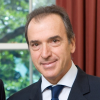 Panagopoulos, Christos
The Mediterranean nation of Greece, reeling from the effects of economic collapse and severe austerity imposed from without, sent a new ambassador to Washington, DC, last fall who has significant experience in the United States. Christos P. Panagopoulos, who presented his credentials to President Obama on September 19, 2012, succeeded Vassilis Kaskarelis, who had served since June 2009.
Born in Kalamata, Greece, in 1954, Panagopoulos earned a law degree at the University of Athens and a Master’s Degree in International Law and International Relations at the Fletcher School of Law and Diplomacy at Tufts University. He served in the Greek Navy in the Office of the Admiral, Chief of the Hellenic Fleet. He was also a member of Greece's junior national water polo team.
Panagopoulos joined the Greek Foreign Service in 1978 with service at the Greek Embassy in Ankara, Turkey, an historic rival of Greece. Over the course of a 35-year career at the Greek Foreign Ministry, Panagopoulos has served as head of the European Integration Directorate and head of the Directorate for Balkan Affairs. He is no stranger to the U.S., having served in Boston as consul from 1983 to 1985 and as consul general there until 1989, and as consul general in Los Angeles from September 1994 to 1999.
Panagopoulos served as ambassador of Greece to Cyprus from 2000 to 2005, and as ambassador to Serbia from July 2005 to late 2008. Back in Athens, he was director of the Diplomatic Cabinet of the Foreign Minister, and of the Alternate Minister, from 2008 to 2012.
Ambassador Panagopoulos Responds to Questions through the Social Media (Greek News)
- Table of Contents
- News
- Overview
- Basic Information
- History
- Newspapers
- History of U.S. Relations with Greece
- Current U.S. Relations with Greece
- Where Does the Money Flow
- Controversies
- Human Rights
- Debate
- Past Ambassadors
- Ambassador to the U.S.
- Embassy Web Site in the U.S.
- Comments
- Leave a comment


U.S. Ambassador to Greece
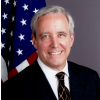
The next U.S. ambassador to Greece—a nation currently being driven by creditor-imposed austerity to levels of under-development and poverty not seen in Europe for many years—will be a Middle East expert who started his career as a journalist. David D. Pearce, who has been serving as both principal deputy in the Office of the Special Representative for Afghanistan and Pakistan and as a deputy assistant secretary of state in the Bureau of South and Central Asian Affairs since July 2012, would succeed Daniel Bennett, who has served in Athens since 2010.
Born in Portland, Maine, on June 9, 1950, Pearce grew up in Falmouth and graduated Cheverus High School in 1968. Pearce earned his B.A. in Classics at Bowdoin College in 1972 and an M.A. in Journalism at Ohio State University a year later.
Following graduation, Pearce worked as a reporter and foreign correspondent from 1973 to 1979, for the Associated Press in Ohio, the Rome Daily American in Italy, United Press International in Brussels, Belgium, Lisbon, Portugal, and Beirut, Lebanon, where he met and married his wife, Leyla Baroody. He then moved to The Washington Post, where he worked as a copy editor on both the foreign and metro desks, and from 1980 to 1981 was a writer-editor in the book service of the National Geographic Society.
Joining the State Department in January 1982, Pearce served his first overseas posting as vice consul and political officer in Riyadh, Saudi Arabia. He then served as a watch officer in the State Department Operations Center from 1984 to 1985, and as a country desk officer for Greece from 1985 to 1987.
After studying Arabic at the Foreign Service Institute field school in Tunis, Tunisia, Pearce served as chief of the political section at the U.S. Embassy in Kuwait and, during the Gulf War, as a liaison officer with the Kuwaiti government-in-exile.
Pearce returned to Washington in 1991 to serve as a special assistant to the under secretary of state for political affairs, and took a sabbatical leave from 1992 to 1993 to write a book on diplomacy and media entitled Wary Partners: Diplomats and the Media, published in 1994.
Upon his return to work, Pearce served as consul general in Dubai, UAE, from 1994 to 1997, and as deputy chief of mission at the embassy in Damascus, Syria, from 1997 to 2001. Back in DC, he served as director of the State Department’s Office of Northern Gulf Affairs, with responsibility for Iraq and Iran from September 2001 to July 2003, including a stint with the Coalition Provisional Authority in Baghdad from May to June 2003.
Pearce then served four straight overseas assignments, as chief of mission and consul general at the Consulate General in Jerusalem, Israel, from 2003 to 2005; as minister counselor for political affairs at the embassy in Rome from 2005-2008 (where he also made excursion tours to Iraq as a senior advisor to Ambassador Ryan Crocker); as ambassador to Algeria from 2008 to 2011; and as assistant chief of mission at the embassy in Kabul, Afghanistan, from 2011 to July 2012.
Pearce’s stint in Algeria coincided with increased cooperation between the Algerian government and the U.S. government in the battle against al-Qaeda in the Islamic Maghreb, a partnership that included providing the Algerians with military radios and fingerprint identification kits, not to mention Boeing-made airplanes and gas-powered turbines. In exchange, the U.S. imported billions of dollars worth of Algerian oil and natural gas.
Pearce speaks Arabic, French, Italian and some Farsi.
David Pearce married Leyla Baroody of Beirut, Lebanon, in 1978. The couple has two children.
-Matt Bewig
To Learn More:
Testimony at Bradley Manning Trial
morePrevious U.S. Ambassador to Greece
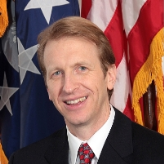
Daniel V. Speckhard has served as US Ambassador to Greece since November 7, 2007.
Speckhard has a bachelor’s degree from the University of Wisconsin as well as a master’s degree in public policy and administration and a master’s degree in economics.
From 1981 to 1990, Speckhard’s assignments included positions in the International Affairs Division of the Office of Management and Budget, the US Agency for International Development, staff member in the US Senate, and in state and local government.
From 1990 to 1993, he served as an advisor and then director of policy and resources for the Deputy Secretary of State, coordinating and overseeing foreign aid funding.
From 1993 to 1997, he was a deputy to the Ambassador-at-Large for the New Independent States at the State Department in Washington and was responsible for a broad range of political, security and economic issues facing large parts of the former Soviet Union. As US Ambassador to Belarus from 1997 to 2000, Speckhard worked closely with European officials in promoting democratic reform, human rights and institutional development.
From 2000 to 2003, he was NATO’s Deputy Assistant Secretary General for Political Affairs, covering political relations with the countries of Eastern Europe, the Balkans, the former Soviet Union, and the Mediterranean.
From 2003 to 2005, Speckhard served as director of policy planning responsible for advising and assisting the secretary general, senior NATO management, and the council in addressing strategic issues facing the alliance. His last posting was as the deputy chief of mission at US Embassy Baghdad, following a year as director of the Iraq Reconstruction Management Office.
Daniel V. Speckhard’s Official Biography
Comments