



Algeria borders the Mediterranean Sea between Morocco and Tunisia in Northern Africa. Though originally settled by the Berbers in the 5th Century BC, Algeria was conquered by a number of ruling powers, including the Phoenicians, Romans, Vandals, Arabs, Turkish and French. Byzantine Arabs brought the Islamic faith to the region, and the country remains 99% Muslim today. Though Algeria earned its freedom from French colonialists in 1962, infighting among hard-line Islamist parties and more moderate factions led to violence and terrorist attacks that lasted throughout the 1990s. Since the US terrorist attacks of September 11, 2001, however, Algeria has stepped forward to work with the US in thwarting terrorism worldwide. Though the country has been cited for numerous human rights violations over the years, officials from the United States and other nations have met with Algerian leaders to affect an open-door trade policy and agreements to work toward shared international goals.
Lay of the Land: A part ofthe Maghreb, or western part of Arab North Africa, Algeria borders the Mediterranean Sea, between Morocco and Tunisia. Algeria is more than three times the size of Texas. Its name is Arabic for “the islands,” and it is believed to be a reference to the 998 kilometers of coastline beside the rocky islands of the Mediterranean. The country is mostly high plateau and desert with some mountains. The Sahara desert covers 80 percent of the entire country.
The Berbers, a people from the northern part of Africa, first populated Algeria in the 5th Century BC. The Berbers were influenced by Carthaginians, Romans, and Byzantines. However, several other powers, including the Phoenicians, Romans, Vandals, Arabs, Turkish and French, all conquered the area in successive waves.
In 2009, the US imported approximately $10.7 billion in goods from Algeria. Oil, liquefied petroleum gases, other petroleum products, and natural gases account for more than 99% of US imports from Algeria. While these imports grew steadily from 2003 to 2008, they all dropped sharply in 2009. American imports of crude oil from Algeria grew from $1.3 billion in 2003 to $11.5 billion in 2007, but dropped down to $6.25 billion in 2009. Liquified petroleum gases, which was at an all-time high in 2008 at $4.7 billion, declined to $2.0 billion, and other petroleum gases fell from $561 million to $213 million.
French Campaign Poster, “Islamist Threat,” Directed at Algeria
Algeria's government continued to fail to account for thousands of persons who disappeared in detention during the 1990s. Other significant human rights problems included restrictions on political party activity limiting the right to change the government peacefully; reports of abuse and torture; official impunity; prolonged pretrial detention; limited judicial independence; denial of fair, public trials; restrictions on civil liberties, including freedom of speech, press, assembly, and especially association; security-based restrictions on movement; limitations on religious freedom, including increased regulation of non-Muslim worship; corruption and lack of government transparency; discrimination against women; and restrictions on workers' rights.
Robert S. Ford earned a Bachelor of Arts from Johns Hopkins University and a Master of Arts from the School of Advanced International Studies at Johns Hopkins in 1983. Following his graduation, Ford served with the Peace Corps in Morocco. Ford entered the Senior Foreign Service in 1985. He has served in posts such as Izmir, Cairo, Algiers, and Yaounde. Ford was Deputy Chief of Mission in Bahrain from 2001 until 2004, as well as the Coalition Provisional Authority Najaf, Iraq (from August to December 2003). He also served as political counselor to the US Embassy in Baghdad, Iraq from 2004 to 2006. He speaks German, Turkish, French, and Arabic.
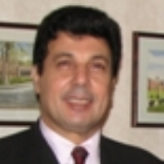 Baali, Abdallah
Abdallah Baali has served as Algeria's ambassador to the United States since Nov 5, 2008.
- Table of Contents
- News
- Overview
- Basic Information
- History
- Newspapers
- History of U.S. Relations with Algeria
- Current U.S. Relations with Algeria
- Where Does the Money Flow
- Controversies
- Human Rights
- Debate
- Past Ambassadors
- Ambassador to the U.S.
- Embassy Web Site in the U.S.
- Comments
- Leave a comment

U.S. Ambassador to Algeria
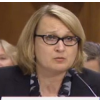
On June 24, 2014, the Senate Foreign Relations Committee sent the nomination of Joan A. Polaschik to be the U.S. ambassador to Algeria to the full Senate for its approval. It would be the first ambassadorial posting for Polaschik, who is a career Foreign Service officer.
Polaschik is from Alexandria, Virginia, and attended the University of Virginia, earning a B.A. in Russian studies and foreign affairs. She subsequently earned an M.S. in foreign service from Georgetown University in 1993.
Polaschik’s first posting with the Foreign Service was in 1995 to Tashkent, Uzbekistan, as the consular and general services officer in the U.S. Embassy. In 1997 she had her first assignment in North Africa, as political officer in the embassy in Tunis, Tunisia. She returned to Washington in 1999 as a staff assistant in the State Department’s Bureau of Near Eastern Affairs, then in 2000 as Iran desk officer.
In 2001, Polaschik was sent to Amman, Jordan, as regional refugee coordinator, with part of her work there involving dealing with refugees from the Iraq war. Polaschik was posted to Baku, Azerbaijan, in 2005 as counselor for political and economic affairs at the U.S. Embassy.
Polaschik was sent to Tripoli, Libya, in 2009 as deputy chief of mission. It turned out to be an eventful posting. In 2010, Polaschik first made news by taking the heat from Libyan officials for an offhand remark made by State Department spokesman P.J. Crowley at a briefing in Washington. Libyan leader Moammar Gadhafi had declared a jihad on Switzerland for banning construction of minarets. Crowley mocked the declaration and Polaschik was summoned by members of Libya’s foreign ministry to convey their demands for an apology from the U.S. government, which Crowley eventually made.
The following year, the U.S. embassy in Tripoli was evacuated in February because of the civil war there. The night before the embassy was abandoned, Polaschik went through the complex helping to destroy computers before she left. She was among the first to return when the embassy was to be reopened the following September.
A year later, on September 11, 2012, the U.S. consulate in Benghazi, Libya, was attacked. Four people, including Ambassador Chris Stevens, were killed. Before the attacks, Polaschik had gone to Washington to urge more security for the diplomatic facilities in Libya. Her pleas were ignored, but she drew praise after the attack for having made the effort.
Polaschik came home and in 2013 was made acting director of the Office of Israel and Palestinian Affairs. Later that year, she was made director of the Office of Egypt and Levant (Eastern Mediterranean) Affairs, a job she still holds.
Polaschik speaks Arabic and French.
-Steve Straehley
To Learn More:
Testimony before Senate Foreign Relations Committee (pdf)
State Department Cables (WikiLeaks)
morePrevious U.S. Ambassador to Algeria
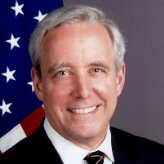
A native of Portland, Maine, David D. Pearce serves as the US Ambassador to Algeria. He was appointed by President George W. Bush and confirmed by the US Senate on May 27, 2008 and sworn in on August 11, 2008.
Comments