



Lebanon was once a jewel of the Middle East, a key destination for travelers from the region and all over the world. But beginning in the mid-1970s, the country was torn apart by sectarian violence that pitted Muslims and Christians, and eventually, Lebanon was pulled into the Arab-Israeli conflict as, first, the PLO and then later Hezbollah used the country as a staging ground to carry out attacks against Israel, which borders Lebanon to the south. The use of Lebanon by terrorist groups resulted in several invasions by Israel’s military, including 1978, 1982 and 2006, which only added to the destruction and internal turmoil that Lebanese have had to endure. From the 1980s until very recently, the Syrian government inserted itself into Lebanon’s governmental affairs, culminating in the 2005 Cedar Revolution which resulted in Syria’s withdrawal, both militarily and to some extent, politically, from the country. Hezbollah, however, continues to play a significant role in Lebanese affairs and has gained considerable support from the local population in key areas, much to the consternation of Israel.
The United States has been very involved in Lebanon’s troubles. US Marines were dispatched in 1958 to help shore up support for a pro-Western government and again in 1983 to help Christian factions battle their Muslim rivals. This decision by the Reagan administration to choose sides produced horrific results, as more than 200 Marines lost their lives in one of the most deadly and high-profile terrorist car bombings of the 1980s. Numerous American citizens fell hostage to terrorists during the decade, some being held for months and even years. Each time Israel invaded Lebanon, the US stood by its ally, often in the face of international condemnation of the attacks. After the withdrawal of Israel’s forces in 2006, the Bush administration sought to fortify Lebanon’s military (in the hope it can mitigate Hezbollah’s power) through arms sales, despite concerns voiced by Israeli officials and even some within the Pentagon and the State Department.
Lay of the Land: Located in southwest Asia, Lebanon is a strip of land along the eastern shore of the Mediterranean Sea. Its principal topographic features are a narrow coastal plain behind which are the high Lebanese Mountains, the fertile Beqaa Valley, and the anti-Lebanon Mountains extending to the Syrian border.
Languages
: North Levantine Arabic 92.4%, Arabic (official), Armenian 5.5%, Northern Kurdish 1.8%, French (official) 0.4%, English 0.008%.
Lebanon was originally occupied by the Phoenicians, Semitic traders whose maritime culture flourished for more than 2,000 years from 2700-450 BC. In later centuries, Lebanon’s mountains were a refuge for Christians, and Crusaders established several strongholds in the region.
Before the 1975 Civil War, Lebanon enjoyed generally good official relations with the United States. In large measure, these ties were promoted by the sizable Lebanese-American community. One incident that weakened these relations was the United States role in the 1958 Civil War. At that time, the administration of President Dwight D. Eisenhower dispatched a unit of US Marines to aid the government of President Shamun, whose regime was under pressure from Muslim factions to strengthen ties with Egypt and Syria. The Marines were never engaged in battle and were withdrawn soon after their arrival. Even so, many Lebanese and other Arab states viewed the United States action as interference in Lebanon’s internal affairs.
Noted Lebanese-Americans
The US signed a trade pact with Lebanon in 2006, the Trade and Investment Framework Agreement (TIFA), which may serve as a stepping stone to a full free-trade agreement at some point in the future.
Was Car Bombing Targeted at US Ambassador?
Probe of Bank Records Prompts Controversy in Lebanon, Jordan
(Voice of America News)
Lebanon’s struggles with human rights largely stems from militant groups and a weak government’s inability to deter or punish their actions. The government is also unable to provide satisfactory prison conditions or protection for basic civil rights. The rights of women and refugees are also a continuing problem.
George Wadsworth
Appointment: Oct 9, 1942
Presentation of Credentials: Nov 19, 1942
Note: Also accredited to Syria; resident at Beirut.
Appointment: Jan 13, 1947
Presentation of Credentials: Mar 6, 1947
Termination of Mission: Left post, Apr 24, 1951
Appointment: Sep 19, 1951
Presentation of Credentials: Oct 18, 1951
Termination of Mission: Left post, Aug 10, 1953
Note: Commissioned during a recess of the Senate. Legation Beirut was raised to Embassy status Aug 27, 1952.
Appointment: Jul 28, 1953
Presentation of Credentials: Sep 29, 1953
Termination of Mission: Left post, Oct 1, 1954
Appointment: Feb 4, 1955
Presentation of Credentials: Mar 9, 1955
Termination of Mission: Left post, Jan 4, 1958
Appointment: Dec 23, 1957
Presentation of Credentials: Jan 15, 1958
Termination of Mission: Left post, Aug 29, 1961
Note: Commissioned during a recess of the Senate; recommissioned after confirmation on Jan 27, 1958.
Appointment: Oct 27, 1961
Presentation of Credentials: Jan 12, 1962
Termination of Mission: Left post, Apr 19, 1965
Note: Commissioned during a recess of the Senate; recommissioned after confirmation on Jan 30, 1962.
Appointment: Mar 18, 1965
Presentation of Credentials: Jun 22, 1965
Termination of Mission: Left post, Sep 12, 1970
Appointment: Sep 21, 1970
Presentation of Credentials: Oct 13, 1970
Termination of Mission: Left post, Jan 17, 1974
Appointment: Feb 13, 1974
Presentation of Credentials: Mar 15, 1974
Termination of Mission: Left post, Jan 13, 1976
Appointment: May 1, 1976
Termination of Mission: Assassinated at post, Jun 16, 1976
Note: Had not presented credentials prior to his assassination.
Appointment: Feb 10, 1977
Presentation of Credentials: Feb 15, 1977
Termination of Mission: Left post, Oct 1, 1978
Appointment: Oct 2, 1978
Presentation of Credentials: Oct 10, 1978
Termination of Mission: Left post, Jun 23, 1981
Appointment: Jun 19, 1981
Presentation of Credentials: Jun 26, 1981
Termination of Mission: Oct 11, 1983
Appointment: Oct 7, 1983
Presentation of Credentials: Oct 27, 1983
Termination of Mission: Left post, May 16, 1986
Appointment: Aug 18, 1986
Presentation of Credentials: Aug 27, 1986
Termination of Mission: Left post, Sep 17, 1988
Appointment: Aug 12, 1988
Presentation of Credentials: Nov 19, 1989
Termination of Mission: Superseded, Oct 30, 1990
Note: Arrived at post Sep 24, 1988, after the expiration of President Amin Gemayel's term of office on Sep 22, 1988. After the withdrawal of all U.S. personnel from Beirut on Sep 6, 1989, McCarthy resided in Washington, D.C. He visited Lebanon Nov 18–19, 1989, to present his credentials to President Rene Moawad.
Appointment: Oct 30, 1990
Presentation of Credentials: Nov 29, 1990
Termination of Mission: Left post, Aug 14, 1993
Appointment: Nov 22, 1993
Presentation of Credentials: Dec 23, 1993
Termination of Mission: Left post, Sep 14, 1994
Appointment: Dec 19, 1995
Presentation of Credentials: Feb 2, 1996
Termination of Mission: Left post Jul 8, 1998
Appointment: Aug 3, 1998
Presentation of Credentials: Sep 23, 1998
Termination of Mission: Left post Jun 10, 2001
Appointment: Aug 7, 2001
Presentation of Credentials: Sep 12, 2001
Termination of Mission: Left post Aug 16, 2004
Appointment: May 12, 2004
Presentation of Credentials: Aug 25, 2004
Termination of Mission: 2008
 Chedid, Antoine
- Table of Contents
- News
- Overview
- Basic Information
- History
- Newspapers
- History of U.S. Relations with Lebanon
- Current U.S. Relations with Lebanon
- Where Does the Money Flow
- Controversies
- Human Rights
- Debate
- Past Ambassadors
- Ambassador to the U.S.
- Embassy Web Site in the U.S.
- Comments
- Leave a comment


U.S. Ambassador to Lebanon

A longtime Middle East expert will serve as the next ambassador to Lebanon, President Barack Obama announced on June 24, 2013. David Hale, a career member of the Senior Foreign Service who has served in Beirut twice before, has been special envoy for Middle East peace since June 2011, having served as deputy special envoy under his predecessor, former Sen. George J. Mitchell (D-Maine), from 2009 to 2011. If confirmed by the Senate, Hale would succeed Maura Connelly, who has served in Beirut since August 2009.
Born circa 1961, David Maclain Hale earned a B.S. in Foreign Service at the Georgetown University School of Foreign Service in 1983.
Joining the Foreign Service in 1984, Hale served early career assignments at the embassy in Manama, Bahrain; the consulate in Dhahran, Saudi Arabia; and as a political officer at the U.S. Mission to the U.N. in New York. He also studied Arabic at the Foreign Service Institute’s Field School in Tunisia, and served his first tour at the embassy in Beirut as a political officer from 1992 to 1994.
In Washington, Hale served as executive assistant to Secretary of State Madeleine Albright from 1997 to 1998.
He served his second tour in Lebanon as deputy chief of mission at the embassy from 1998 to 2001, returning to Washington to serve as director of the Office of Israel and Palestine Affairs from 2001 to 2003.
Hale then served an extended tour at the embassy in Amman, Jordan, from 2003 to 2008, first as deputy chief of mission from 2003 to 2004, as charge d’affaires from 2004 to 2005, and as ambassador from 2005 to 2008.
From 2008 to 2009, Hale was a deputy assistant secretary of state in the Bureau of Near Eastern Affairs.
-Matt Bewig
To Learn More:
Ambassador David Hale, SFS ’83 (Georgetown School of Foreign Service)
morePrevious U.S. Ambassador to Lebanon
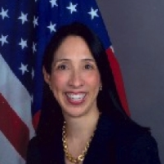
A native of Virginia, Michele J. Sison is the first Filipino-American ambassador from the United States. Her mother is Veronica Sison and her father, Pablo B. Sison was originally from Pangasinan, a province in the Philippines. She was confirmed by the US Senate on August 1, 2008 as the United States Ambassador to Lebanon. She arrived in Beirut on February 5, 2008 as Chargé d’Affaires. She served as ambassador until August 7, 2010.
more
Comments