



According to the State Department’s latest report, human rights problems in Israel have been concentrated around inequalities between Jewish-Israelis and their Arab counterparts, residents of the Occupied Territories faring much worse than Israeli citizens. The escalated conflict between Israel and Hamas in Gaza highlighted these inequalities and abuses.
Appointment: Mar 18, 1949
Presentation of Credentials: Mar 28, 1949
Termination of Mission: Left post, Dec 13, 1950
Appointment: Feb 1, 1951
Presentation of Credentials: Feb 26, 1951
Termination of Mission: Died at post, Dec 26, 1953
Appointment: Apr 9, 1954
Presentation of Credentials: Nov 12, 1954
Termination of Mission: Left post, Feb 17, 1959
Appointment: Jun 5, 1959
Presentation of Credentials: Jul 2, 1959
Termination of Mission: Left Israel, Jan 19, 1961
Appointment: May 11, 1961
Presentation of Credentials: Jun 12, 1961
Termination of Mission: Left post, Jan 19, 1973
Appointment: Jun 22, 1973
Presentation of Credentials: Aug 28, 1973
Termination of Mission: Died in New York, May 5, 1975
Note: Ambassador Keating had departed Tel Aviv on Mar 31, 1975 for consultations on the reassessment of American policy in the Middle East.
Appointment: Jun 9, 1975
Presentation of Credentials: Jul 10, 1975
Termination of Mission: Left post, Dec 27, 1976
Appointment: Apr 26, 1977
Presentation of Credentials: May 25, 1977
Termination of Mission: May 31, 1985
Appointment: Jul 12, 1985
Presentation of Credentials: Aug 6, 1985
Termination of Mission: Left post, Dec 28, 1988
Appointment: Nov 22, 1988
Presentation of Credentials: Dec 29, 1988
Termination of Mission: Left post, Jan 7, 1992
Note: Commissioned during a recess of the Senate; nomination of May 24, 1988 was not acted upon by the Senate. Recommissioned Oct. 2, 1989 after confirmation.
Appointment: Nov 21, 1991
Presentation of Credentials: Jan 21, 1992
Termination of Mission: Left post, May 7, 1993
Appointment: Nov 22, 1993
Presentation of Credentials: Jan 13, 1994
Termination of Mission: Left post, Aug 9, 1994
Appointment: Mar 4, 1995
Presentation of Credentials: Apr 10, 1995
Termination of Mission: Left post, Sep 27, 1997
Appointment: Nov 10, 1997
Presentation of Credentials: Dec 24, 1997
Termination of Mission: Left post Jan 23, 2000
Appointment: Nov 16, 1999
Presentation of Credentials: Jan 25, 2000
Termination of Mission: Left post Jul 13, 2001
Appointment: Jul 12, 2001
Presentation of Credentials: Jul 18, 2001
Termination of Mission: Left post, Jul 17, 2005
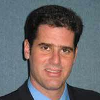 Dermer, Ron
Prime Minister Binyamin Netanyahu of Israel, whose aggressive policies toward Palestine have raised tensions with the U.S., recently named a longtime aide known for even more hawkish views to become the country’s next ambassador to the United States. Ron Dermer, an ex-American who has been a close political advisor to Netanyahu for the past four years, once called the “two-state solution”—for decades Washington’s preferred outcome to the Israeli-Palestinian impasse—“childish.” He will succeed Michael Oren, whose term is due to end in the fall but who, according to some sources, wanted to keep his job.
Born in 1971 in Miami Beach, Florida, Ron Dermer is the younger son of Jay Dermer, a trial attorney from New York who was elected mayor of Miami Beach in1967, and Yaffa Rosenthal, who was born in Palestine and moved to Florida with her parents soon after Israel won its independence. Growing up in Miami Beach, Dermer suffered the loss of his father to a heart attack in 1984, just two weeks before his bar mitzvah. Dermer earned a B.A. in Finance and Management at the Wharton School of the University of Pennsylvania in 1993 and a Master’s degree in Philosophy, Politics and Economics at Oxford University in 1996.
Shortly thereafter, Dermer moved to Israel and began the process of becoming an Israeli citizen. In 1998, he married artist Adi Blumberg, whose father was chairman of the Bank of Jerusalem, and their wedding was presided over by the prominent rabbinical scholar Adin Steinsaltz. Adi Blumberg died in February 2000 at the age of 29. Dermer renounced his American citizenship in 2005.
A political consultant for conservative Israeli politicians, in the 1999 Knesset campaign Dermer worked for Natan Sharansky, for whom he had also worked three years earlier during the 1995 Knesset election campaign. Starting in January 2001, Dermer wrote a column called “The Numbers Game” for the Jerusalem Post, and in 2004 he and Sharansky co-wrote the ironically titled book The Case For Democracy: The Power of Freedom to Overcome Tyranny and Terror, even as Sharansky gave interviews claiming that Israeli Jews, but not Arab Palestinians, had a right to a democratic state in the former territory of Palestine.
Since 2005, Dermer has served the government of Israel continuously. From 2005 to 2008, when Netanyahu was finance minister, Dermer served as economic envoy at the Israeli embassy in Washington. In 2008, he became a close advisor to Netanyahu, who became prime minister in April 2009. Dermer left the PM’s office in March 2013, after rumors of his possible appointment as ambassador had begun to swirl, but was not officially nominated until July 9.
Dermer has five children. He is married to Rhoda Pagano Dermer. The family lives in Jerusalem.
-Matt Bewig
To Learn More:
Biography (Wikipedia)
Ron Dermer, New Israel Envoy, Not Shy To Boast of Ties With Netanyahu: Fast-Rising Right Winger Is Pugnacious Supporter of Premier (by Ron Kampeas, Jewish Daily Forward)
Possible Future Israeli Ambassador Holds Two Countries in his Heart (by Michael Fince II, Amy Sherman and Elinor J. Brecher, Miami Herald)
Ron Dermer is Israel’s Next Ambassador: Netanyahu’s hard-hitting American-born adviser gets the nod (by Yair Rosenberg, Tablet)
When Zionism is Racism: Ron Dermer and Bibi Netanyahu, on the Record (by Larry Derfner, 972 Magazine)
Bibi’s Brain (by Allison Hoffman, Baltimore Jewish Life)
- Table of Contents
- News
- Overview
- Basic Information
- History
- Newspapers
- History of U.S. Relations with Israel
- Current U.S. Relations with Israel
- Where Does the Money Flow
- Controversies
- Human Rights
- Debate
- Past Ambassadors
- Ambassador to the U.S.
- Embassy Web Site in the U.S.
- Comments
- Leave a comment


U.S. Ambassador to Israel
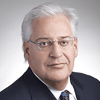
President Donald Trump’s bankruptcy lawyer—whose work has likely saved Trump millions of dollars over the years—is set to become the next U.S. Ambassador to Israel, where he is expected to implement with enthusiasm Trump’s radically pro-Israel, anti-Palestine agenda, including moving the U.S. Embassy from Tel Aviv to the divided and disputed city of Jerusalem, which both Israel and Palestine claim as their capital.
David Melech Friedman was born circa 1959, one of four children to Morris S. and Addi Friedman. His father, who was rabbi at Temple Hillel, a Conservative synagogue in North Woodmere, Long Island, served as the head of the New York Board of Rabbis. His mother was a high school English teacher. David Friedman, too, considered becoming a rabbi, but his father told him, “You’re out of your mind, go make a living.”
Friedman earned a B.A. in Anthropology at Columbia University in 1978 and a J.D. at New York University School of Law in 1981. He has been a member of the New York bar since 1982.
A founding partner of the law firm Kasowitz, Benson, Torres & Friedman since 1994, David Friedman had headed the firm’s creditors’ rights and bankruptcy practice group and has represented Donald Trump and/or the Trump Organization several times. A personal friend of Trump since 2005, Friedman co-chaired Trump’s Israel Advisory Committee along with Jason D. Greenblatt, a Trump Organization executive vice president.
Although Republican control of the Senate virtually guarantees Friedman’s confirmation, his aggressive support for Trump’s Israel agenda—which would reverse or weaken several policies that have been in place for decades—has provoked sharp criticism.
Friedman has advocated for years the kind of pro-Israel, anti-Palestine policies that Trump now espouses, including moving the embassy and allowing Israel to build settlements without restrictions in the Palestinian West Bank. Friedman writes a column for the pro-settlement Arutz Sheva news service and is the chair of the American Friends of Bet El Institutions, which raises money for the Beit El settlement community.
But Friedman’s most radical position rejects the “two-state solution” that every U.S. administration has advocated since at least 1967. He has even said that Trump would support Israeli annexation of the West Bank—something most Israel supporters oppose because annexation would make Israel a Muslim-majority nation. Adding 4.5 million Palestinian Muslims to Israel’s current population of 8.6 million (which is 75% Jewish) would create a nation of 13.1 million: 6.45 million Jews and 6.65 million Muslims.
To avoid the conclusion that his policies would actually destroy the Jewish character of Israel, Friedman has been forced to rely on his own set of Kellyanne Conway-esque “alternative facts,” claiming to Haaretz without any evidence whatsoever that “nobody really knows how many Palestinians live there.”
Friedman’s language has also been extreme. He called Barack Obama an “anti-Semite” because of his failure to rubber stamp Israeli President Benjamin Netanyahu’s policies, and stated that Jews associated with the liberal organization “J Street” are “far worse than Kapos”—Jewish concentration camp prisoners who collaborated with the Nazis in running the camps. Friedman’s comment has itself been criticized for being anti-Semitic.
David Friedman and his wife, Tammy Sand, live in New York, but also own properties in the affluent Talbiya neighborhood of Jerusalem.
-Matt Bewig
To Learn More:
What Do We Know About David Friedman, Trump’s Pick for Ambassador to Israel? (by Judy Maltz, Haaretz)
Meet David Friedman, Bankruptcy Lawyer Turned Possible Israel Ambassador (by Daniel J. Solomon, Forward)
Trump Picks Hard-Line Attorney as Israel Envoy, Angering Jewish left (by Nahal Toosi, Politico)
morePrevious U.S. Ambassador to Israel
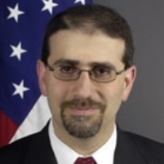
U.S. Ambassador to Israel Daniel B. Shapiro is a long-time foreign policy professional with extensive experience dealing with issues pertaining to the Middle East. As an observant and active member of the Jewish community, Shapiro’s role has been to reassure American Jews that Obama will be a friend to their interests, including those related to Israel. He was confirmed by the Senate on May 26, 2011, sworn in on July 8, and arrived in Israel on July 21.
Comments