



First established in 1971, the United Arab Emirates (UAE) consists of seven states: Abu Dhabi, Dubai, Ajman, Umm al Qaywayn, Ras al Khaymah, Al Fujayrah and Sharjah. This small, oil-rich confederation plays a major role in the oil and finance industries of the Persian Gulf. Due to its size, and the proximity of larger, more powerful neighbors, security concerns have been a major focus of the UAE’s foreign relations. Since the 1991 Gulf war, the government has forged a close relationship with the United States, which has sold billions of dollars in sophisticated military hardware to fortify UAE security forces. After the Sept. 11 terrorist attacks on the US, the UAE was identified as a major financial center used by al-Qaeda in transferring money to the hijackers (two of the 9/11 hijackers were UAE citizens). The nation immediately cooperated with the US, freezing accounts tied to suspected terrorists and strongly clamping down on money laundering.
Lay of the Land: In southwest Asia along the southern shore of the Persian Gulf and the western reaches of the Gulf of Oman are seven tiny sheikdoms–Abu Dhabi, Dubai, Sharjah, Ra al-Khaimah, Fujairah, Umm al-Qaiwain, and Ajman, which joined together in 1971-1972 to form the United Arab Emirates.
Originally the area now occupied by the United Arab Emirates (UAE) was inhabited by a seafaring people who were converted to Islam in the 7th century. Later, a dissident sect, the Carmathians, established a powerful sheikdom, and its army conquered Mecca. After the sheikdom disintegrated, its people became pirates. Threatening the Sultanate of Muscat and Oman early in the 19th century, the pirates provoked the intervention of the British, who in 1820 enforced a partial truce and in 1853 a permanent truce. From that point on, the Pirate Coast became known as the Trucial Coast. The British provided the nine Trucial states with protection but did not formally administer them as a colony.
7 Days [English]
The United States was the third country to establish formal diplomatic relations with the UAE and has had an ambassador resident in the UAE since 1974.
Private commercial ties, especially in petroleum, have developed into friendly government-to-government ties which include security assistance between the UAE and the US. In 2002, the two countries began a strategic partnership dialogue covering virtually every aspect of the relationship. Since then, the UAE has been a key partner in the US war on terrorism. UAE ports host more American Navy ships than any port outside the US.
The UAE is the largest export market for the United States in the Arab world and, in 2009, was the 19th largest export market, ahead of Spain, Ireland and Indonesia. The UAE buys products from every state in the United States. US imports from the UAE rose by 38% between 2000 and 2007, from $971.7 million to $1.34 billion.
Halliburton CEO Moves from Houston to Dubai
According to the State Department, “UAE courts implementing Shari’a (Islamic law) sometimes imposed flogging sentences on Muslims and non-Muslims as punishment for adultery, prostitution, consensual premarital sex, pregnancy outside of marriage, defamation of character, and drug or alcohol abuse. Authorities used canes to administer floggings, which left substantial bruising, welts, and open wounds on the recipients’ bodies.”
Note: During Stolzfus' tenure as non-resident Ambassador, the Embassy in Abu Dhabi was established on May 15, 1972, with Philip J. Griffin as Chargé d'Affaires ad interim.
Appointment: Feb 29, 1972
Presentation of Credentials: Mar 20, 1972
Termination of Mission: Appointment terminated Jun 23, 1974
Note: Also accredited to Bahrain, Oman, and Qatar; resident at Kuwait.
Appointment: May 24, 1974
Presentation of Credentials: Jun 24, 1974
Termination of Mission: Left post Aug 24, 1976
Appointment: Sep 16, 1976
Presentation of Credentials: Dec 14, 1976
Termination of Mission: Left post Aug 4, 1979
Appointment: Sep 28, 1979
Presentation of Credentials: Dec 15, 1979
Termination of Mission: Left post Apr 6, 1981
Appointment: Jul 2, 1982
Presentation of Credentials: Oct 13, 1982
Termination of Mission: Left post Jan 28, 1986
Appointment: Sep 12, 1986
Presentation of Credentials: Oct 7, 1986
Termination of Mission: Left post Oct 24, 1989
Appointment: Nov 21, 1989
Presentation of Credentials: Jan 16, 1990
Termination of Mission: Left post Jun 23, 1992
Appointment: Oct 9, 1992
Presentation of Credentials: Nov 3, 1992
Termination of Mission: Left post Jun 1, 1995
Appointment: Oct 3, 1995
Presentation of Credentials: Oct 23, 1995
Termination of Mission: Left post Oct 13, 1998
Appointment: Oct 1, 1998
Presentation of Credentials: Apr 4, 1999
Termination of Mission: Left post Aug 12, 2001
Appointment: Sept 17, 2001
Presentation of Credentials: Nov 6, 2001
Termination of Mission: Left post Jun 17, 2004
Appointment: May 12, 2004
Presentation of Credentials: Feb 7, 2005
Termination of Mission: 2008
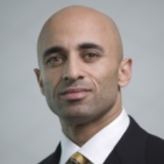 Al Otaiba, Yousef
The United Arab Emirates (UAE) diplomat known as “the most charming man in Washington,” and a close friend of presidential son-in-law Jared Kushner, lost some of his magic recently, following release of emails that link him to a major international fraud, suggest that his country coordinates closely with Israel, and reveal blunt criticism of President Donald Trump. Yousef Al Otaiba, who has been ambassador of the UAE to the United States since July 2008, has been a forceful voice against Iran, the Arab Spring protest movement, and neighboring emirate Qatar, which the royal family of UAE and others recently accused of supporting terrorism as a way of deflecting attention from their personal grievances against the royal family of Qatar.
Otaiba was born in Cairo, Egypt, on January 19, 1974, into a wealthy and politically powerful family. His father, petroleum magnate Mana Al Otaiba, was the UAE’s first oil minister (1973-1990) and served as president of OPEC (Organization of the Petroleum Exporting Countries} a record six times. Mana had at least twelve children with four wives, including Yousef’s Egyptian mother. Yousef Al Otaiba graduated Cairo American College in 1991, and, encouraged by then U.S. Ambassador to Egypt Frank Wisner, studied International Relations at Georgetown University, where he graduated in 1995. While at Georgetown, he played on the school’s soccer team, making nine appearances and scoring one goal. When the team from Saudi Arabia trained at Georgetown for the 1994 World Cup, which was held in the United States, Otaiba served as a ball boy for the team.
After working his family’s automotive business, Otaiba studied as a fellow at the Industrial College of the Armed Forces at the National Defense University in Washington, DC.
In 2000, at age 26, Otaiba became the director of international affairs for Mohammed bin Zayed Al-Nahyan, the crown prince of Abu Dhabi. Bin Zayed is deputy supreme commander of the UAE Armed Forces, so in effect Otaiba worked for the UAE’s defense minister for eight years.
In July 2008, Otaiba became UAE ambassador to the U.S. He began a diplomatic and public relations campaign to push the UAE’s views, aided immensely by his country’s willingness to spend money: as of 2013, the UAE spent more money on lobbying than any other foreign government. In 2015, the UAE paid lobbyists in the U.S. $13.5 million, with $6,5 million going to the Camstoll Group and $4.5 million to the Harbor Group.
In 2008, Otaiba immediately founded the Oasis Foundation. Among other activities, it has provided aid to poor neighborhoods in the U.S., paying for artificial turf soccer fields in New York, Los Angeles, Miami, Chicago and Washington DC. And it has made significant donations to hospitals, such as Johns Hopkins, the Cleveland Clinic, Mercy Hospital in Joplin, Missouri, and Children's National Medical Center in Washington. It has also donated money to a Baltimore food bank, the New York Police Foundation and the Joplin school system (to buy MacBook laptops).
In February 2016, the former executive director of the Oasis Foundation, Byron Fogan, an old friend of Otaiba’s from his Georgetown years, was sentenced to 21 months in prison for spending foundation funds for personal indulgences.
Otaiba has been especially critical of Iran, whose radical brand of Shi’a Islam is viewed with alarm by Sunni Arab leaders, and of the Arab Spring protest movements, which threatened the power of people like Otaiba.
In one hacked email, sent the evening of the 2016 U.S. presidential election, the Huffington Post reported that Otaiba rhetorically asked Obama official Rob Malley, “On what planet can trump be a president??” Other emails and records, according to the Wall Street Journal, reveal that Otaiba received $66 million that was stolen as part of a $4.5 billion fraud against 1MDB, a government-run strategic development company in Malaysia. In his business life, Otaiba is connected with Densmore Investments Ltd in the British Virgin Islands and Silver Coast Construction and Boring in the UAE.
Otaiba and his wife, Abeer, a civil engineer originally from Egypt and founder of a luxury fashion company, have one son, Omar, and one daughter, Samia.
-Matt Bewig, David Wallechinsky
To Learn More:
The Qatar Crisis Offers a Window into Feuding within the Trump Administration (by Ishaan Tharoor, Washington Post)
Hacked Emails Show Top UAE Diplomat Coordinating With Pro-Israel Think Tank Against Iran
(by Zaid Jilani & Ryan Grim, The Intercept)
His Town: Yousef Al Otaiba is the most Charming Man in Washington (by Ryan Grim and Akbar Shahid Ahmed, Huffington Post)
United Arab Emirates Helps Joplin “Think Big” in Rebuilding Tornado-Scarred Schools (by Rajiv Chandrasekaran, Washington Post)
In Conversation: UAE Ambassador Yousef Al Otaiba (Aspen Ideas Festival)
- Table of Contents
- News
- Overview
- Basic Information
- History
- Newspapers
- History of U.S. Relations with United Arab Emirates
- Current U.S. Relations with United Arab Emirates
- Where Does the Money Flow
- Controversies
- Human Rights
- Debate
- Past Ambassadors
- Ambassador to the U.S.
- Embassy Web Site in the U.S.
- Comments
- Leave a comment

U.S. Ambassador to United Arab Emirates

On September 18, 2014, the Senate Foreign Relations Committee approved the nomination of Barbara Leaf, a career Foreign Service officer, to be the next Ambassador to the United Arab Emirates. If Leaf is confirmed by the full Senate, it will be her first ambassadorial posting.
Leaf’s father, Lieutenant General Howard Leaf, was a decorated fighter pilot who went on to become assistant vice chief of staff in the Pentagon. There is an award given in his name for outstanding achievement by a U.S. Air Force test team engaged in the test and evaluation of a defense acquisition program.
Barbara Leaf earned a B.A. in government from the College of William and Mary in 1980 and in 1984 received her Master’s in foreign affairs with a focus on Soviet affairs from the University of Virginia.
Between undergraduate and graduate school, Leaf worked as a library assistant for the Court of Appeals in Washington, D.C. She joined the Foreign Service in 1984 and her first overseas assignment came the following year as a consular/political officer at the U.S. Embassy in Port-au-Prince, Haiti. Following that, in 1986, Leaf did a stint as watch officer in the State Department Operations Center and in 1987, she was sent to Jerusalem as chief of the visa section in the consulate there.
Leaf returned to Washington in 1990 as the Kuwait desk officer in the Bureau of Near Eastern Affairs and in 1994, she was sent to Cairo as a political officer. She moved to Paris in 1996 as a Middle East “Watcher,” reporting on French policies on Iraq, Iran, the Arab-Israeli dispute, Libya, and terrorism issues. Leaf was back in Washington in 2001 as chief editor/director in the Office of Medical Services.
Her next assignment was to Bosnia-Herzegovina, first in 2003 as director of the regional office in the Office of the High Representative in the city of Tuzla, where she enforced local implementation of civilian aspects of the Dayton peace accords, including the return of refugees to areas from which they had been ethnically cleansed. Then in 2004 she began a stint as a political counselor in the U.S. Embassy in Sarajevo.
Leaf came home in 2006 as director of the Office of Iran Affairs. This was a new position, created to help rebuild State Department expertise about the country and encourage people-to-people exchanges between Iran and the United States.
In 2008, she was sent to Rome as political minister-counselor and in 2010 she began a tour in Iraq as a team leader of a provincial reconstruction team in Basrah.
Leaf returned to Washington in 2011 to become deputy assistant secretary of state for Iraq affairs and in 2013 she was made deputy assistant secretary for Arabian Peninsula affairs.
Leaf and her husband, Chris Querin, have two daughters, Maro and Asja. She speaks Arabic, French, Italian and some Serbo-Croatian.
-Steve Straehley
To Learn More:
Testimony Before Senate Foreign Relations Committee (pdf)
State Department Cables 2007-2009 (WikiLeaks)
morePrevious U.S. Ambassador to United Arab Emirates
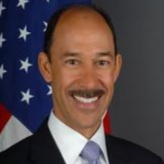
A career diplomat with extensive experience in the Middle East, Michael H. Corbin was nominated by President Barack Obama to serve as ambassador to the United Arab Emirates (UAE) on May 5, 2011, and confirmed by the Senate on June 30. He was sworn in on July 25.
Comments