



Lay of the Land: Iraq, known historically in the West as Mesopotamia, is located in southwestern Asia and borders the Persian Gulf on the south. Its twin river system, the Tigris-Euphrates, empties into the Persian Gulf. Iraq is largely desert and flood plain, but to the north and east are high mountain ranges. Most Iraqis live along the banks of the Tigris and the Euphrates.
A booklet handed out to US soldiers on their way to Iraq included this piece of prescient advice: “That tall man in the flowing robe you are going to see soon, with the whiskers and the long hair, is a first-class fighting man, highly skilled in guerilla warfare. Few fighters in any country, in fact, excell [sic] him in that kind of situation. If he is your friend, he can be a staunch and valuable ally. If he should happen to be your enemy—look out!” That booklet, A Short Guide to Iraq, was produced by the United States Army and given to American soldiers…in 1942, when US troops invaded Iraq in support of British troops.
Relations between Iraq and the US this decade have been dominated by events stemming from the American invasion in March 2003. Similarly to the Gulf War in 1991, US military forces had little trouble battling Saddam Hussein’s army. Only this time US Marines and Army units didn’t stop short, and instead pushed through to Baghdad, causing the Iraqi dictator to flee and his regime to collapse. President George W. Bush declared a short time later that the war was over and that it was just a matter of getting Iraq back on its feet.
Oil has been the central trade issue with Iraq since the US invasion in 2003. The United States imports very little from Iraq except oil. From 2003 to 2007, American importation of crude oil increased from $4.57 billion to $10.8 billion. Altogether, US imports from Iraq totaled $11.4 billion in 2007.
- Kellogg, Brown & Root (Halliburton) $10,832,000,000
- Parsons Corp. $5,286,136,252
- Fluor Corp. $3,754,964,295
- Washington Group International $3,133,078,193
- Shaw Group/Shaw E & I $3,050,749,910
- Bechtel Group Inc. $2,829,833,859
- Perini Corporation $2,525,000,000
- Contrack International Inc. $2,325,000,000
- Tetra Tech Inc. $1,541,947,671
- USA Environmental Inc. $1,541,947,671
- CH2M Hill $1,528,500,000
- American International Contractors, Inc. $1,500,000,000
- Odebrect-Austin $1,500,000,000
- Zapata Engineering $1,478,838,958
- Environmental Chemical Corporation $1,475,000,000
- Explosive Ordnance Technologies Inc. $1,475,000,000
- Stanley Baker Hill L.L.C. $1,200,000,000
US Spying on Iraqi Government
Despite the Bush administration’s best efforts to characterize the situation in Iraq in a positive light, the State Department has reported that “significant human rights problems” continue to exist inside the war-torn country.
To Pull Out or Not to Pull Out
Alexander K. Sloan
Appointment: Mar 30, 1931
Presentation of Credentials: Jun 18, 1931
Termination of Mission: Relinquished charge, Oct 19, 1932
Note: Commissioned during a recess of the Senate; recommissioned after confirmation on Dec 17, 1931.
Appointment: Aug 5, 1932
Presentation of Credentials: Nov 7, 1932
Termination of Mission: Recess appointment expired, Mar 4, 1933
Note: Commissioned during a recess of the Senate.
Presentation of Credentials: May 18, 1933
Termination of Mission: Died at post, Feb 1, 1942
Appointment: Aug 13, 1942
Presentation of Credentials: Sep 26, 1942
Termination of Mission: Left Iraq, Sep 19, 1943
Appointment: Jul 8, 1943
Presentation of Credentials: Nov 20, 1943
Termination of Mission: Left post, Apr 7, 1945
Note: James S. Moose, Jr., was serving as Chargé d'Affaires ad interim when Legation Baghdad was raised to Embassy status, Dec 28, 1946.
Appointment: Apr 30, 1946
Note: Did not serve under this appointment.
Appointment: Nov 19, 1946
Note: Commissioned during a recess of the Senate; did not serve under this appointment.
Presentation of Credentials: Feb 15, 1947
Termination of Mission: Left post, Sep 26, 1948
Appointment: Sep 28, 1948
Presentation of Credentials: Mar 12, 1949
Termination of Mission: Left post, Jun 1, 1952
Note: Commissioned during a recess of the Senate; recommissioned after confirmation on Mar 2, 1949.
Appointment: Jun 25, 1952
Presentation of Credentials: Aug 11, 1952
Termination of Mission: Left post, May 3, 1954
Appointment: Jul 2, 1954
Presentation of Credentials: Nov 3, 1954
Termination of Mission: Reaccredited when Iraq became a republic; presented new credentials Sep 22, 1958; left post, Dec 14, 1958
Note: Commissioned as Ambassador Extraordinary and Plenipotentiary to the Arab Union, Jul 10, 1958, but did not take oath of office under that appointment, the Arab Union having been dissolved; continued to serve as Ambassador Extraordinary and Plenipotentiary to Iraq.
Appointment: Dec 11, 1958
Presentation of Credentials: Jan 12, 1959
Termination of Mission: Departure requested by Govt. of Iraq, Jun 2, 1962; left post, Jun 11, 1962
Note: Commissioned during a recess of the Senate; recommissioned after confirmation on Jan 29, 1959.
Appointment: Jun 4, 1963
Presentation of Credentials: Jul 2, 1963
Termination of Mission: Left post, Apr 13, 1967
Note: Enoch S. Duncan was serving as Chargé d'Affaires ad interim when Iraq severed diplomatic relations with the United States, Jun 7, 1967.
Appointment: Jul 12, 1985
Presentation of Credentials: Sep 17, 1985
Termination of Mission: Left post, Jan 19, 1988
Appointment: Mar 28, 1988
Presentation of Credentials: Sep 5, 1988
Termination of Mission: Left post, Jul 30, 1990
Note: Renominated Jan 27, 1988; an earlier nomination was not acted upon by the Senate.
Appointment: Jun 17, 2004
Presentation of Credentials: June 29, 2004
Termination of Mission: Left post, Mar 17, 2005
Appointment: Jun 20, 2005
Presentation of Credentials: Jun 21, 2005
Termination of Mission: Left post, Mar 26, 2007
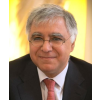 Yasseen, Fareed
Fareed Yasseen, who was first a physicist, then a human rights advocate before joining Iraq’s foreign ministry, took over as his country’s ambassador to the United States in November 2016.
Yasseen’s father, Mustafa Kamil Yasseen, was an Iraqi diplomat who defected after Saddam Hussein consolidated power as the country’s ruler in the mid-1970s. His mother, Shahzanan Shakarchi Yasseen, was a university professor and the author of Collaboration Between International Organizations and Arab Middle East States to Improve the Status of Women.
Born in Baghdad on March 18, 1956, Yasseen graduated from Baghdad College high school and then lived in Europe and the United States. In January 1981, he earned a diplôme d'ingénieur physicien (post-graduate engineer-physicist degree) from the École polytechnique fédérale de Lausanne in Luasanne, Switzerland and, in June 1986, he received a docteur ès sciences physiques (Ph.D. in physics) from the same university. Yasseen spent ten years working as a physics researcher in Lausanne and Boston, and attended the Massachusetts Institute of Technology, where he earned a master’s in management of technology in 1992.
From 1993 until 1996, Yasseen was a consultant in technology management. He was the head of the information unit at the United Nations Secretariat on Climate Change in Bonn from 1996 until 1998. He then served as a consultant at the Rand Corporation and the United Nations Conference on Trade and Development (UNCTAD) until 2001.
,
Yasseen’s field of study was theoretical plasma physics related to fusion and space applications, in particular polar wind, a plasma outflow from the terrestrial ionosphere at high latitudes. But by the 1990s, he began to focus on human rights issues in Iraq as well. With a grant from the U.S. National Endowment for Democracy, he and Zuhair Humadi founded the Center for the Disappeared, an organization dedicated to remembering victims of Hussein’s rule who were taken away by security forces and never seen again. In September 2002, thanks to a $150,000 grant from the U.S. State Department, they added a website, mafqud.org, to the organization and listed names of more than 10,000 missing Iraqis.
After the U.S. invasion, Yasseen was an adviser to Sunni governing council member Adnan Pachachi. Yasseen opposed the Bush administration’s plans to privatize government-owned assets, such as cement plants and fertilizer factories, warning that only foreign companies and Iraqis who grew rich thanks to their friendships with Sadaam Hussein could afford buy the enterprises. In 2004, he became director of policy planning in the Ministry of Foreign Affairs. The following year, he was appointed diplomatic adviser to Iraqi Vice-President Adil Abd al-Mahdi, a position he held until 2009, when he returned to the Ministry of Foreign Affairs.
Yasseen was named ambassador to France in May 2010. He remained in that post until taking the Washington job. He is also secretary-general of the Académie Diplomatique Internationale in Paris.
-David Wallechinsky, Steve Straehley
To Learn More:
Biography (Iraq Britain Business Council)
Prisoners’ Parents Quiet No Longer (by Caryle Murphy, Washington Post)
- Table of Contents
- News
- Overview
- Basic Information
- History
- Newspapers
- History of U.S. Relations with Iraq
- Current U.S. Relations with Iraq
- Where Does the Money Flow
- Controversies
- Human Rights
- Debate
- Past Ambassadors
- Ambassador to the U.S.
- Embassy Web Site in the U.S.
- Comments
- Leave a comment


U.S. Ambassador to Iraq
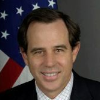
On May 8, 2014, President Barack Obama nominated Stuart E. Jones, a career Foreign Service officer, to be the next U.S. ambassador to Iraq. It will be the second ambassadorial posting for Jones, who is currently the envoy to Jordan.
Jones is from Lafayette Hill, Pennsylvania, and has a family tradition of diplomacy; his grandfather also served in the Foreign Service. Jones earned a B.A. in history from Duke University in 1982 and a law degree from the University of Pennsylvania in 1986. After law school, Jones traveled in Latin America and subsequently decided to make a career in the State Department.
His first overseas assignment, in 1988, was as a consular officer in the U.S. embassy in Bogotá, Colombia. Other early assignments included a posting to El Salvador as legal advisor and as Serbian desk officer in Washington.
In 1994, Jones was named special assistant to then-United Nations Ambassador Madeleine Albright, remaining in that post two years. Jones then went to Turkey, serving for three years as the consul in Adana, and then two years as political counselor in the embassy in Ankara.
Jones then got his first experience in Iraq, as governorate (regional) coordinator in Al Anbar province. Later in 2004, Jones served in the George W. Bush White House as country director for Iraq on the National Security Staff. Jones went abroad again in 2005 as deputy chief of mission in the U.S. embassy in Cairo. He returned to Washington in 2008 as deputy assistant secretary of state in the Bureau of European and Eurasian Affairs. There, he was responsible for the Balkans and for European Union affairs. Jones was took over as the U.S. envoy to Amman in July 2011.
In light of the sectarian violence in Iraq, Jones said during his June 11 confirmation hearing before the Senate Foreign Relations Committee that his first priority as ambassador in Baghdad will be to protect the U.S. embassy and its employees.
Jones is married with three children, one of whom is attending Duke. His wife, Barbara, also a Penn graduate, was formerly a Foreign Service officer.
-Steve Straehley
To Learn More:
The Ambassador of Conflict (by Walter Campbell, Penn Law Journal)
morePrevious U.S. Ambassador to Iraq

On May 8, 2014, President Barack Obama nominated Robert Stephen Beecroft to be the U.S. ambassador to Egypt. He was confirmed by the Senate on June 26. This is Beecroft’s third ambassadorial posting, having previously served in Jordan and Iraq.
Beecroft, 56, is from San Diego, where his father was an attorney and land developer. He earned a B.A. in English and Spanish in 1982 from Brigham Young University in Provo, Utah. Beecroft served the customary mission with his church, the Church of Jesus Christ of Latter-Day Saints (Mormons), in Venezuela.
He told LDS Church News, “I distinctly remember my father taking me aside and teaching me to look for the person in need. He used to send my brothers and me out at Christmas time with money in envelopes to anonymously deposit in the mailboxes of people in our community who were in need.”
He then earned a law degree from UC Berkeley in 1988. After law school, Beecroft practiced for a few years with the firm of Graham & Jones in San Francisco.
In 1994, Beecroft joined the Foreign Service. His first posting was in the Middle East, as a consular officer in Damascus, Syria, and most of his career has been focused on that region. He moved to Riyadh, Saudi Arabia in 1996 as consular and political officer, remaining there two years.
Beecroft returned to Washington in 1998, working first as a staff officer and operations officer in the Secretariat, then as deputy assistant secretary of state for political/military affairs. Much of his work during this period involved the campaign to remove landmines from former conflict areas. He spearheaded training programs in landmine clearning for those in affected countries.
In 2003, Beecroft was named special assistant to Deputy Secretary of State Richard Armitage, and the following year was special assistant to Secretary of State Colin Powell. Beecroft remained in the job when Condoleezza Rice took over the State Department.
Beecroft served as ambassador to Jordan from July 17, 2008 to June 4, 2011. In one cable from October 2009, released by WikiLeaks, Beecroft bemoaned the lack of real reforms despite promises by King Abdullah II. “Jordan's politicians are looking intently to the King for direction, eagerly (and in some cases nervously) anticipating a royal ruling on the future of reform. They have received almost nothing. The King has been largely absent from the political scene as of late and sphinxlike in his increasingly rare public appearances.”
Beecroft was transferred to Baghdad, Iraq, on July 14, 2011, serving as deputy chief of mission. He took over the sprawling embassy there when Ambassador James Jeffrey left on June 1, 2012, and was named ambassador himself when Obama’s original choice for the job, Brett McGurk, was forced to withdraw.
Beecroft’s wife, Anne Tisdel Beecroft, is also a BYU graduate, with a B.A. and J.D.. The Beecrofts have four children, Blythe, Warren, Sterling and Grace.
-Steve Straehley
To Learn More:
Statement before the Senate Foreign Relations Committee (pdf)
A Diplomatic Life (by Brittany Karford Rogers, BYU Magazine)
more
Comments