



In the sixty or so years since gaining independence, Pakistan has been embroiled in regional wars, internal strife and the war against terrorism. Upon separating itself from India in 1947, Muslim Pakistan engaged in the first of several wars with its larger, Hindu neighbor. Conflicts with India have stemmed from both religious differences and disagreements over control of Kashmir. Pakistan also fought with Indian forces while unsuccessfully attempting to hold onto East Pakistan (now known as Bangladesh) in 1971. In addition, Pakistan and India have been engaged in a nuclear arms race since the 1970s, when India became the first country on the subcontinent to demonstrate it had such weapons. Pakistan, however, did not conduct its first nuclear test until the late 1990s. For most of its history, Pakistan has been ruled by military dictators who have used their control of the army to dominate the presidency. Attempts at civilian rule have been brief and often marred by violence.
Lay of the Land: In southern Asia, in the northwest portion of the Indian subcontinent, Pakistan extends north from the Arabian Sea roughly 900 miles to the lofty ranges of the Hindu Kush and the Himalayas.
The Embassy in Karachi was established Aug 15, 1947, with Charles W. Lewis, Jr., as Chargé d'Affaires ad interim.
Appointment: Sep 20, 1947
Presentation of Credentials: Feb 26, 1948
Termination of Mission: Left post Jun 27, 1948
Note: Commissioned during a recess of the Senate; recommissioned after confirmation on Dec 9, 1947.
Appointment: Mar 4, 1949
Note: Took oath of office, but did not proceed to post.
Appointment: Feb 2, 1950
Presentation of Credentials: Feb 25, 1950
Termination of Mission: Left post Nov 26, 1952
Appointment: Sep 17, 1952
Note: Commissioned during a recess of the Senate; did not serve under this appointment.
Appointment: May 13, 1953
Presentation of Credentials: May 19, 1953
Termination of Mission: Reaccredited when Pakistan became a republic; formally received Apr 23, 1956; left post May 1, 1957
Appointment: Jun 13, 1957
Presentation of Credentials: Jul 27, 1957
Termination of Mission: Left post Jul 29, 1959
Appointment: Jun 18, 1959
Presentation of Credentials: Aug 17, 1959
Termination of Mission: Left post Feb 7, 1962
Appointment: Mar 1, 1962
Presentation of Credentials: Mar 20, 1962
Termination of Mission: Left post May 27, 1966
Appointment: May 27, 1966
Presentation of Credentials: Jun 9, 1966
Termination of Mission: Left Pakistan, Apr 16, 1967
Appointment: Jul 27, 1967
Presentation of Credentials: Aug 16, 1967
Termination of Mission: Left post Jun 17, 1969
Appointment: Sep 19, 1969
Presentation of Credentials: Nov 15, 1969
Termination of Mission: Left post Apr 30, 1972
Appointment: Oct 15, 1973
Presentation of Credentials: Dec 5, 1973
Termination of Mission: Left post Apr 23, 1977
Note: Nomination withdrawn May 5, 1977.
Appointment: Jun 8, 1977
Presentation of Credentials: Jun 28, 1977
Termination of Mission: Left post Jul 19, 1981
Appointment: Oct 1, 1981
Presentation of Credentials: Oct 29, 1981
Termination of Mission: Left post Oct 27, 1983
Appointment: Nov 21, 1983
Presentation of Credentials: Dec 26, 1983
Termination of Mission: Left post Nov 9, 1986
Appointment: May 4, 1987
Presentation of Credentials: Jun 24, 1987
Termination of Mission: Died near Bahawalpur, Aug 17, 1988
Appointment: Aug 18, 1988
Presentation of Credentials: Sep 1, 1988
Termination of Mission: Left post Aug 29, 1991
Note: Commissioned during a recess of the Senate; recommissioned after confirmation on Oct 17, 1988.
Appointment: Jul 2, 1991
Presentation of Credentials: Oct 24, 1991
Termination of Mission: Left post Nov 3, 1992
Appointment: Oct 9, 1992
Presentation of Credentials: Nov 10, 1992
Termination of Mission: Left post Sep 10, 1995
Appointment: Dec 19, 1995
Presentation of Credentials: Jan 25, 1996
Termination of Mission: Left post Aug 24, 1998
Appointment: Aug 3, 1998
Presentation of Credentials: Sep 10, 1998
Termination of Mission: Left post Jul 6, 2001
Appointment: Jul 12, 2001
Presentation of Credentials: Sep 13, 2001
Termination of Mission: Left post May 29, 2002
Appointment: Aug 2, 2002
Presentation of Credentials: Aug 16, 2002
Termination of Mission: Left post Nov 5, 2004
Appointment: Oct 18, 2004
Presentation of Credentials: Nov 25, 2004
Termination of Mission: Left post, Mar 28, 2007
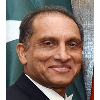 Chaudhry, Aizaz Ahmad
Pakistan’s ambassador to the United States, since March 13, 2017, is Aizaz Ahmad Chaudhry, a 36-year veteran of the Pakistan Foreign Service who most recently served as foreign secretary of Pakistan from December 2013 to March 2017. He succeeds Jalil Abbas Jilani, who chose retirement over an extended term in Washington. Chaudhry presented his credentials to President Donald Trump on April 24, 2017.
Born on February 27, 1958, Aizaz Ahmad Chaudhry graduated PAF College Sargodha, a college prep school run by the Pakistan Air Force, in 1978. He earned a Bachelor of Science degree and a Master’s degree in Political Science at Punjab University in Lahore, Pakistan, and a Masters in International Relations at Tufts University’s Fletcher School of Law and Diplomacy in 1990.
Chaudhry joined the Foreign Service of Pakistan in 1980, starting his career by taking government courses at the Civil Service Academy in Lahore in 1981 and the Foreign Service Training Institute in Islamabad in 1981-1982. His first posting was also educational, as a language trainee at the Pakistani Embassy in Cairo, Egypt, in 1983.
Chaudhry served as third/second secretary at Pakistan’s embassy in Doha, Qatar, from 1984 to 1987, and from 1988 to 1991 held jobs in several offices of the Foreign Ministry in Islamabad.
From 1991 to 1997, Chaudhry served in Tehran, Iran, as chef de cabinet to the secretary general of the Economic Cooperation Organization (ECO), an intergovernmental organization founded in 1985 by Pakistan, Turkey, and Iran to promote free trade in Central Asia. ECO now has ten members (Afghanistan, Azerbaijan, Iran, Kazakhstan, Kyrgyzstan, Pakistan, Tajikistan, Turkey, Turkmenistan, and Uzbekistan) with a population of 460 million and GDP of $1.75 billion.
From 1997 to 1999, Chaudhry served as chef de cabinet to the foreign secretary and participated in India-Pakistan Foreign Secretary level talks.
In his first posting to the Western Hemisphere, Chaudhry served as political counsellor and then as deputy permanent representative to the United Nations in New York from 1999 to 2006.
In 2007, Chaudhry served as director general of the Organization of Islamic Cooperation (OIC). He led the Pakistani diplomatic team, chaired several OIC meetings, and organized an OIC Conference of Foreign Ministers in Islamabad in May 2007.
From 2007 to 2009, Chaudhry served as director general for South Asia and represented Pakistan at the South Asian Association for Regional Cooperation.
For his first ambassadorship, he served as ambassador to the Netherlands from 2009 to 2012, where he wrote a book Pakistan Mirrored to Dutch Eyes.
From 2012 to March 2013, Chaudhry served as additional foreign secretary, focusing on issues related to the United Nations and other international organizations, economic coordination, and disarmament affairs, and then served as the Foreign Ministry spokesperson from March to December 2013. As brief as was his term as spokesperson, Chaudhry found himself in an awkward position when secret documents were published showing that the Pakistani government had cooperated with the CIA’s drone bombing program inside Pakistan’s borders. Chaudhry was left to explain that even if this was true, the current government, installed four months earlier, would not continue the complicity, stating “We regard such strikes as a violation of our sovereignty as well as international law. They are also counter-productive.”
Chaudhry and his wife, Najia Aizaz Ahmad, the former president of the Pakistan Foreign Office Women's Association, have three children.
-Matt Bewig
To Learn More:
Conversations in Diplomacy: Aizaz Ahmad Chaudhry and Adil Najam (Harvard Kennedy School Belfer Center) (audio)
- Table of Contents
- News
- Overview
- Basic Information
- History
- Newspapers
- History of U.S. Relations with Pakistan
- Current U.S. Relations with Pakistan
- Where Does the Money Flow
- Controversies
- Human Rights
- Debate
- Past Ambassadors
- Ambassador to the U.S.
- Embassy Web Site in the U.S.
- Comments
- Leave a comment


U.S. Ambassador to Pakistan
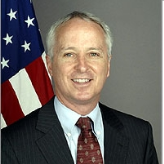
With the war in Afghanistan spilling over into Pakistan, where the CIA has launched numerous drone attacks on insurgents, the Obama administration selected Cameron Munter, a veteran diplomat with experience in Iraq, to run the U.S. embassy in Islamabad. Munter also is used to working in countries undergoing some kind of political transition, although all of those previous assignments took place in Europe. Munter was sworn in as U.S. ambassador to Pakistan on October 6, 2010.
Previous U.S. Ambassador to Pakistan

Anne W. Patterson's Official Biography
more
Comments