



Qatar is an oil-rich nation occupying a small peninsula in the Persian Gulf and boasts the highest per capita income of any country in the Middle East. Once a protectorate of Great Britain, Qatar’s first ruler was Sheikh Abdullah bin Jassim Al Thani, who laid the groundwork for his powerful family to rule for decades following World War I. The Qatar Petroleum Company was given a 75-year oil concession in 1935, however, World War II delayed the exploitation of this resource until 1949. Qatar’s economy thrived during the 1950s and 1960s, and this led to increased immigration and social progress. When Britain ended its treaty relationships with the gulf sheikdoms, they tried but ultimately failed to form a union of Arab emirates. Instead, Qatar declared its independence in 1972. Since then, Qatar has been ruled by a series of Amirs, most recently Sheikh Hamad bin Khalifa, who has announced his intention to move his nation toward democracy. This has occurred in small steps thus far, with the Qataris approving a new constitution that went into effect in June 2005.
Lay of the Land: In southwest Asia, Qatar is a small peninsula (100 miles long and 35-50 miles wide), which juts northward into the Persian Gulf from the Saudi coast west of Abu Dhabi.
Humans have inhabited the Qatar Peninsula for 50,000 years, dating back to the Stone Age. Nomadic tribes wandered the peninsula for millennia, from Najd and Al Hasa regions in Saudi Arabia, with seasonal encampments around sources of water. Some were fishermen, or traded in precious pearls. Over time, they added to the population by importing slaves from East Africa.
Diplomatic relations between Qatar and the United States began in 1971, and the US embassy opened in March 1973. The first ambassador arrived in July 1974, and since that time, the two nations have enjoyed warm bilateral relations and cooperation on a number of trading and other measures.
In April 2003, the Bush Administration announced that the US Combat Air Operations Center for the Middle East would be moved from Prince Sultan Airbase in Saudi Arabia to Qatar’s
Trade between the United States and Qatar is quite lopsided. The US exported $2.7 billion in 2008 to Qatar, while importing only $484 million.
Qatar Currency Issue Raises Questions, Inflation
The State Department reports that while there were allegations of police abuse against incarcerated suspects during interrogations to elicit confessions, no cases were investigated during 2007. Documentation of abuses was very limited, due partly to hesitancy by alleged victims to make public claims of torture or abuse.
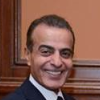 Al Kuwari, Mohammed Jaham Abdulaziz
Mohammed Jaham Abdulaziz Al Kuwari was appointed as Qatar’s ambassador to the United States in December, 2013. It’s the second ambassadorial posting for Al Kuwari.
Al Kuwari was born May 20, 1958, one of 13 children of parents who could not read or write. Gaining a scholarship, he attended college in the United States, at the University of Portland in Oregon, where he earned a bachelor’s degree in Political Science in 1980. He joined Qatar’s foreign service the following year, with his first posting coming in Washington, D.C.
Al Kuwari remained in Washington until 1986, when he was sent to Qatar’s mission to Spain. During his time there, he earned a master’s degree in international relations from the University of Madrid in 1990.
He was brought home that year to be chief of the Information Department of the Cooperation Council to Qatar’s Ministry of Foreign Affairs. In 1991, Al Kuwari was posted to the Qatari embassy in Tehran, Iran, where he remained until 1992.
Al Kuwari began a long stint home in 1993, first as deputy head of cabinet, then in 1995 as director of European and American Affairs. Beginning in 1997, he worked in Diplomatic Consular Services. Al Kuwari returned as director of European and American Affairs in 2001 and simultaneously was head of a Qatari delegation engaged in political and strategic dialogue with France.
He was posted to Paris as Qatar’s ambassador to France in 2003 and was also accredited to Switzerland and the Holy See (Vatican City). He served in that post for 10 years, and in 2007 added the posts of non-resident envoy to Portugal and Monaco to his portfolio.
Since his return to Washington, Al Kuwari has seen Qatar complete a deal to buy a Patriot missile defense system, 24 Apache helicopters and 500 Javelin anti-tank missiles from the United States for $11 billion. In addition, he has said he is hoping to complete contracts with American companies to work on some of Qatar’s many infrastructure projects to be built in the run-up to the 2022 FIFA World Cup.
Al Kuwari is married and has five children; four girls and one boy. He speaks English, Spanish, French and Arabic.
-Steve Straehley
To Learn More:
- Table of Contents
- News
- Overview
- Basic Information
- History
- Newspapers
- History of U.S. Relations with Qatar
- Current U.S. Relations with Qatar
- Where Does the Money Flow
- Controversies
- Human Rights
- Debate
- Past Ambassadors
- Ambassador to the U.S.
- Embassy Web Site in the U.S.
- Comments
- Leave a comment

U.S. Ambassador to Qatar
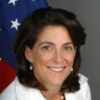
On May 1, 2014, President Barack Obama nominated Dana Shell Smith to be the U.S. Ambassador to Qatar. If confirmed, it will be the first ambassadorial posting for the career Foreign Service officer.
Shell Smith joined the State Department at age 21, right after graduating from University of California San Diego with a degree in political science and Middle East studies in 1992. She was first assigned to the United States Information Agency (now the Bureau of International Information Programs). In 1993, Shell Smith went to Cairo to study Arabic at the American University there. She remained in Egypt, serving as the cultural affairs officer in the embassy there until 1996.
That year, Shell Smith was reassigned to the U.S. embassy in Tel Aviv. While in there, she met the man who would become her husband, Diplomatic Security Service officer Ray Smith. In 1999, Shell Smith was moved to Jordan, where she was the spokesperson for the U.S. embassy in Amman.
In 2003, Shell Smith had her first posting outside the Middle East when she was assigned to be public affairs officer at the American Institute in Taiwan. The Institute serves as a de facto embassy in the nation with which the United States does not have formal diplomatic relations.
Shell Smith returned to Washington in 2006 to serve as the senior advisor to the director general of the Foreign Service. In 2009, she returned to the Middle East to work at the State Department media liaison office in Dubai. She was the designated representative to appear on Arab news programs to explain the U.S. position on various issues.
The year 2010 brought a return to Washington, first as deputy assistant secretary for Public Affairs, establishing an office of international social media engagement, pioneering the State Department’s use of Twitter in Arabic, then in May 2011 as principal deputy assistant secretary for Public Affairs.
Shell Smith raised some eyebrows outside the diplomatic world in 2012 when she wrote an article in The Atlantic that was a response to an earlier piece about life in government service entitled “Why Women Still Can’t Have It All.” In Shell Smith’s response, “How to Have an Insanely Demanding Job and 2 Happy Children,” she wrote that while she did make some sacrifices, she was in general able to balance a career with progressively more responsibility with raising her two sons. Predictably, Shell Smith drew a mixed response from the article, both from inside the Foreign Service and among the general public.
Shell Smith stirred more controversy with a response to another article written by colleagues. In 2013, Susan Johnson, president of the American Foreign Service Association (AFSA), wrote an op-ed for The Washington Post decrying what she and her two co-authors perceived as a breakdown in the Foreign Service system in favor of political appointees and regular civil service employees. Shell Smith and another Foreign Service officer circulated a letter expressing disagreement with the op-ed. In response, 11 former AFSA presidents asked the Senate Foreign Relations Committee not to approve Shell Smith’s nomination. However, the committee approved her appointment and sent it to the full Senate for consideration on June 24.
In addition to Arabic, Shell Smith speaks Spanish, Hebrew and Chinese. Her husband, Ray Smith, is an agent with the Diplomatic Security Service.
-Steve Straehley
To Learn More:
Why is the State Department Tweeting in Arabic? A Conversation with Dana Shell Smith (by Jillian C. York)
Testimony Before Senate Foreign Relations Committee (pdf)
morePrevious U.S. Ambassador to Qatar
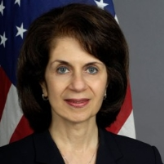
Susan L. Ziadeh was sworn in as U.S. Ambassador to Qatar on September 12, 2011, for what is her eighth tour of duty in the Middle East.
Comments