



The area now known as Kazakhstan was originally settled by nomadic tribes in the 1st century BC, forming various nations according to family structures. The country became part of the Mongol Empire during the 13th century and became an important stop along the Great Silk Road. Kazakhstan developed a common language and culture in the 15th century and cultivated an agriculture-based economy. In the 18th century, Russia came to control Kazakhstan, partially through protection treaties and partially through military action. Eventually, though, the Kazakh people grew tired of colonial rule and briefly earned their independence as the Russian Empire fell. This independence was short lived, and Kazakhstan became part of the Soviet Union in the 1920s. Forced collectivization brought about starvation and hardship, forcing many Kazakhs to leave the country for Western China and other areas. As change occurred in the Soviet Union in the late 1980s, Kazakhstan declared it independence in December 1991. Today, Kazakhstan is poised to become a powerful international trader on the basis of its rich oil reserves, along with other natural resources.
Lay of the Land: Kazakhstan extends from the Caspian Sea to the Altay Mountains and from the plains of Western Siberia to the oasis and desert of Central Asia. The country has cold winters, hot summers, and an arid climate. Kazakhstan shares borders with Uzbekistan, Russia, China, Kyrgyzstan and Turkmenistan.
Kazakhstan was originally settled by nomadic tribes in the 1st century BC, though the land itself has been occupied since the Stone Age. From the 4th century through the 13th century, these nomadic tribes formed various nations that ruled Kazakhstan in succession.
Noted Kazakh-Americans
The United States opened its Embassy in Almaty in January 1992. Relations between the two countries are cooperative and bilateral. The US Embassy moved to Astana in 2006.
Total US exports to Kazakhstan in 2009 equaled $599.5 million. The largest U.S. export category to Kazakhstan in 2009 was agricultural equipment, which totaled $118.2 million.
Kazakhs Threaten to Sue British Comedian for Portrayal in Borat
According to the State Department, Kazakhstan demonstrated the following human rights problems: “severe limits on citizens’ rights to change their government; military hazing that led to deaths; detainee and prisoner abuse; unhealthy prison conditions; arbitrary arrest and detention; lack of an independent judiciary; restrictions on freedom of speech, the press, assembly, and association; pervasive corruption, especially in law enforcement and the judicial system; prohibitive political party registration requirements; restrictions on the activities of nongovernmental organizations (NGOs); discrimination and violence against women; trafficking in persons; and societal discrimination”.
Note: The United States recognized Kazakhstan, Dec 26, 1991. Embassy Alma-Ata (now Almaty) was established Feb 3, 1992, with Courtney as Chargé d’Affaires ad interim.
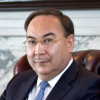 Kazykhanov, Yerzhan
Since February 2017, the ambassador of Kazakhstan to the U.S. has been Yerzhan Khozeyevich Kazykhanov, a career diplomat who has served in the U.S. before. He presented his credentials to President Donald Trump on April 24, 2017. The largest of the former Soviet republics, since 1989 Kazakhstan has been ruled with an iron fist by President Nursultan Nazarbayev, whose human rights record has been condemned worldwide. Kazykhanov, who served as ambassador to the United Kingdom prior to this appointment, holds the diplomatic rank of ambassador extraordinary and plenipotentiary.
Born on August 21, 1964, in Almaty, Kazakhstan SSR, which was then part of the Soviet Union, Yerzhan Kazykhanov earned his bachelor’s degree in Oriental Studies from the Leningrad [Saint Petersburg] State University in Russia, in 1987.
During his two-year stint in the Soviet Army from 1987 to 1989, Kazykhanov watched as the Soviet Union began to disintegrate around him. By the time his military service concluded, the USSR had barely two years left to live, and Kazakhstan was on the verge of autonomy and independence.
Kazykhanov has spent his entire career at the Kazakhstan Foreign Ministry, starting at the Protocol-Political Division in 1989, where he rose to chief by the time he left in 1995.
Kazykhanov served his first foreign posting from 1995 to 2000 as first secretary/counselor at Kazakhstan’s Permanent Mission to the United Nations in New York. He served in Kazakhstan’s capital, Astana, as director of the Department of Multilateral Cooperation from 2000 to 2003, and then returned to New York as Kazakhstan’s permanent representative to the UN and as non-resident ambassador to Cuba from 2003 to 2007.
Back in Astana, Kazykhanov was deputy minister of Foreign Affairs from February 2007 to early 2008, and assistant to President Nazarbayev from February to December 2008.
Kazykhanov served as ambassador to Austria and permanent representative to international organizations located in Vienna, such as the International Atomic Energy Agency and the United Nations Industrial Development Organization, from December 2008 to February 2011.
Kazykhanov returned to Astana adeputy minister of foreign affairs from February to April 2011, and then as minister of foreign affairs from April 2011 to September 2012.
When it was released in 2006, Sacha Baron Cohen's mock documentary, Borat: Cultural Learnings of America for Make Benefit Glorious Nation of Kazakhstan, was banned in Kazakhstan. However, in April 2012, Kazykhanov admitted that the film had actually boosted the tourism industry in his country, noting, “For us, it is a great victory. I am grateful to Borat, the main character of the movie, for tourists' keen interest to (come to) Kazakhstan.”
After again working as an assistant to President Nazarbayev from September 2012 to September 2014, Kazykhanov served as Kazakhstan’s ambassador to the United Kingdom from September 2014 to February 2017.
Kazykhanov has written numerous scholarly articles and publications in Kazakh and other periodicals on multilateral diplomacy, Kazakh foreign policy, and the United Nations. He speaks Russian, English, and Arabic. He is married to Danara Kazykhanova, with whom he has a daughter and a son.
-Matt Bewig
To Learn More:
Erzhan Kazykhanov Becomes New Kazakhstan’s Foreign Minister (Kazakhstan Foreign Ministry)
- Table of Contents
- News
- Overview
- Basic Information
- History
- Newspapers
- History of U.S. Relations with Kazakhstan
- Current U.S. Relations with Kazakhstan
- Where Does the Money Flow
- Controversies
- Human Rights
- Debate
- Past Ambassadors
- Ambassador to the U.S.
- Embassy Web Site in the U.S.
- Comments
- Leave a comment

U.S. Ambassador to Kazakhstan

George A. Krol was nominated by President Barack Obama to be ambassador to Kazakhstan on May 1, 2014. If confirmed by the Senate, it will be the third ambassadorial post for the career Foreign Service officer.
Krol was born in Pittsburgh, Pennsylvania, in 1956, and raised in Manchester Township, New Jersey, the youngest of three sons of Mr. and Mrs. Anthony J. Krol. He attended St. Peter’s Preparatory School in Jersey City, and earned a Bachelor’s degree in History, magna cum laude, at Harvard University. At Oxford University in England he received both Bachelor’s and Master’s degrees in Philosophy, Politics and Economics.
Krol taught at the National War College, and joined the U.S. Foreign Service in 1982, taking assignments for the State Department in India, Poland and the Ukraine. In 1991, he was the U.S. consul in Leningrad (now St. Petersburg). From 1993 to 1995, he served as deputy chief of mission and chargé d’affaires in Minsk, Belarus. Between 1995 and 1997, he was special assistant to the Ambassador-at-Large for the New Independent States, and from 1997 to 1999 he served as director of the Office of Russian Affairs—both positions based in Washington, D.C.
In 1999, Krol was named minister-counselor for Political Affairs at the U.S. Embassy in Moscow, Russia, a post he held through 2002. The following year he was appointed U.S. ambassador to Belarus, a position he held through 2006.
In April 2007, President George W. Bush announced his intention to nominate Krol to be the U.S. ambassador to Turkmenistan, but he was never confirmed, although the reasons are unclear. Krol subsequently served as deputy assistantsSecretary for South and Central Asian Affairs. Among his responsibilities was engaging in direct consultation with Uzbek government officials.
Krol was nominated to be ambassador to Uzbekistan in July 2010 and assumed the post about a year later. While there, he has taken criticism from human rights groups in the country for deferring to the regime of Islam Karimov, under which there are frequent rights violations, including forced labor of its citizens, and little freedom of expression. However, Uzbekistan has been a vital part of the U.S. supply train to American forces in Afghanistan.
Krol is married to Melissa Welch.
-Danny Biederman, Steve Straehley
more
Previous U.S. Ambassador to Kazakhstan
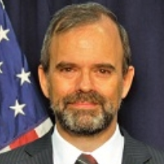
Experienced in both nuclear and economic issues, Kenneth J. Fairfax was finally approved by the United States Senate to serve as the U.S. Ambassador to Kazakhstan. The former Soviet republic has been a focus of ongoing efforts to safeguard nuclear materials once owned by the Soviet military, which had key bases in Kazakhstan. Nominated by President Barack Obama on March 29, 2011, Fairfax was sworn in on September 15.
Comments