Afghanistan
Bookmark and Share
News  

Wanted: Falcons, Handlers For Mission in Afghanistan (by Walter Pincus, Washington Post)
From Great Game to Grand Bargain: Ending Chaos in Afghanistan and Pakistan (by Barnett R. Rubin and Ahmed Rashid, Foreign Affairs)
Afghanistan’s Emerging Antiwar Movement (by Anand Gopal, Christian Science Monnitor)
Military Mom Makes Trip Home (by Alpha Husted, Dunkirk Observer)
An Old Afghanistan Hand Offers Lessons of the Past (by John F. Burns, New York Times)
Time for a Political Solution in Afghanistan? (by Edward C. Corrigan, Media Monitors Network)
Afghanistan: Not a Good War Gone Bad (by Larry Everest, Counterpunch)
West lowers sights in Afghanistan as War Drags On (by Jon Hemming, Reuters)
Afghanistan: The Night I was “Killed in Action” by a Taliban Ambush (by Nick Meo, The Telegraph)
Breaking with Tradition: Drew University Soccer Player Shamila Kohestani Leaves Taliban Behind (by Wayne Coffey, New York Daily News)
US/Afghanistan: Moving Towards a “Grand Bargain” (by Jim Lobe, Inter Press Service)
Playing Al-Anbar Roulette in FATA (by Abdus Sattar Ghazali, OpEdNews)
Slain Beverly Soldier Explained Why he Served (by Stephen Fortunato, Boston Globe)
How Deeply is the U.S. involved in the Afghan Drug Trade? (by Eric Margolis, Huffington Post)

 
Overview  
Long a crossroads of disparate cultures, trade and migration routes, Afghanistan is a mosaic of historical influences and civilizations. With an ethnically diverse population speaking at least 47 languages, the country is largely united by Islam, and defined by its history of regional power struggles. A seemingly remote territory, it has played a central role in the shaping of global events. In modern history, the country has been taken apart and put back together by decades of war and unrest.
 
In the late 20th century, Afghanistan was the site of a proxy war between the U.S. and the Soviet Union, which eventually left the country after years of fighting with U.S.-backed Mujahideen—which later regrouped under the regressive banner of the Taliban. The Taliban era ushered in what is considered one of the strictest and most repressive Islamist regimes in modern history. As part of its War on Terror offensive following September 11, 2001, the U.S. invaded Afghanistan and toppled the Taliban regime. Despite the U.S. spending billions of dollars in an effort to institute a centralized democratic government, after seven years, widespread factionalism and insurgency continues. Additionally, the U.S. has poured billions into the country’s reconstruction plan–with, critics contend, a majority of contracts going to Washington insiders, and a high rate of failure.
 
Also fueled by instability in the post-war climate, is the country’s burgeoning opium industry—which supplies an estimated 90%-95% of the world’s heroin supply.
 
Basic Information  
Lay of the Land: Afghanistan is located in west central Asia. The Hindu Kush and Pamir mountain ranges, which rise to 25,000 feet in places, divide the country into three watersheds: the Amu Darya (oxus) River basin along the northern border, the Indus headwaters in the east, and in the southwest, the Helmand River, which drains into an inland basin called the Seistan along the Afghanistan-Iran border. Winters in Afghanistan are cold and windy; summers are hot, dry, and often dusty.
 
Population: 32.7 million
 
Religions: Sunni Muslim 80%, Shi’a Muslim 19%, other 1%. (Figures are estimates, as a nationwide census has not been conducted in decades).
 
Ethnic Groups: Pashtun 42%, Tajik 27%, Hazara 9%, Uzbek 9%, Aimak 4%, Turkmen 3%, Baloch 2%, other 4%.
 
Languages: Eastern Farsi (official) 19.6%, Hazaragi 6.2%, Southern Uzbek 4.9%, Southern Pashto (official) 3.8%, Turkmen 1.8%, Aimaq 1.7%, Western Balochi 0.7%, Brahui 0.7%. There are 47 living languages in Afghanistan.


History  
Its location at the crossroads of Central, West and South Asia made the territory now known as Afghanistan home to waves of migration, flourishing trade routes, and great empires for more than 2,000 years.

After Arab and Mongol conquests (643-1200 and 1200-1500, respectively), the region fell into fractured ethnic rule: Uzbek, Persian, Mughal and Pashtun. In 1747 Ahmad Shah Durrani unified the Pashtuns and founded the state of Afghanistan, which thereafter became a buffer between British colonial and expanding Russian powers. Afghanistan gained independence from Britain in 1919, but would remain a proxy for contending forces well into the 20th and, many will argue, 21st centuries.

 
A 1973 coup abolished the monarchy that had been established by Durani and attempted democratic reforms. A1978 Communist counter-coup was followed a year later by Soviet invasion, and a Cold-War proxy battle, in which the U.S. backed Mujahideen soldiers against Soviet forces, which eventually withdrew in 1989.
 
In 1996 Kabul fell to the Taliban, a Pakistan-backed, fundamentalist Sunni-Islam nationalist movement staffed with religious scholars and former Mujahideen. By 2000 the group, which instituted the strictest interpretation of Shariah law and was infamous for its treatment of women and austere cultural prohibitions, controlled about 95% of the country.
 
Following the terrorist attacks of September 11, 2001, the U.S. invaded Afghanistan and ousted the Taliban, citing the group’s support of terrorism, particularly its alliance with Osama bin Laden.
 
The U.S. has poured billions of dollars into the reconstruction of Afghanistan, including government and infrastructure. Hamid Karzai was elected President of Afghanistan in 2004, and a National Assembly was inaugurated the following year.
 
Currently, despite U.S. efforts to establish a central, democratic government authority, provincial instability continues, exacerbated by a Taliban guerilla insurgency against the U.S.-backed government.
Afghanistan's Newspapers  
History of U.S. Relations with Afghanistan  
The first U.S. minister to Afghanistan was appointed in 1935, and the U.S. established its first official embassy in Kabul in the 1940s.
 
From 1950 to 1979, the U.S. provided more than $500 million in loans, grants and surplus agricultural commodities for development. As with other U.S. development and aid practices during the Cold War, these funds were aimed at a strategic development model–one that would bolster U.S. interests in regions that were thought susceptible to Soviet influence. Afghanistan was also part of the U.S.-backed Green Revoultion which, generally, diverted production from sustainable and local mechanisms towards high-yield production for export, introducing pesticides and uprooting local management and native farming techniques. Short-sighted and unsustainable agricultural production, argue critics, wreaked havoc on economy and environment alike. The Peace Corps was active in Afghanistan from 1962 and 1979.
 
Relations deteriorated after the 1978 Communist coup, and U.S. Ambassador Adolph Dub was murdered in Kabul the following year. The U.S. subsequently reduced bilateral aid, and then withdrew it altogether when the Soviets invaded in 1979. During the Cold War, the U.S. provided support for Afghan refugees in Pakistan, and spent $3 billion arming the Mujahideen against the Soviet regime. In 1989, the U.S. closed its embassy in Kabul. The U.S. reopened its embassy in 2001 when it invaded and occupied the country.
 
The U.S. and Afghan Tragedy (by Khushal Arsala and Stephen Zunes, Foreign Policy in Focus)
 
Current U.S. Relations with Afghanistan  
The U.S. continues to be the largest donor in the reconstruction of Afghanistan, funding military and infrastructure, and still has thousands of troops stationed there. President Hamid Karzai is strongly backed by the U.S. administration, and in 2005 the two countries signed a strategic partnership agreement, which reiterates Afghanistan’s support for and cooperation with U.S. military bases and counter-terrorism operations in exchange for continuing reconstruction and development aid. 
 
Afghan-Americans
According to the U.S. Census Bureau, in 2000, 53,709 Afghans lived in the U.S. However, according to the Afghani Embassy, estimates of the Afghan population in the U.S. are upwards of 300,000, with about 40,000 in or around the San Francisco Bay Area, about 20,000 in Northern Virginia, and another 10,000 scattered throughout Southern California. Smaller communities are also found in New York, Georgia, Oregon and Texas. Tajik and Pashtun are among the majority ethnicities, with Uzbek, Hazara, Jewish and Hindus among the minorities.
The Afghan Diaspora in the U.S. (Embassy of Afghanistan, Washington, D.C.)
 
Where Does the Money Flow  
Afghanistan’s chief exports include carpets, fruits and nuts, medical plants, animal products, cotton, gems and marbles. These products are generally exported to India, China, Pakistan, the U.A.E., Europe, the UK and the U.S.
 
Most years, Afghanistan exports only about $500 million worth of goods, compared with the $4.4 billion it imports. However, exports have seen a steady increase in the past few years.
 
In 2007, Afghan exports to the U.S. totaled more than $74 million. By far the highest value (in dollars) for 2007 was for “U.S. goods, returned or reimports” at nearly $65 million. Rugs followed at more than $3 million, steadily up in recent years. Artwork, which has accounted for around $2-$3 million in recent years, was back up after a drop in 2004 and 2005. And while crude oil was at $43 million in 2003, no crude was exported to the U.S. in subsequent years.
 
U.S. Exports to Afghanistan totaled $488.7 million in 2007, on a dramatic, gradual incline from only $60.7 million in 2003. Of this, passenger cars accounted for the highest dollar value, at $133 million, followed by military parts ($81.2 million) and telecom equipment ($42.6 million). Wheat, trucks, buses and special purpose vehicle exports were also significant, and chemicals, electrical equipment and computers were all around $10 million.
 
Top investor countries include Turkey, Pakistan, the U.S., China, U.A.E. and Iran, with investments totaling $2.4 billion (2003-2007).
 
In 2007 the U.S. gave a staggering $1.8 billion in aid to Afghanistan, including $819 million in supplementary funding. The budget allotted the most funding to Infrastructure ($560.1 million), Counter-Narcotics ($425.7 million), Good Governance ($205.8 million), Health ($114.7 million), and Conflict Mitigation and Reconciliation ($78.0 million). The 2008 budget estimate increased aid to $1.9million, including $839 in supplementary funds. Although the 2009 budget request will decrease aid to $1.1 billion, the final budget, including supplementary funding, may equal the sums of previous years. The 2009 budget will allot the most funding to Counter-Narcotics ($312.6 million), Infrastructure ($147.1 million), Good Governance ($105.0 million), and Political Competition and Consensus-Building ($93.0 million). The increases in Governing Justly and Democratically represent preparations for the 2009-2010 elections, while the decline in funding for Economic Growth can be traced to the completion of a number of major power and road projects.
Karzai: Afghanistan Underfunded (by Alex Johnson, MSNBC/Meet the Press)
Can Money Save Afghanistan? (by Aryn Baker, Time)
 
Controversies  
Civilian Casualties from U.S. Operations
Evidence Points to Civilian Toll in Afghan Raid (by Carlotta Gall, New York Times)
“Accidents” of War (Tom Englehardt, Tom Dispatch)
Afghanistan: NATO Killing Stirs Controversy (by Breffni O’Rourke, Radio Free Europe/Radio Liberty)
 
Post-War Contracts
A 2003 study by the Center for Public Integrity found that post-war contracting policies in Iraq and Afghanistan favored well-connected Bush Administration supporters. According to the report, more than 70 U.S. companies and individuals won up to $8 billion in contracts for work in the two countries between 2001 and 2003. Nearly 60% of the companies had employees or board members who either served in or had close ties with the highest levels of executive and legislative branches or the military. Further reports indicate that many of these contracts are granted with minimal oversight and quality assurance, meaning that U.S. corporations are profiting from incompetent and incomplete development projects that are responsible for further destabilizing the country.
Afghanistan, Inc. (by Fariba Nawa, Corp Watch) (PDF)
 
Government/Elections
 
Human Rights  
Prior to the U.S. invasion, the Taliban regime was universally condemned by international observers for gross human rights violations, including summary executions, kidnapping, torture, child soldiers, and arbitrary arrests, not to mention suppression of freedoms of speech and expression, which were virtually obliterated under strict, prohibitive cultural directives.
 
Current Human rights conditions can be described as “dire” in Afghanistan, where the average life expectancy for men and women is around 46 years old, and where, according to the U.N., one-third of inhabitants suffer from chronic food insecurity.
Afghanistan: Events of 2007 (Human Rights Watch)
 
The US Presence in Afghanistan
Critics of the U.S.-led coalition in Afghanistan point consistently to a lack of resources, funding, troops and coordination among existing operatives. The 40,000 NATO and Coalition forces currently in the country, claim observers, are relatively few compared to deployments to other post-conflict zones, especially given the size and scope of reconstruction in Afghanistan. Initiatives or missions are often left unfinished or under-supported, in many cases leading to corruption, inefficiency and failure. NATO and Coalition forces are sometimes bound by national laws and restrictions that prevent them from adequately protecting the civilian population.
 
In addition to inefficiency, the U.S. has come under fire for its treatment of civilians. Human Rights Watch (HRW) reported that in 2007, NATO and U.S.-led Coalition forces killed at least 300 civilians. According to HRW, “The US military operates in Afghanistan without an adequate legal framework, such as a Status of Forces Agreement with the Afghan government, and continues to detain hundreds of Afghans without adequate legal process.”
 
Also in 2007, a U.S. Federal court sentenced CIA contractor David Passaro to eight-and-a-half years in prison after he was found guilty of assault in the 2003 beating death of Abdul Wali. Passaro was the first civilian to be charged with abusing a detainee in the U.S. wars in Afghanistan and Iraq.
 
Refugees
Afghanistan has had the largest repatriation of refugees of any country in the last 30 years. According to the U.S. government, as of December 2007, approximately 3.5 million Afghans remained in neighboring countries. Between 2001 and 2007, the U.S. has provided more than $447.5 million in support to Afghan refugees, returnees, and other conflict victims.
 
Government Abuses
Warlords and criminals continue to exert influence in Hamid Karzai’s government, and even hold seats in Parliament, where some have attempted to pass restrictive legislation curtailing freedoms of press and speech. Corruption and the lack of transparency have caused the Karzai government to lose credibility, and given way to further deterioration of stability and rule of law. Also, international observers point to the government’s use of secret prisons, and Afghanistan is implicated in U.S. extraordinary rendition operations.
 
Taliban and Other Militia
The Taliban regime was notorious for insidious and endemic human rights abuses, and a particularly brutal treatment of women. Even after U.S. military forces ousted the Taliban in 2001, they continue to gather strength and have made a strong resurgence recently amid widespread instability.
 
The Taliban and other anti-government insurgent groups, including Islamists and tribal militias, criminal groups and local warlords (many of which have ties to government) continue to terrorize the civilian population and prevent peacekeeping and security forces from achieving their mission.
 
The reprisal of suicide bombings in 2007 killed nearly 400 civilians, a record number. The Taliban carried out 28 beheadings in the same year, many of them recorded and/or televised. Also in 2007, insurgent groups killed at least 34 aid workers, and the UN doubled its “most dangerous” areas (where personnel are not allowed to enter), now constituting a third of the country.
Taliban Resurgence (PRI The World)
Taliban ResurgenceStrains Alliance in Afghanistan (by Tom Bowman, NPR Morning Edition)
Time Is on the Taliban's Side (by Jason Motlagh, Asia Times)
The Taliban, Regrouped And Rearmed (by Peter Bergen, Washington Post)
Human Rights and the Taliban (Lorrne W. Craner, US State Department)
Survivors Describe Taliban (Human Rights Watch)
 
Women
During their five-year rule of the country, the Taliban instituted a severe interpretation of Islamic law, coming down hard on all members of society, but particularly targeting women. The UNHCR condemned the regime for widespread discrimination, executions, trafficking, forced marriage, kidnappings and abductions targeting women. Women and girls were also kept out of public life, including schools and employment. Marginalized under Taliban rule, women made progress in government participation after the U.S. invasion, especially in 2005 parliamentary elections. However, discrimination against women and human rights violations continue, as the government is unable or unwilling to enforce the law.
U.S. Feminist Voice Post-Taliban Concerns (by Siobhan Benet, Women’s E News)
 
 
Debate  
Debate over Afghanistan in the U.S. largely centers on whether or not the government should have authorized the 2001 invasion, how long troops should be stationed there, how the reconstruction efforts are carried out and funding. In light of recent Pentagon reports painting a bleak picture and citing deteriorating security conditions so many years after the invasion, at a time by which most thought infrastructure, political climate and security would have seen dramatic changes for the better, many U.S. citizens and politicians question the wisdom of U.S. policy in the country. Recent violence levels in Afghanistan have made Iraq look mild in comparison, drawing increasing attention to the debate from all sides.
 
Troop Increase?
Across partisan lines, a broad spectrum of politicians (including Barack Obama and John McCain) have at one point or another asked for an increase in troops. Many critics of the Bush administration claim that funds necessary to fight the War on Terror–and find Osama bin Laden, the government’s original target–have been diverted to Iraq, leaving important operations in Afghanistan under-funded. The partisan divide generally falls between moderate Democrats who want to pull troops out of Iraq and put more in Afghanistan, and Republicans who are committed to the current policy direction in Iraq.
 
Left
If elected, Democratic presidential nominee Barak Obama says that he will withdraw thousands of troops from Iraq and send them to Afghanistan. Other lawmakers join him, as do many military leaders who have become disillusioned with Iraq as the U.S. is faced with failure in Afghanistan.
 
Right
Republican presidential nominee John McCain, on the other hand, disagrees. As one of many Republicans still committed to the Bush Administration’s policy in Iraq, McCain is against pulling troops out of Iraq, instead suggesting NATO and Pakistan take on more responsibility in Afghanistan.
 
Obama’s Tour of Afghanistan Renews Debate About US Role (by Aunohit Mojumdar, Christian Science Monitor)
Obama, McCain split over Afghan strategy (by Bryan Bender, Boston Globe)
'The Insurgents Are not Winning in Afghanistan' (Der Spiegel interview with Brookings Institute’s Jeremy Shapiro)
 
Forum

Past Ambassadors  
Adolph Dubs, 1978-1979
Adolph Dubs, Russian expert and WWII veteran, was appointed U.S. Ambassador to Afghanistan in 1978. Dubs was killed in an exchange of fire between Afghan troops and the Islamist extremists who had kidnapped him. The troops were reportedly attempting his rescue from the kidnappers, who demanded the release of prisoners. Critics in the U.S. claim that the killing was far from accidental, pointing to Soviet control of the Afghan forces at the time. The U.S. closed its Kabul embassy after the incident.
Adolph Dubs bio (Arlingtoncemetary.net)
 
Nominations for Next Ambassador

Afghanistan's Ambassador to the U.S.  
Jawad, Said
Said T. Jawad attended the Afghan French Lycée Istiklal and earned degrees from the Schools of Law and Political Sciences at Kabul University, and at Westaelische Wilhelms University in Münster, Germany. In 1986 he settled in the United States, where he earned his MBA from Golden Gate University in San Francisco and worked for a number of law firms.
 
Jawad returned to Afghanistan after 9/11 terrorist attacks and served as the President’s Press Secretary, Chief of Staff, and Director of the Office of International Relations at the Presidential Palace. He contributed to drafting Afghanistan’s foreign investment laws, and was President Karzai’s principal liaison with the constitutional commission throughout the drafting process of the constitution.
 
Jawad was appointed Ambassador to the U.S. by President Karzai in 2003, and is also Afghanistan’s non-resident Ambassador to Mexico, Brazil, Columbia and Argentina.
 
Jawad speaks English, French and German.
 
 
Afghanistan's Embassy Web Site in the U.S.  
Comments  
Nominations  
Leave a Comment  
Name:
Email:
Message:
Enter the code:
Nominate Official  
Name:
Email:
Message:
Enter the code:
Table of Contents


U.S. Ambassador to Afghanistan
Eikenberry, Karl

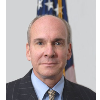
While some retired military leaders have served as United States ambassadors, Lt. General Karl W. Eikenberry is the first active-duty general (or admiral) ever to be appointed to a top diplomatic post. Having agreed to retire from the U.S. Army upon his confirmation on April 3, 2009, Eikenberry brings to the job a wealth of knowledge about Afghanistan, having served two tours of duty that included commanding all American forces in the war-torn nation.

 
A native of Goldsboro, North Carolina, Eikenberry graduated from Goldsboro High School in 1969. He attended the U.S. Military Academy, and later earned master’s degrees in East Asian studies from Harvard University (1979-1981) and in political science from Stanford University. He also was a National Security Fellow at the Kennedy School of Government at Harvard (1992-1993).
 
Eikenberry became fluent in Chinese after studying at the United Kingdom Ministry of Defence Chinese Language School in Hong Kong, earning an Interpreter’s Certificate in Mandarin Chinese from the British Foreign Commonwealth Office. He also was awarded an advanced degree in Chinese history from Nanjing University in China.
 
Throughout his four-decade military career, Eikenberry held a variety of posts, both in the field and at a desk. His operational posts included service as commander and staff officer with mechanized, light, airborne, and ranger infantry units in the continental United States, Hawaii, South Korea and Italy.
 
He also has served in various strategy, policy, and political-military positions, including as Deputy Director for Strategy, Plans, and Policy on the Army Staff; Senior Country Director for China, Taiwan, Hong Kong and Mongolia in the Office of the Secretary of Defense; Assistant Army and later Defense Attaché at the US Embassy in Beijing, China; U.S. Security Coordinator and Chief of the Office of Military Cooperation in Kabul, Afghanistan; and Director for Strategic Planning and Policy for the U.S. Pacific Command.
 
Eikenberry served three years in Afghanistan over the course of two separate tours of duty. During his first tour, he was chief of military cooperation, with responsibility for rebuilding Afghan security forces, and later he served 18 months (2005-2007) as commander of the Combined Forces Command, putting him in charge of all U.S. forces stationed in the country.
 
In 2007, Eikenberry was transferred to NATO to serve as deputy chairman of the Military Committee in Brussels, Belgium, a post he held until being nominated for the ambassadorship to Afghanistan.
 
He has published numerous articles on U.S. military training, tactics, and strategy, on Chinese ancient military history, and on Asia-Pacific security issues. He was previously the president of the Foreign Area Officers Association and is a member of the Council on Foreign Relations.
 
As ambassador to Afghanistan, Eikenberry brings with him a track record for spotting problems in the country. He was one of the first to warn about the resurgence of the Taliban, and the need to develop the Afghan Army into a legitimate fighting force—which is currently a top priority for the Obama administration.
 
Eikenberry reportedly has a good relationship with Afghanistan President Hamid Karzai, and while serving at NATO headquarters in Brussels, he developed close ties with European allies that could be useful in convincing them to provide more support for the Afghanistan mission.
 
But in choosing an Army general, Obama does risk creating friction between the U.S. embassy and the American military operation in Afghanistan, led by General David McKiernan. Stephen Biddle, a defense specialist at the Council on Foreign Relations who has studied Afghanistan, said, “Given that most people think the situation in Afghanistan has been getting worse, and that policies are going to have to change, you just wonder what the chemistry will be between these two guys.”
 
Eikenberry has already stirred some controversy within the State Department when he announced that he would be bringing his wife, Ching Eikenberry, with him to Afghanistan. Such a move would collide with State Department rules that forbid family members of diplomats in countries designated as “an unaccompanied post” due to security concerns.
 
Envoy Choice Cites Urgency of Boosting War Effort (by Robert Burns, Associated Press)
Obama Taps a General as the Envoy to Kabul (by Eric Schmitt, New York Times)