



Mongolia is located in central Asia, between Russia and China. Nomadic tribes originally settled the country, until Genghis Kahn united it in 1206 AD. The Mongol dynasty spread to nearly all of Asia and some of Europe. It was overthrown in 1368, and Mongolia was subsumed into the Qing Dynasty of China. For almost three centuries, from 1691-1911, Outer Mongolia was a Chinese province before briefly becoming part of Russia before it was returned to Chinese rule. China and Russia continued to influence the country throughout the early part of the 20th century, when Mongolia moved toward Communism. Though Mongolia tried to remain neutral after World War II, it quickly allowed the Soviet Union to install troops along its border to protect against Chinese aggression.
Lay of the Land: Mongolia is a landlocked, bowl-shaped nation in central Asia sandwiched between Russian Siberia and the People’s Republic of China. The dry, barren Gobi Desert occupies the southeastern quarter of the country, while mountain ranges rise above 13,000 feet in the central and western sections. Mongolia is characterized by extreme variations in temperature and a relatively small amount of annual precipitation. A third of the country is covered by the Gobi Desert, but on the mountain slopes further north can be found large forests and powerful rivers.
Mongolia was originally settled by nomadic tribes. In 1206 AD, Genghis Khan united these tribes into a single Mongolian state. Genghis Khan went on to conquer nearly all of Asia and European Russia and sent armies as far as central Europe and Southeast Asia. Genghis Kahn’s son, Kublai Kahn, conquered China and established the Yuan dynasty from 1279-1368. Marco Polo subsequently made Kublai Kahn famous in his writings.
The United States officially recognized Mongolia in January 1987. In September 1988, the US established its first embassy in Ulaanbaatar. Richard L. Williams was the first US ambassador to Mongolia.
In January 2004, Deputy Secretary of State Richard L. Armitage visited Mongolia, and President Bagabandi came to Washington for a meeting with President Bush in July 2004. President Bush and Secretary of State Condoleezza Rice visited Mongolia in November 2005. Defense Secretary Rumsfeld visited in October 2005, and Speaker of the House of Representatives Dennis Hastert visited Mongolia in August 2005.
The election of a pro-business Democratic Party in 2009 has paved the way for the development of Mongolia’s mineral industry. Mongolia has virtually every desirable mineral resource: gold, copper, uranium, iron ore and oil. Previously, resource industries were deterred from investing in Mongolia because of political instability and punitive taxes on copper and gold profits. These taxes were repealed by President Elbegdorj Tsakhia on the eve of a deal with Canadian company Ivanhoe Mines to develop the $5 billion Oyu Tolgoi copper and gold reserve, which is believed to be the size of Manhattan. The success of the deal has sparked international interest, and Mongolia is hoping to attract $25 billion in investments over the next five years to build the infrastructure needed to exploit its mineral wealth.
Supreme Court Ruling May Mean Millions in New Property Taxes
According to the State Department, Mongolia’s human rights problems consist of police abuse of prisoners and detainees; impunity; poor conditions in detention centers; arbitrary arrest, lengthy detention, and corruption within the judicial system; continued refusal by some provinces to register Christian churches; sweeping secrecy laws and a lack of transparency; domestic violence against women; international trafficking of persons; and some domestic cases of child prostitution.
Note: The United States established diplomatic relations with the People’s Republic of Mongolia on Jan 27, 1987. The Embassy in Ulaanbaatar was opened Apr 17, 1988, with Steven Mann as Chargé d’Affaires ad interim. Ambassador Williams resided in the District of Columbia.
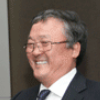 Altangerel, Bulgaa
The remote central Asian nation of Mongolia—sandwiched between big powers Russia and China—appointed a new ambassador to the U.S. in December 2012. Dr. Bulgaa Altangerel presented his credentials to President Obama on January 14, 2013, succeeding Bekhbat Khasbazar, who had served since April 2008.
Born October 25, 1955, in Khovd Province, Mongolia, Altangerel was handpicked at an early age by the Mongolian Foreign Ministry to receive a university education and eventually work for it. He earned a Master's degree in International Law at the Moscow Institute of International Relations in 1979, a Master's degree in Political Science at the Moscow Institute of Political Science in 1990, and a PhD in International Law at Ukraine's Kiev National Taras Shevchenko University in 2003.
In 1992, he was a visiting fellow for International Law and International Public Affairs at Columbia University, and from 1993 to 1997 he served as chair of the International Law Department at the Mongolian National University.
Upon joining the Mongolian Ministry of Foreign Affairs in 1979, Altangerel had two years of desk work before taking a four-year stint at the Mongolian embassy in Kabul, Afghanistan, from 1981 to 1985, which were some of the worst years of fighting between the Soviet-backed government of Babrak Karmal and the U.S.-backed rebels who eventually won and established the Taliban regime.
Altangerel served the next twelve years based in Ulan Bator, first at the Foreign Ministry as a member of the Inter-Governmental Commission on the inspection of state boundaries between Mongolia and the USSR from 1985 to 1988, then as foreign policy advisor to the Parliament of Mongolia, known as the State Great Hural, from 1990 to 1991, and finally as director of the Foreign Relations Division (later Department) of the Great Hural from 1991 to 1997, when he was also the responsible Secretary of the Mongolian Inter-Parliamentary Group. During Mongolia's transition from Soviet-style rule, Altangerel was involved in re-establishing the country's foreign policy apparatus for the new regime.
In 1997, Altangerel was assigned to his first ambassadorship, to serve as the first-ever Mongolian ambassador to Turkey, resident in Ankara and concurrently accredited to Bulgaria, Lebanon, Romania and Uzbekistan, from 1997 to 2003. He then served as director general for Legal and Consular Affairs of the Foreign Ministry from 2003 to 2008, and as director of the Law and Treaty Department from 2004 to 2008. He also spent five years (2007-2012) as a member of the board of directors of the Trust Fund for Victims of the International Criminal Court. From May 2008 to late 2012, Altangerel was ambassador to the United Kingdom, resident in London and concurrently accredited to South Africa, Ireland and Iceland.
Altangerel speaks Russian, English and Spanish. An enthusiastic equestrian, Altangerel owns a dozen horses and even attended Royal Ascot while posted to London.
He and his wife, Erdenee Chuluuntsetseg, have three daughters.
Official Biography (pdf)
- Table of Contents
- News
- Overview
- Basic Information
- History
- Newspapers
- History of U.S. Relations with Mongolia
- Current U.S. Relations with Mongolia
- Where Does the Money Flow
- Controversies
- Human Rights
- Debate
- Past Ambassadors
- Ambassador to the U.S.
- Embassy Web Site in the U.S.
- Comments
- Leave a comment


U.S. Ambassador to Mongolia
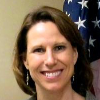
The landlocked nation of Mongolia, sandwiched between Russia and China, has long been one of the most remote and least developed places in the world. Its progress toward democracy and economic development since the end of the Cold War will likely be familiar to the career diplomat nominated by President Obama on March 5, 2012, to be the next ambassador to Mongolia.
Piper Anne Wind Campbell, daughter of Gay Campbell and David N. Campbell, a longtime director of Gibraltar Industries, which manufactures and distributes building materials. She was born circa 1966 in Buffalo, New York, and graduated Nichols School, a Buffalo prep school, in 1984. She later said her participation in a summer exchange program to Japan “definitely set me onto this career path in diplomacy.” Campbell earned a B.S. in Foreign Service with a certificate in Asian Studies at the Georgetown University School of Foreign Service in 1988, and a Masters in Public Administration at the Harvard University Kennedy School of Government in 1999.
She worked briefly for an organization promoting trade between Western New York and Canada prior to joining the Foreign Service in 1989. She began her career with service as a consular and administrative officer at the embassy in Manila, Philippines, followed by a stint as a general services officer providing support to the three U.S. missions in Brussels, Belgium (to the EU, to NATO and to Belgium). Campbell served in the State Department Operations Center from 1994 to 1995, and in the International Organizations Bureau from 1995 to 1996. Detailed to the civil affairs section of a UN peacekeeping mission in the Balkans from 1996 to 1998, Campbell helped the US Agency for International Development (USAID) establish an office in Eastern Slavonia, Croatia, in 1998.
After taking a one-year leave to earn her M.P.A. in 1999, Campbell covered Asian issues and Security Council reform at the U.S. Mission to the UN in New York from 1999 to 2002, and served as counselor for Humanitarian Affairs at the U.S. Mission to the UN in Geneva, Switzerland, from 2002 to 2006. Campbell then served at the Embassy in Phnom Penh, Cambodia, first as deputy chief of mission, starting September 20, 2006, and then as chargé d’affaires ad interim from August 25, 2008, to January 19, 2009.
Back in Washington, Campbell served as chief of staff to Jack Lew, the deputy secretary of state for Management and Resources, until being named consul general at the U.S. Consulate General in Basrah, Iraq, on July 12, 2011.
Piper Campbell has donated $3,200 to Democratic candidates and organizations over the years, with $1,500 going to the 2004 presidential campaign of John Kerry and $700 to the Democratic National Committee in 2004; she also donated $1,000 to Barack Obama’s campaign in 2008, according to OpenSecrets.org. An avid runner, Campbell has competed in marathons and half marathons on three continents.
-Matt Bewig
Buffalo Native Nominated as Ambassador to Mongolia (Buffalo News)
more
Comments