



Due to colonization by the British Empire and subsequent immigration waves and territory adjustments, South Africa is ethnically, religiously, linguistically, and culturally diverse. Although originally settled by speakers of the Khosian language, South Africa was populated mainly by Bantu, who migrated from central Africa. The Nguni joined these two groups in 1488, around the time the Portuguese arrived on the Cape of Good Hope. Permanent European settlement began in 1652, when the Dutch East India Company established a trading post, and over the next few decades, French, Dutch and German settlers arrived. These three groups combined to form the Afrikaner or Boer ethnic group. In the 18th and 19th century, the Boers came into conflict with the native populations as well as the British, who had gained control of the country. Although Boer republics were established, by the late 1800s, early 1900s, the republics were subsumed into the British Empire after several conflicts.
Lay of the Land: The Republic of South Africa sprawls across the foot of the African continent. The Indian Ocean washes the east coast of the country, and the Atlantic borders the west coast. The two oceans merge south of the port city of Cape Town.
South Africa has been populated for thousands of years, most notably by speakers of the Khosian language, who continue to inhabit the western part of the country. The Bantu make up the largest part of South African’s population today, and migrated southward from central Africa, settling in the Transvaal region sometime before 100 AD.
Diplomatic relations between the US and South Africa were begun in 1799, when an American consulate was opened in Cape Town.
Current relations between the US and South Africa are comfortable. The two countries cooperate on a number of key issues, including counter-terrorism, fighting HIV/AIDS, and military relations. The two countries also enjoy strong economic and trade relations, and through the US Agency for International Development (USAID), the US provides development assistance to South Africa.
US imports from South Africa are led by two billion-dollar items: precious metals and diamonds. From 2004 to 2008, precious metals rose from $1.7 billion to $2.97 billion, and gem diamonds (uncut or unset), went up from $754 million to $1 billion.
US Africa Command Raises Controversy
According to the State Department, “South African police used lethal force during apprehensions which resulted in a significant number of deaths. Some police officers reportedly tortured, beat, raped, and otherwise abused suspects. Police torture and abuse allegedly occurred during interrogation, arrest, detention, and searches of persons’ homes. There was a 13 percent increase in the number of deaths as a result of police action in 2008. Police forcibly dispersed demonstrators on several occasions during 2008, resulting in injuries. Incidents of police harassment against foreigners continued, particularly during coordinated police raids in areas where foreign nationals resided. There were allegations of police abuse during sweeps and home searches and other criticisms against government legislation and practices.
Ralph J. Totten
Appointment: Dec 19, 1929
Presentation of Credentials: Feb 18, 1930
Termination of Mission: Promoted to Envoy Extraordinary and Minister Plenipotentiary
Note: Commissioned to the Union of South Africa.
Appointment: Jun 20, 1930
Presentation of Credentials: Sep 8, 1930
Termination of Mission: Left post Apr 12, 1937
Note: Commissioned to the Union of South Africa.
Appointment: Jul 31, 1937
Presentation of Credentials: Oct 22, 1937
Termination of Mission: Left post Aug 13, 1942
Note: Commissioned to the Union of South Africa.
Appointment: May 21, 1942
Presentation of Credentials: Oct 21, 1942
Termination of Mission: Left post Nov 21, 1943
Note: Commissioned to the Union of South Africa.
Appointment: Mar 21, 1944
Presentation of Credentials: Jun 14, 1944
Termination of Mission: Left post May 30, 1948
Note: Commissioned to the Union of South Africa.
Appointment: Mar 24, 1948
Presentation of Credentials: Jun 11, 1948
Termination of Mission: Promoted to Ambassador Extraordinary and Plenipotentiary
Note: Commissioned to the Union of South Africa.
Appointment: Mar 2, 1949
Presentation of Credentials: Mar 23, 1949
Termination of Mission: Left South Africa, Dec 20, 1949
Note: Commissioned to the Union of South Africa.
Appointment: May 23, 1950
Presentation of Credentials: Oct 4, 1950
Termination of Mission: Died at Capetown, Feb. 18, 1951
Note: Commissioned to the Union of South Africa.
Appointment: Aug 22, 1951
Presentation of Credentials: Oct 18, 1951
Termination of Mission: Left post Aug 15, 1954
Note: Commissioned to the Union of South Africa.
Appointment: Sep 15, 1954
Presentation of Credentials: Nov 29, 1954
Termination of Mission: Left post Aug 11, 1956
Note: Commissioned during a recess of the Senate; recommissioned after confirmation on Dec 3, 1954. Commissioned to the Union of South Africa.
Appointment: Jul 26, 1956
Presentation of Credentials: Oct 9, 1956
Termination of Mission: Left post Jan 24, 1959
Note: Commissioned to the Union of South Africa.
Appointment: Feb 16, 1959
Presentation of Credentials: Apr 22, 1959
Termination of Mission: Left post Apr 6, 1961
Note: Commissioned to the Union of South Africa.
Appointment: Apr 6, 1961
Presentation of Credentials: May 22, 1961
Termination of Mission: Reaccredited when South Africa became a republic
Note: Commissioned to the Union of South Africa.
Presentation of Credentials: [May 31, 1961]
Termination of Mission: Left post Nov 17, 1965
Note: New letter of credence submitted to the Foreign Office on May 31, 1961; not formally presented.
Appointment: Oct 20, 1965
Presentation of Credentials: Jan 8, 1966
Termination of Mission: Left post Jun 5, 1970
Appointment: Jul 24, 1970
Presentation of Credentials: Sep 10, 1970
Termination of Mission: Left post Apr 7, 1975
Appointment: Mar 17, 1975
Presentation of Credentials: May 14, 1975
Termination of Mission: Left post Apr 19, 1978
Appointment: May 3, 1978
Presentation of Credentials: Jun 5, 1978
Termination of Mission: Left post Jul 22, 1981
Appointment: Mar 29, 1982
Presentation of Credentials: Apr 20, 1982
Termination of Mission: Left post Oct 4, 1986
Appointment: Oct 16, 1986
Presentation of Credentials: Nov 27, 1986
Termination of Mission: Left post May 22, 1989
Appointment: Aug 7, 1989
Presentation of Credentials: Sep 8, 1989
Termination of Mission: Left post Jul 5, 1992
Appointment: Jul 14, 1992
Presentation of Credentials: Sept 21, 1992
Termination of Mission: Left post Dec 14, 1995
Appointment: Dec 19, 1995
Presentation of Credentials: Feb 27, 1996
Termination of Mission: Left post Nov 7, 1999
Appointment: Nov 16, 1999
Presentation of Credentials: Jan 21, 2000
Termination of Mission: Left post Jun 22, 2001
Appointment: Nov 5, 2001
Presentation of Credentials: Nov 29, 2001
Termination of Mission: Left post Jul 28, 2004
Appointment: May 25, 2004
Presentation of Credentials: Aug 10, 2004
Termination of Mission: Left post Aug 26, 2005
Appointment: Jul 5, 2006
Presentation of Credentials: Aug 15, 2006
Termination of Mission: Jan 20, 2009
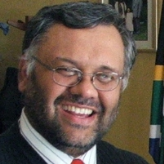 Rasool, Ebrahim
Prior to becoming South Africa’s ambassador to the United States in July 2010, Ebrahim Rasool was in the thick of his country’s politics. The Muslim leader spent years fighting the apartheid government and eventually rose to become a regional governor, during which he reportedly paid journalists to write friendly articles about his leadership. According to a U.S. State Department cable released by WikiLeaks, Rasool introduced himself to U.S. ambassador Don Gips as “a non-violent Islamic militant, a non-fundamentalist revolutionary, and a non-extremist radical.”
- Table of Contents
- News
- Overview
- Basic Information
- History
- Newspapers
- History of U.S. Relations with South Africa
- Current U.S. Relations with South Africa
- Where Does the Money Flow
- Controversies
- Human Rights
- Debate
- Past Ambassadors
- Ambassador to the U.S.
- Embassy Web Site in the U.S.
- Comments
- Leave a comment

U.S. Ambassador to South Africa

The new ambassador to South Africa, who was sworn into the post on August 26, is a former union leader who was born in Africa. Patrick Gaspard succeeded Donald Gips, who served starting in September 2009.
Gaspard was born in 1967 in the Democratic Republic of Congo to Haitian parents who had moved there in response to an appeal by Prime Minister Patrice Lumumba for French-speaking academics of African descent. His father, a lawyer, was involved in some of the freedom movements in Africa at the time, and Gaspard credits him as a source of his political values:
“I think my father was always completely inspired by just how wide open [the] democratic discourse is in this country, and he instilled in me from my earliest years a sense that I had an obligation to give back to my community and to serve to the greatest degree possible,” Gaspard has said.
Gaspard immigrated to New York City with his parents at the age of three. Although he attended Columbia University, Gaspard left without a degree in order to jump into the shark tank known as New York City politics.
After working as a community organizer around school reform issues, Gaspard worked on the 1988 Jesse Jackson presidential campaign and David Dinkins’s successful 1989 mayoral bid. Enjoying the spoils of victory, Gaspard served as a special assistant in the Office of Manhattan Borough President and special assistant in the Office of Mayor Dinkins, and from 1998 to 1999 he was chief of staff to the New York City Council.
In 1999, he organized protests after the killing of Amadou Diallo, an unarmed immigrant from Guinea who was shot at 41 times, and hit 19 times, by four New York City police officers.
In 2003 and 2004, Gaspard was national deputy field director for Gov. Howard Dean’s Democratic presidential primary campaign, and after Dean conceded defeat in 2004, was national field director for America Coming Together, a Democratic-leaning get-out-the-vote organization.
Gaspard served nine years as executive vice president for politics and legislation for Local 1199-Service Employees International Union-United Healthcare Workers East labor union, the largest local union in the United States. He helped coordinate political activity and government relations on behalf of 300,000 members.
Although he turned down a chance to join the Obama campaign in 2007, Gaspard signed on as Obama’s national political director in June 2008 and after the election served as associate personnel director of President-elect Obama’s transition team. He then worked in the White House as assistant to the president and director of the Office of Political Affairs from 2009 to 2011. As the re-election effort loomed, he moved over to the Democratic National Committee, where he was executive director from 2011 to 2013.
Generally a low-key, low-profile figure, Gaspard let his feelings get the better of him the day the Supreme Court upheld the Affordable Care Act, tweeting triumphantly, “It’s constitutional. Bitches.” He apologized within a few minutes.
Gaspard is a huge fan of comic books, and has said that Batman is his favorite character. He is married to Raina Gaspard and has two children, Indigo and Cybele. Widely considered a devoted father, in 2006 he cited raising two children of color in America as his most important accomplishment.
-Matt Bewig
To Learn More:
Patrick Gaspard, Top Obama Aide, Headed to South Africa as Ambassador (by Melba Newsome, The Grio)
Statement Before the Senate Foreign Relations Committee (pdf)
more
Comments