



Chad has been plagued by poor development, human rights abuses and almost uninterrupted conflict since independence. As the 12th poorest country in the world, Chad is regularly placed among the most corrupt countries on Transparency International’s corruption perception index and is second only to Somalia on Foreign Policy’s Failed States Index. Further complicating its prospects for peace and stability, Chad has had to deal with the spillover from the Darfur crisis in neighboring Sudan, placing enormous pressure on its limited natural resources with the arrival of 220,000 refugees, and destabilizing the region with frequent incursions by Arab militia and Chadian rebels from Sudan. The most promising economic development for Chad is oil. This decade the country began pumping petroleum from its previously untapped underground supplies, thanks to help from friendly foreign oil companies, including ExxonMobil and Chevron. Oil is the primary trade connection between the United States and Chad. The US also has provided the Chadian government, which has been the focus of numerous coups and human rights complaints, with millions of dollars in military aid.
Lay of the Land: In north central Africa, Chad rises from an elevation of 750 feet at Lake Chad in the west to almost 12,000 feet in the northern Tibesti Mountains. The heavy rains of the southern and central regions drain into Lake Chad, but the northern region is a desert.
Currently, relations between the United States and Chad are described as “cordial.” The US has an embassy in N’Djamena, which was established in 1960. The US sent food and agricultural aid to remote areas of the country in the early 1970s, when drought threatened the population. The aid included grain, animal health services and technical assistance. Other agreements helped to build roads in the area of Lake Chad.
Wall Street Journal)
Chad’s government under Idriss Déby has recently been helpful to the US in fighting global terrorism, and the country has provided shelter for approximately 250,000 refugees from Darfur, along the country’s eastern border.
Oil exploitation in the southern Doba region of Chad began in June 2000, with ExxonMobil leading a consortium (that includes Chevron) in a $3.7 billion project to export oil via a 1,000-km pipeline through Cameroon to the Gulf of Guinea. Beginning in late 2000, development of Chad’s petroleum sector stimulated economic growth by attracting major investment and increased levels of US trade.
US Aids Chadian Government Despite Use of Child Soldiers
The strike by more than 400 workers lasted from July 4-6 in the Doba oil fields of Kome, Miandoum and Bolobo. Oil workers served notice that future strikes would occur, possibly disrupting production of the 200,000 barrel-a-day output sent through the Chad-Cameroon pipeline, unless workers’ demands were met. The strike was prompted by Esso-Tchad when it offered a pay increase that workers considered unacceptable. Management offered a 7.5% pay increase while workers wanted a 25% boost in order to bring pay levels closer to oil workers in Cameroon.
The Doba fields, connected to the Cameroon port of Kribi by a 1,063-kilometre pipeline, belong to a consortium of oil companies, with ExxonMobil holding 40%, Malaysia’s Petronas 35%, and Chevron a 25% stake.
In May 2006 President Idriss Déby, leader of the Patriotic Salvation Movement (MPS), was elected to a third term in what unofficial observers characterized as an “orderly, but seriously flawed election” boycotted by the opposition. Déby has ruled the country since taking power in a 1990 coup. Political power remained concentrated in the hands of a northern oligarchy composed of the president’s Zaghawa ethnic group and its allies. The executive branch effectively dominated the legislature and judiciary, thereby eliminating potential challenges to a culture of impunity for the ruling minority. Civilian authorities did not maintain effective control of the security forces.
W. Wendell Blancke
Appointment: Dec 12, 1960
Presentation of Credentials: Jan 9, 1961
Termination of Mission: Superseded, May 28, 1961
John A. Calhoun
Appointment: Apr 27, 1961
Presentation of Credentials: May 28, 1961
Termination of Mission: Left post, Apr 1, 1963
Appointment: Apr 25, 1963
Presentation of Credentials: Aug 12, 1963
Termination of Mission: Left post, Jan 20, 1967
Appointment: Aug 11, 1967
Presentation of Credentials: Sep 23, 1967
Termination of Mission: Left post, May 9, 1969
Appointment: Jul 8, 1969
Presentation of Credentials: Aug 21, 1969
Termination of Mission: Left post, Jun 29, 1972
Appointment: Oct 12, 1972
Presentation of Credentials: Dec 6, 1972
Termination of Mission: Left post, Jun 23, 1974
Appointment: Oct 3, 1974
Presentation of Credentials: Dec 7, 1974
Termination of Mission: Left post, Feb 23, 1976
Appointment: Sep 3, 1976
Presentation of Credentials: Oct 15, 1976
Termination of Mission: Left post, Jun 19, 1979
Presentation of Credentials: Nov 17, 1979
Termination of Mission: Embassy closed Mar 24, 1980
Appointment: Apr 28, 1983
Presentation of Credentials: May 27, 1983
Termination of Mission: Left post, Jul 23, 1985
Appointment: Aug 1, 1985
Presentation of Credentials: Sep 2, 1985
Termination of Mission: Left post, Oct 4, 1988
Appointment: Aug 12, 1988
Presentation of Credentials: Oct 15, 1988
Termination of Mission: Left post, Nov 15, 1989
Appointment: Jun 27, 1990
Presentation of Credentials: Aug 4, 1990
Termination of Mission: Left post, Jul 21, 1993
Appointment: Jul 16, 1993
Presentation of Credentials: Sep 3, 1993
Termination of Mission: Left post, Jun 26, 1996
Appointment: Jun 11, 1996
Presentation of Credentials: Sep 12, 1996
Termination of Mission: Left post Aug 6, 1999
Appointment: Jul 7, 1999
Presentation of Credentials: Oct 10, 1999
Termination of Mission: Left post Jan 16, 2004
Appointment: May 12, 2004
Presentation of Credentials: Jun 16, 2004
Termination of Mission: 2007
 Djoumbe, Maintine
The north-central African nation of Chad—which is fourth (after Somalia, Congo and Sudan) on the Fund for Peace-Foreign Policy Failed States Index and is the only nation that uses child soldiers and yet receives U.S. military aid, sent a new ambassador to Washington last summer. Career diplomat Maitine Djoumbe presented his credentials to President Obama on July 30, 2012, succeeding Mahamoud Adam Bechir, who had served since December 2004. Djoumba is concurrently accredited as Chad's ambassador to Canada, as well.
Born New Year's Day 1953 in Moukoulou, Chad (then part of French Equatorial Africa), Djoumbe earned a Master's Degree in Administration and Management at the Administrative Staff College in Paris, France, in 1978.
In a long career at the Chad Ministry of Foreign Affairs, Djoumbe has served as ambassador to several other African nations, as well as other positions. He was ambassador to the Democratic Republic of Congo from 1982 to 1987, ambassador to Sudan from 1987 to 1989, and ambassador to Algeria from 1989 to 1991.
Although the available public record is sketchy regarding Djoumbe's activities during the chaotic years after the 1990 coup that put Idriss Déby in power (where he remains today), Djoumbe emerged as deputy general director of the Foreign Ministry from 1999 to 2001. He then served as ambassador to the Central African Republic from 2001 to 2003, and as ambassador to Ethiopia from 2003 to 2007, concurrently accredited as Chad's permanent representative to the African Union while resident in Addis Ababa.
Djoumbe next received his first posting to Europe, serving as ambassador to Belgium from 2007 to 2010, concurrently accredited as Chad's permanent representative to the European Union while resident in Brussels.
In an odd career twist, Djoumbe then served as Minister of Mines and Geology from 2010 to 2011.
Maitine Djoumbe is married to Naomi Darkarim, with whom he has six children.
Entrevue avec son excellence Maitine Djoumbe, ambassadeur du Tchad aux Etats-Unis (Interview with Maitine Djoumbe) (video, in French)
Chad’s Embassy in the United States
- Table of Contents
- News
- Overview
- Basic Information
- History
- Newspapers
- History of U.S. Relations with Chad
- Current U.S. Relations with Chad
- Where Does the Money Flow
- Controversies
- Human Rights
- Debate
- Past Ambassadors
- Ambassador to the U.S.
- Embassy Web Site in the U.S.
- Comments
- Leave a comment

U.S. Ambassador to Chad
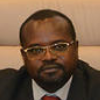
Mahamat Nasser Hassane was appointed to be Chad’s ambassador to the United States in December, 2013. It’s the first diplomatic posting for Hassane, who has long experience in his country’s oil ministry.
Hassane was born in 1964 in N’djamena, Chad’s capital and largest city. He has a B.S. in geology from a university in the United Arab Emirates and a Ph.D with a specialization in public rights and African oil law from the University of Nantes in France.
Hassane’s government service began as a petroleum engineer in Chad’s Ministry of Energy. In 2003, he was appointed minister of oil and energy for the first time. Three years later, Hassane was fired by President Idriss Deby because some members of the consortium drilling for oil in Chad, ChevronTexaco and Petronas, didn’t pay the taxes that were levied. According to the newsletter Africa Energy Intelligence, Hassane was in the mid-2000s jailed by Deby, who runs a country some consider the most corrupt in the world.
After his departure from the Energy Ministry, Hassane was a consultant for a year, and then in 2007 was named a senior advisor to Deby. The following year, Hassane was once again named minister of oil and energy. Deby fired him from that post again in 2010, reportedly because Hassane pestered the oil consortium, led by ExxonMobil, about falling production.
In 2011, Hassane was named governor of the Bahar El Gazel region of central Chad. He held that job until being named to the Washington post.
Hassane is married.
-Steve Straehley
To Learn More:
morePrevious U.S. Ambassador to Chad
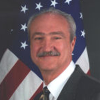
The troubled African nation of Chad will soon have a new ambassador from the U.S., a career member of the Senior Foreign Service who has spent almost his entire career serving in Africa. James A. Knight will succeed career diplomat Mark Boulware, who has served as U.S. Ambassador in ‘'Djamena since September 2010.
Born circa 1949, James Alcorn Knight served in the U.S. Army during the Vietnam War from 1970 to 1973. He earned a B.A. and an M.A. at Wichita State University and a PhD in Anthropology at the University of Chicago in 1988, with a dissertation entitled, “Being Twareg: Social Order and Process in Central Niger.”
Prior to joining the Foreign Service, Knight worked as a software developer in the private sector and an economic development specialist for the U.S. Agency for International Development in the African nation of Niger.
At the State Department, Knight's early career assignments included service as the general services officer at the embassy in Lagos, Nigeria; political, economic and consular officer at the embassy in Banjul, Gambia, from 1993 to 1995; political officer at the embassy in Antananarivo, Madagascar, from 1995 to 1998; and country affairs officer for Ethiopia in the Department’s Office of East African Affairs from 1998 to 2001.
Knight then served two straight stints as deputy chief of mission, first at the embassy in Praia, Cape Verde, from 2001 to 2003, and then at the embassy in Luanda, Angola, from 2004 to 2006. Like many other non-Middle East specialists, Knight was called on to serve a “hardship posting” in Iraq, serving as team leader of the Ninewa Provincial Reconstruction Team in Mosul from 2006 to 2007.
Back in Washington, Knight served from 2007 to 2009 as director of the Office of East African Affairs, which has purview over relations with Comoros, Djibouti, Eritrea, Ethiopia, Kenya, Madagascar, Mauritius, Seychelles, Somalia, Tanzania, and Uganda.
Knight was appointed to his first ambassadorship by President Barack Obama in 2009, serving as ambassador to the West African nation of Benin from September 2009 to December 2012, when he was appointed assistant chief of mission at the embassy in Baghdad.
Knight and his wife, Dr. Amelia Rector (Bell) Knight, a crisis management specialist at the Foreign Service Institute, have three sons and a daughter. She is the great-great-granddaughter of Henry Massey Rector (Democrat), who was governor of Arkansas from 1860 to 1862, and James Lusk Alcorn (Whig/Republican), who was governor of Mississippi from 1870 to 1871, U.S. Senator from 1871 to 1877, and founder of Alcorn State University. In 2008, the Knights contributed to the presidential campaigns of Barack Obama, John McCain and Hillary Clinton.
Through no apparent fault of his own, Knight has been, in a sense, victimized by the notorious Internet confidence artists of Nigeria, who have run a scam using Knight's name.
To Learn More:
Testimony before the Senate Foreign Relations Committee (pdf)
more
Comments