



Roughly the size of Oregon, Uganda is located in east central Africa. Originally settled by hunter-gatherers thousands of years ago, Uganda was subsequently populated by Bantu, Nilotic and Ateker people. Arab traders first made contact with Uganda in the 1800s, followed by British explorers and missionaries. By 1888, British control spread throughout the country, and in 1894, Uganda was placed under formal British protection. The country remained under British control until 1961, when it was granted internal self-government. On October 9, 1962, Uganda gained full independence. Over the next several years, political control teetered between those in favor of a centralized state and those favoring a loose federation of kingdoms. In 1966, Prime Minister Milton Obote suspended the constitution, assumed all government powers, and removed the ceremonial president and vice president. This paved the way for a series of leaders and abuses that followed for the next several decades. In January 1971, armed forces commander Idi Amin overthrew Obote and quickly gave himself absolute power. His rule as characterized by extreme human rights abuses and a rapidly declining economy. Finally, Tanzanian troops backed by Ugandan exiles overthrew Amin in 1979.
Lay of the Land: Located in east central Africa, Uganda has been called the “Pearl of Africa.” A lush land well watered by lakes, rivers, and heavy annual rainfall, only the northeastern corner of the country is insufficiently irrigated. Southeastern Uganda forms an arc around the northwestern part of Lake Victoria, Africa’s largest lake. In the west is Lake Mobuto Sese Seko (formerly Lake Albert); along with Lake Idi Amin (formerly Lake Edward), it forms part of the border with Democratic Republic of the Congo. Between the two western lakes rise the magnificent Ruwenzori Mountains, also called the Mountains of the Moon because of their bluish tinge.
Hunter-gatherers settled Uganda thousands of years ago. Around 1500 AD, Bantu tribes from central and western Africa came to occupy the southern areas of the country. They used agriculture, ironworking and social organization that eventually led to the development of centralized kingdoms.
Diplomatic relations between the US and Uganda were established on October 9, 1962, with Olcott H. Deming as Chargé d’Affaires ad interim. New credentials were presented when Uganda became a republic, on January 6, 1964.
The US hopes to provide development assistance to reduce poverty in Uganda by focusing on health, education and agriculture. The US also provides large amounts of humanitarian assistance to populations without access to adequate food supplies because of conflict, drought and other factors. Both the US Agency for International Development (USAID) and the Centers for Disease Control (CDC) have major programs to fight the HIV/AIDS pandemic. Peace Corps Volunteers are active in primary teacher training and HIV/AIDS programs. Other programs promote trade and investment, curb environmental degradation, encourage the peaceful resolution of local and international conflicts, and promote honest and open government. US-Ugandan relations also benefit from significant contributions to health care, nutrition, education, and park systems from US missionaries, non-governmental organizations, private universities, HIV/AIDS researchers, and wildlife organizations.
US imports from Uganda totaled $57.7 million in 2010 while US exports to Uganda totaled $94.4 million.
Uganda-Iran Oil Deal Angers US
According to the State Department, “Serious human rights problems in the country included arbitrary and politically motivated killings; vigilante killings; politically motivated abductions; mob and ethnic violence; torture and abuse of suspects and detainees; harsh prison conditions; official impunity; arbitrary and politically motivated arrest and detention; incommunicado and lengthy pretrial detention; restrictions on the right to a fair trial and on freedoms of speech, press, assembly, association, and religion; restrictions on opposition parties; electoral irregularities; official corruption; violence and discrimination against women and children, including female genital mutilation (FGM), sexual abuse of children, and the ritual killing of children; trafficking in persons; violence and discrimination against persons with disabilities and homosexuals; restrictions on labor rights; and forced labor, including child labor.”
Note: The Embassy in Kampala was established on Oct 9, 1962, with Olcott H. Deming as Chargé d’Affaires ad interim.
Appointment: Jan 7, 1963
Presentation of Credentials: Jan 14, 1963
Termination of Mission: Presented new credentials on Jan 6, 1964, when Uganda became a republic; left post Jun 26, 1966
Note: Commissioned during a recess of the Senate; recommissioned after confirmation on Mar 12, 1963.
Appointment: Jun 27, 1966
Presentation of Credentials: Jul 22, 1966
Termination of Mission: Left post Sep 2, 1969
Appointment: Mar 17, 1970
Presentation of Credentials: Jun 30, 1970
Termination of Mission: Left post Jul 19, 1972
Appointment: Jun 12, 1972
Presentation of Credentials: Jul 30, 1972
Termination of Mission: Left post Feb 9, 1973
Note: Robert V. Keeley was serving as Chargé d’Affaires ad interim when all US diplomatic personnel were withdrawn from Uganda, Nov 10, 1973.
Appointment: May 23, 1980
Presentation of Credentials: Jun 13, 1980
Termination of Mission: Left post May 31, 1983
Appointment: Apr 5, 1983
Presentation of Credentials: Jul 1, 1983
Termination of Mission: Left post Aug 14, 1985
Appointment: Oct 28, 1985
Presentation of Credentials: Nov 22, 1985
Termination of Mission: Left post Aug 17, 1988
Appointment: Aug 12, 1988
Presentation of Credentials: Nov 4, 1988
Termination of Mission: Left post Aug 28, 1991
Appointment: Jul 2, 1991
Presentation of Credentials: Sep 18, 1991
Termination of Mission: Left post Aug 9, 1994
Appointment: Aug 26, 1994
Presentation of Credentials: Oct 6, 1994
Termination of Mission: Left post Aug 1, 1997
Appointment: Nov 7, 1997
Presentation of Credentials: Dec 4, 1997
Termination of Mission: Left post Jul 9, 1999
Appointment: Aug 9, 1999
Presentation of Credentials: Oct 11, 1999
Termination of Mission: Left post Jul 5, 2002
Appointment: Oct 3, 2002
Presentation of Credentials: Nov 17, 2002
Termination of Mission: Sep 30, 2005
State of Residency: Texas
Foreign Service officer
Title: Ambassador Extraordinary and Plenipotentiary
Appointment: Feb 21, 2005
Presentation of Credentials: Apr 26, 2006
Termination of Mission:
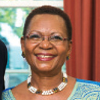 Wonekha, Oliver
Oliver Wonekha presented her credentials as Uganda’s ambassador to the United States to President Barack Obama on July 18, 2013. The day had been a long time coming; Wonekha had been named ambassador the previous summer, but government financial problems held up her assuming the post in Washington.
Wonekha, 63, was born and raised in a rural area of Uganda near the Kenyan border. She was the oldest of seven children, the rest of whom were boys. Her parents were teachers, and she initially followed them into the teaching profession. Wonekha earned a Bachelor of Science with honors from Kampala’s Makerere University.
She also worked in the coffee industry for 30 years before entering politics. Wonekha entered Uganda’s parliament in 2001, serving from the Mbale district. She won a seat again in 2006, but this time from the Bududa district. She worked on agricultural issues during her time in the legislature and was named chair of the agricultural committee in her second term. When she left office, she ran for a seat in the East Africa Legislative Assembly, but wasn’t successful.
Wonekha has been quoted as lamenting the gender difference between legislators in her country. Ugandan male legislators are able to network at pubs and clubs after the sessions, while women are still expected “to rush home and make your spouse comfortable.” She also spoke of all legislators being expected by constituents to provide municipal services out of their own pockets.
One of Wonekha’s efforts since coming to Washington has been to help introduce a common East African Tourist Visa, along with Rwanda and Kenya, to encourage travel to those countries.
Wonekha and the Ugandan embassy have been the focus of demonstrations by those protesting Uganda’s draconian anti-gay laws.
Wonekha’s first name—Oliver—has caused some confusion, with some diplomatic directories referring to her as “His Excellency.”
-Steve Straehley
To Learn More:
Obama Receives Wonekha as Ugandan envoy (by Joyce Namutebi, New Vision)
The Berated Politicians: Other Ways of Reading Miriam, Michal, Jezebel and Athaliah in the Old Testament in Relation to Political and Gender Quandary in Sub-Saharan Africa, Kenya and Uganda as Case Studies (by Wabyanga Robert Kuloba) (pages 133-134) (pdf)
- Table of Contents
- News
- Overview
- Basic Information
- History
- Newspapers
- History of U.S. Relations with Uganda
- Current U.S. Relations with Uganda
- Where Does the Money Flow
- Controversies
- Human Rights
- Debate
- Past Ambassadors
- Ambassador to the U.S.
- Embassy Web Site in the U.S.
- Comments
- Leave a comment

U.S. Ambassador to Uganda
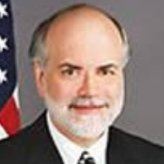
A career Senior Foreign Service Officer whose career has included several postings in Southern Asia will be the next ambassador to the small Himalayan nation of Nepal. President Barack Obama nominated Scott H. DeLisi to the post on November 17, 2009, subject to Senate confirmation. A native of Minnesota who grew up in South St. Paul, DeLisi earned a B.A. in 1977 and a J.D. in 1980, both from the University of Minnesota. Nepal, a landlocked country sandwiched between large powers India and China, has recently emerged from a decade long civil war, and became a republic in 2008.
Previous U.S. Ambassador to Uganda
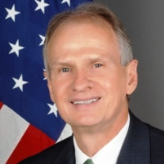
Jerry P. Lanier was confirmed as U.S. Ambassador to Uganda on August 4, 2009. In an October 19, 2009, cable released by WikiLeaks, Lanier praised Uganda’s progress, but warned that Ugandan President Yoweri Museveni’s “autocratic tendencies, as well as Uganda's pervasive corruption, sharpening ethnic divisions, and explosive population growth are eroding Uganda's status as an African success story."
Comments