



Lay of the Land: The DRC, located in Central Africa, is bordered by Angola and Zambia to the south, Burundi, Rwanda, Tanzania and Uganda to the east, the Central African Republic and Sudan to the north, and the Republic of the Congo to the west.
The United States first established diplomatic relations with the DRC in 1960. A crisis soon erupted in the country that drew the attention of the Eisenhower and Kennedy administrations. For 14 months after the outbreak of the crisis in July 1960, the threat of Soviet domination of the Congo through Soviet influence on the charismatic Patrice Lumumba and on his followers was a major concern of both Eisenhower and Kennedy. The formation of a moderate coalition government in August 1961 seemed to bring an end to the crisis, but the outbreak of hostilities in Katanga in September 1961 initiated a new phase.
Overall, relations between the Democratic Republic of the Congo and the US are positive. The US has played a part in the DRC’s peace process. In 2004, the US facilitated the signing of a regional security agreement between the DRC, Rwanda and Uganda. Burundi joined this Tripartite Commission in September 2005, and when this happened, the group was renamed Tripartite Plus.
US imports from the DRC include feedstuff and food grains, which increased from $678,000 in 2006 to $1.1 million in 2007; crude oil, which increased from $0 in 2006 to $41 million in 2007 (which was down from $85.8 million in 2003); “miscellaneous nonferrous metals,” which increased from $744,000 in 2006 to $1.37 million in 2007; “artwork, antiques, stamps, and other collectibles,” which increased from $4.1 million in 2006 to $6.1 million in 2007; and “gem diamonds-uncut or unset,” which increased from $67 million in 2006 to $147.9 million in 2007 (up from just $31 million in 2003).
Human Rights Abuses Tied to DRC Copper Mining Company
In all areas of the DRC, the government’s human rights record remained poor, according to the 2007 State Department report, and security forces acted with impunity, committing numerous serious abuses, including unlawful killings, disappearances, torture and rape, and engaging in arbitrary arrests and detention. Other problems included harsh and life-threatening conditions in prisons and detention facilities, prolonged pretrial detention, lack of an independent and effective judiciary, and arbitrary interference with privacy, family, and home also remained serious problems. Security forces recruited and retained child soldiers and compelled forced labor by adults and children. Members of the security forces also continued to abuse and threaten journalists, contributing to a decline in freedom of the press. Government corruption remained pervasive. Security forces at times harassed local human rights advocates and UN human rights investigators. Discrimination against women and ethnic minorities, trafficking in persons, child labor, and lack of protection of workers’ rights continued to be pervasive throughout the country.
Note: The Embassy in Leopoldville (now Kinshasha) was established on Jun 30, 1960, with John D. Tomlinson as Chargé d'Affaires ad interim.
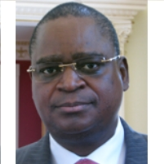 Mombouli, Serge
Serge Mombouli has served as ambassador of the Republic of Congo to the United States since July 2001.
Embassy of the Democratic Republic of Congo
- Table of Contents
- News
- Overview
- Basic Information
- History
- Newspapers
- History of U.S. Relations with Congo, Democratic Republic
- Current U.S. Relations with Congo, Democratic Republic
- Where Does the Money Flow
- Controversies
- Human Rights
- Debate
- Past Ambassadors
- Ambassador to the U.S.
- Embassy Web Site in the U.S.
- Comments
- Leave a comment

U.S. Ambassador to Congo, Democratic Republic
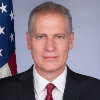
Todd Philip Haskell, a career member of the Foreign Service, was nominated by President Barack Obama on January 17, 2017, to be the next ambassador to the Republic of the Congo.
Haskell was born in 1962 and is from Hewlett Harbor, New York, on Long Island. He graduated from Lawrence High School in 1980 and went on to Georgetown’s school of foreign affairs, where he earned his B.S.F.S. in 1984.
Haskell joined the State Department the following year. In 1986, he went on his first overseas assignment, as a general services officer and consul in Karachi, Pakistan, and moved to Manila as a consul in 1988.
In 1990, Haskell began a tour as a civilian observer in the multinational force in the Sinai Peninsula. He returned to more conventional duty in 1992, as consul in Poznan, Poland. Haskell returned to Washington in 1993 as an intelligence analyst in the State Department’s Bureau of Intelligence and Research.
Haskell was sent to Tel Aviv as consul in 1996. While there, he was involved in the case of an American teen arrested and held by the Israeli government in 1998. Hashem Mufleh was boarding a plane for the United States when he was arrested and subsequently held for three months without bail on charges of being a member of Hamas. As consul, Haskell monitored the case and urged his release.
In 2001, Haskell was sent to Mexico City as consul. He received his first African assignment in August 2003 as public affairs officer in Ouagadougou, Burkina Faso. In August 2006, he took a similar role at the U.S. consulate in Johannesburg, South Africa. Haskell was sent to Santo Domingo, Dominican Republic in August 2010 as public affairs counselor.
Haskell returned to Washington in August 2013 for a stint as office director in the Africa Bureau’s Office of Public Diplomacy and Public Affairs, where he was a member of the Ebola communications task force. He was named deputy assistant secretary for Southern Africa in the Bureau of African Affairs in August 2015.
Haskell and his wife, Jennifer, have three sons: Michael, Jonah and Seth. Haskell speaks French, Spanish and Hebrew.
-Steve Straehley
To Learn More
morePrevious U.S. Ambassador to Congo, Democratic Republic

On October 8, 2008, James C. Swan was sworn in as Ambassador to Djibouti. After receiving a Bachelor of Science in Foreign Service from Georgetown University, Swan continued his education at Johns Hopkins School of Advanced International Studies, where he received a Master of Arts in International Relations. Additionally, he also received a Master’s degree in Security Studies from the National War College, where he was a 2005 Distinguished Graduate.
Comments