



Location of the longest war in American history, where nearly 60,000 American lost their lives, Vietnam has a long tradition of resistance to foreign powers seeking to influence its affairs. The Vietnamese achieved independence after 1,000 years of Chinese rule, and in the 19th century endured over 80 years of French imperial domination before expelling them. Though much of the country is hilly and even mountainous, rich agricultural land in the north and south are capable of feeding the populace.
Lay of the Land: Over 1,000 miles in length from north to south, Vietnam forms the eastern edge of the Indochinese Peninsula in Southeast Asia. It is bordered by China to the north, Laos and Cambodia to the west, the Gulf of Thailand to the south and west, and the South China Sea to the east. Vietnam has an area of 128,527 square miles, slightly larger than the state of New Mexico, or almost the size of Germany. Except for the coastal plains and two major river deltas – the Red River in the north and the Mekong in the far south – most of the country is dominated by the Annamese Cordillera mountain range. Specifically, level land covers no more than 20% of the country, while mountains account for 40%, and smaller hills another 40%. Tropical forests cover 42% of Vietnam, mountains and flatlands alike. Vietnam’s capital is Hanoi, with a population of 3.4 million, while the largest city is Ho Chi Minh City (which under the name Saigon was the capital of the French colony of Cochinchina from 1864 to 1948, and of South Vietnam from 1955 to 1975), where 6.6 million Vietnamese live.
Between 1954 and 1975, the US had close relations with South Vietnam, which was a client state of the US, and was fighting an undeclared war with North Vietnam. Between 1975 and 1995, relations between the reunified Vietnam and the US were hostile, though they thawed gradually following Vietnam’s decision in 1986 to reform its economic and political policies. In 1995, President Clinton announced the formal normalization of diplomatic relations with Vietnam. As diplomatic ties between the nations grew, the United States opened a consulate in Ho Chi Minh City, and Vietnam opened a consulate in San Francisco.
US relations with Vietnam have become increasingly cooperative and broad-based in the years since 1995. A series of bilateral summits have helped improve ties, including President Bush’s visit to Hanoi in November 2006, President Triet’s visit to Washington in June 2007, and Prime Minister Dung’s visit to Washington in June 2008. The two countries hold an annual dialogue on human rights, resumed in 2006 after a two-year hiatus. They signed a Bilateral Trade Agreement in July 2000, which went into force in December 2001. In 2003, the two countries signed a Counternarcotics Letter of Agreement, a Civil Aviation Agreement, and a textile agreement. In January 2007, Congress approved Permanent Normal Trade Relations (PNTR) for Vietnam. In October 2008, the US and Vietnam held political-military talks and policy planning talks to consult on regional security and strategic issues. Bilateral diplomatic engagement expanded at ASEAN and APEC, and with Vietnam’s January 2008 start of a two-year term on the UN Security Council.
Agriculture is by far the most important economic sector in Vietnam. The great majority of the population earns its income from farming. In addition, agriculture is the main source of raw materials for the processing industries and a major contributor to exports; by the late 1980s Vietnam was again exporting rice after years of shortages. The export of such seafood as shrimp, squid, crab, and lobster has become a growing source of foreign exchange. There also has been an increase in the number of commercial shrimp farms. The fledgling petroleum industry has grown steadily since oil extraction began in 1986. Food processing is the largest industrial activity in Vietnam. Seafood is processed for export, while coffee and tea are processed both for export and for domestic consumption. Beverages and a variety of condiments also are produced in significant quantities. Textiles are of increasing importance; silk production was revived in the 1990s after a period of decline.
The Socialist Republic of Vietnam is an authoritarian state ruled by the Communist Party of Vietnam (CPV), which monopolizes political power. The most recent National Assembly elections, held in May 2007, were neither free nor fair, since all candidates were vetted by the CPV. Civilian authorities generally maintain effective control of the security forces.
The question of whether the Vietnamese government has continued to imprison American servicemen since the end of the war continues to be debated, though a Senate Select Committee on the subject, led by three Vietnam veteran Senators (John Kerry, John McCain and Robert Smith) found “no compelling evidence that proves that any American remains alive in captivity in Southeast Asia.”
Donald R. Heath
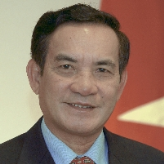 Phung, Le Cong
Le Cong Phung, a career diplomat, was born on February 20, 1948 in Thanh Hoa Province, Vietnam. He graduated from the Vietnamese Foreign Ministry’s School of Diplomacy in Hanoi in 1971. During his 37-year career, Ambassador Le Cong Phung served in various foreign service posts in England (1974-1977), China (1978-1980), Indonesia (1984-1987) and as Ambassador to Thailand (1993-1997). He served as Assistant Foreign Minister from 1999 until 2000. From 2000 through 2004, he acted as Chairman of the Committee on Border Affairs and as Chairman of the National Commission for UNESCO. He served as Deputy Foreign Minister between 2001 and 2004. Prior to becoming ambassador to the US, Phung was the First Deputy Foreign Minister, the Ministry of Foreign Affairs’ second ranking official, assisting Deputy Prime Minister and Foreign Minister in the conduct of Vietnam’s foreign policy. He was appointed by President Nguyen Minh Triet as Ambassador to the US in October 2007. He speaks fluent English and French.
- Table of Contents
- News
- Overview
- Basic Information
- History
- Newspapers
- History of U.S. Relations with Vietnam
- Current U.S. Relations with Vietnam
- Where Does the Money Flow
- Controversies
- Human Rights
- Debate
- Past Ambassadors
- Ambassador to the U.S.
- Embassy Web Site in the U.S.
- Comments
- Leave a comment

U.S. Ambassador to Vietnam
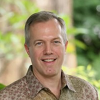
On June 24, 2014, the Senate Foreign Relations Committee sent the nomination of Ted Osius III to be U.S. ambassador to Vietnam to the full Senate for consideration. It would be the first ambassadorial post for Osius, a career Foreign Service officer. Osius is the seventh openly gay person to be nominated by President Barack Obama to be an ambassador.
Osius is from Maryland, but attended The Putney School in Vermont, graduating in 1979. He went to Harvard, where he wrote for the Harvard Crimson and researched and edited some of the books in the “Let’s Go” travel series. After graduating in 1984 with a B.A. in social studies, he served as an intern at the American University in Cairo for a year. While he was in Egypt, his father, Dr. Ted Osius, a urologist, died of a heart attack while duck hunting. The Sailing Club of the Chesapeake, of which the elder Osius was an active member, created the Ted Osius Memorial Regatta, which is still held annually.
Following that, he went to work for then-Senator Al Gore (D-Tennessee) as legislative correspondent from 1985 to 1987.
Interested in a career in diplomacy, Osius took but did not pass the Foreign Service exam. He then went to Johns Hopkins’ School of Advanced International Studies, graduating with an M.A. in international economics and U.S. foreign policy in 1989. He took the exam again and passed it, joining the Foreign Service that year.
Osius’ first posting was to Manila, from 1989 to 1991. Other early assignments included the Vatican and the United Nations.
In 1996, Osius was among the first U.S. diplomats to work in Vietnam since the end of the U.S. war there. The following year, he helped set up the U.S. consulate in Ho Chi Minh City (formerly Saigon). While there, he travelled 1,200 miles by bicycle from Hanoi to Ho Chi Minh City.
Osius returned to Washington in 1998 to serve as a senior advisor on international affairs to Gore, who by then was vice president of the United States, working on subjects including Asia, international economics and trade issues.
Osius went back to Indochina in 2001 as regional environmental affairs officer at the U.S. Embassy in Bangkok. While in Thailand he had a book, The U.S.-Japan Security Alliance: Why It Matters and How To Strengthen It, published. The book, which is still available, examines the U.S. role as Japan’s military protector.
In 2004 he was back in Washington as deputy director in the State Department’s Office of Korean Affairs in the Bureau of East Asian and Pacific Affairs.
That year was also significant in Osius’ personal life. He met Clayton Bond at a Gays and Lesbians in Foreign Affairs Agencies meeting. Bond was then a watch officer in the State Department’s operations center. They were married in 2006 in Vancouver, Canada.
They were posted together that year in the embassy in New Delhi, India, where Osius was the political minister-counselor. In 2008 he was a poll observer for Bhutan’s first democratic election.
In 2009, Osius was named the deputy chief of mission at the U.S. Embassy in Jakarta, Indonesia. In his first year there, he helped coordinate relief efforts after the West Sumatra earthquake.
Osius returned to Washington in 2012 to work as a senior fellow at the Center for Strategic and International Studies, a foreign policy think tank. In 2013, he became an associate professor at the National Defense University.
During his confirmation hearing, Osius told the Senate Foreign Relations Committee that the time is coming to consider lifting U.S. restrictions on arms sales to Vietnam, which currently buys most of its weaponry from Russia.
Osius speaks Vietnamese, French and Italian, as well as a bit of Arabic, Hindi, Thai, Japanese and Indonesian. He and Bond have a son.
-Steve Straehley
To Learn More:
Statement before the Senate Committee on Foreign Relations (pdf)
Ted Osius (American University in Cairo)
A Lifetime in the American Foreign Service (SAIS Observer)
State Department Cables (WikiLeaks)
morePrevious U.S. Ambassador to Vietnam
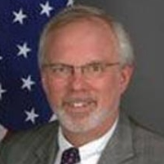
It took almost eight months after his nomination, but veteran Foreign Service officer David B. Shear officially became the ambassador to Vietnam, on August 4, 2011. Shear’s appointment was held up after Senators from both parties placed multiple holds on the diplomat’s confirmation, to protest problems that Americans have had with adopting orphans from Vietnam.
Comments