



Nigeria is the most populous nation in Africa, seventh most populous in the world, and the most populous majority-black country in the world. Alhough most Americans’ knowledge of Nigeria is limited to a familiarity with some of the many Nigerian athletes who have come to the U.S. to play, including NBA Hall of Fame great Hakeem Olajuwon, Nigeria is a major source of U.S. oil imports. Over the centuries of the slave trade, Nigeria was one of the leading suppliers of slaves to the New World, including the U.S. Thus millions of Americans have Nigerian descent, including the actor, singer and political activist Paul Robeson, whose parents were both born in Nigeria.
Lay of the Land: Nigeria is a densely settled land located on the southern bulge of West Africa. Slightly larger than California, Oregon and Washington combined, Nigeria is bordered by Benin to the west, Niger to the north, Chad and Cameroon to the east, and the Gulf of Guinea to the south. Comprised of 36 states and a federal capital territory, Nigeria’s geography ranges from the wet and humid mangrove swamps of the south to the fringe of the Great Sahara Desert in the north. Indeed, perhaps the most important geographical feature of Nigeria is the difference between the savannah and semi-desert of the North, where Muslims predominate, and the forested and wet south, where Christians are in the majority. In southeastern Nigeria, a morass of brackish rivers and humid palm-studded islands form the Niger Delta. Here a land once famed for its palm oil is now producing another kind of oil–petroleum–and the oil derricks on land and offshore daily pump millions of barrels of the black gold. The entire coastal part of the country consists of a hot and humid belt of mangrove swamps, which merge in the interior into a dense rain forest, and then into open woodland and savanna farther north. In the far north, vegetation all but ceases as the fringe of the Great Sahara Desert is reached. The capital, Abuja, which is home to nearly 800,000 people, was built near the country’s center during the 1980s and became the capital in 1991. The former capital and Nigeria’s largest city, Lagos, is Africa’s second largest city, after Cairo, Egypt, with a population of nearly 8 million (15 million, counting the entire metropolitan area).
Archaeological evidence demonstrates that human habitation dates back to at least 9000 BC. The area around the Benue and Cross River is thought to be the original homeland of the Bantu migrants who spread across most of central and southern Africa in waves between the 1st millennium BCE and the 2nd millennium. Before the rise of European influence in the area around 1500, much of modern Nigeria was comprised of states identified with still predominant ethnic groups, including Igbo Kingdom of Nri, the Yoruba kingdoms, the Edo Kingdom of Benin and the Hausa city states. The first of these was the Nri Kingdom, founded in the tenth century in North Central Igboland, which is probably the oldest area of Igbo settlement and is considered the homeland of the Igbo people and the cradle of their culture. The Kingdom of Nri was unique in that its leader, a priest-king called the eze Nri, did not exercise military power. Instead, the kingdom wielded religious and political influence, managing trade and diplomacy on behalf of the Igbo people, and expanding by force of persuasion, as villages and regions joined the kingdom. It also gave safe haven to outcasts from other communities and to runaway slaves, whom the kingdom set free upon arrival. Nri influence peaked between the 12th and 15th centuries. The growing penetration of the European slave trade eroded Nri power, which declined notably in the 18th century, though the kingdom survived formally until 1911, when the British forced the eze Nri to abdicate.
Noted Nigerian-Americans:
Athletes
Nnamdi Asomugha—NFL football player for the Oakland Raiders and Philadelphia Eagles. His parents were born in Nigeria.
Hakeem Olajuwon—NBA basketball player; most valuable player in 1994. Born in Nigeria, played for the University of Houston and represented the United States at the 1996 Olympics.
Oguchi Onyewu—Soccer player on U.S. national team. His parents were born in Nigeria.
Others
Sade Baderinwa—News anchor at WABC-TV in New York. Her father is Nigerian and her mother German.
John Ogbu (1039-2003)—Anthropologist. Born in Nigeria, he was a proponent of the “Acting White” theory that many African-Americans perform below expectations in school because academic achievement is regarded by their peers as “acting white.”
Vop Osili–Indiana Secretary of State. Born in Nigeria to a Nigerian father and an American mother.
Paul Robeson (1898-1976)—Singer, actor and political activist. His father, William Drew Robeson, was of Igbo origin and was born into slavery in North Carolina.
Victor Ukpolo–Chancellor of Southern University at New Orleans. Born in Nigeria, he came to the United States at the age of 23.
Noted Nigerian-Americans:
The discovery of oil in the 1930s led eventually to the fact that Nigeria’s economy is dominated by the black gold. A member of OPEC since 1971, Nigeria is the 12th largest petroleum producer in the world, the 8th largest exporter, and has the 10th largest proven reserves. Nevertheless, the majority of Nigerians live in poverty, as corruption and financial mismanagement have long been an unfortunate aspect of life in Nigeria. Petroleum accounts for 40% of GDP and 80% of Government revenues. Nigeria has a large trade surplus with the U.S., averaging $25.3 billion from 2008 to 2010, based entirely on crude oil, which dominates US imports from Nigeria, accounting for $26.7 billion annually in purchases by the United States from 2008-2010, or 91.4% of the three-year total. The only other sizeable imports are also petroleum related, including liquefied petroleum gases ($3.6 billion or 4%), fuel oil and other petroleum products ($3.3 billion or 3.8%), and natural gas ($339 million or .04%). In contrast, US exports to Nigeria mainly consist of the products of American agriculture and industry, led by wheat ($804.4 million or 19.9%), new and used passenger cars ($649.5 million or 16%), “other” petroleum products ($522.8 million or 12.9%), industrial engines and other machinery ($414.5 million or 10.3%), drilling and oilfield equipment ($217.5 million or 5.4%), industrial engines ($145.8 million or 3.6%), and trucks, buses and special purpose vehicles ($116.4 million or 2.9%).
Run by popularly elected officials for only about 21 years of its fifty-year existence, Nigeria’s human rights record is spotty at best, especially during those years when the military was in charge of the country. The Abacha regime (1993-1998), for example, enforced authority through the federal security system, which committed numerous human rights abuses, including infringements on freedom of speech, assembly, association, travel, and violence against women. More recently, the State Department’s 2010 Human Rights report on Nigeria found many problems, including abridgement of citizens' right to change their government; politically motivated and extrajudicial killings; torture, rape, and other cruel, inhuman or degrading treatment of prisoners, detainees, and suspects; harsh and life-threatening prison conditions; arbitrary arrest and detention; prolonged pretrial detention; denial of fair public trial; executive influence on the judiciary and judicial corruption; infringement on citizens' privacy rights; restrictions on freedom of speech, press, assembly, religion, and movement; official corruption and impunity; violence and discrimination against women; the killing of children suspected of witchcraft; female genital mutilation (FGM); child abuse and child sexual exploitation; societal violence; ethnic, regional, and religious discrimination and violence; vigilante killings; trafficking in persons for the purpose of prostitution and forced labor; discrimination against persons with disabilities; discrimination based on sexual orientation and gender identity; child labor; forced and bonded labor; and abductions by militant groups.
Joseph Palmer 2d
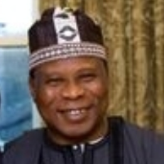 Adefuye, Ade
Ambassador from Nigeria: Who Is Ade Adefuye?
- Table of Contents
- News
- Overview
- Basic Information
- History
- Newspapers
- History of U.S. Relations with Nigeria
- Current U.S. Relations with Nigeria
- Where Does the Money Flow
- Controversies
- Human Rights
- Debate
- Past Ambassadors
- Ambassador to the U.S.
- Embassy Web Site in the U.S.
- Comments
- Leave a comment

U.S. Ambassador to Nigeria

President Barack Obama has turned to a career diplomat with extensive experience in Africa to serve as the next U.S. ambassador to the troubled nation of Nigeria, the most populous country in Africa. James F. Entwistle, who has been ambassador to the even more troubled Democratic Republic of the Congo (DRC) since November 2010, will succeed Terence P. McCulley, who served in Nigeria starting in August 2010.
Born circa 1956 to Air Force Col. Oliver Entwistle and Barbara Entwistle, James Entwistle earned a B.A. at Davidson College in 1978.
Joining the State Department in January 1981, Entwistle served early career postings from 1981 to 1986 in Yaounde, Cameroon; Douala, Cameroon; and Niamey, Niger. Early assignments in Washington, DC, between 1986 and 1990 included service as a watch officer in the Bureau of Intelligence and Research and as desk officer for Kenya and Uganda in the Bureau of African Affairs.
From 1991 to 1994, Entwistle was in charge of the Refugee Assistance unit at the U.S. embassy in Bangkok, Thailand, and served as deputy chief of mission at the embassy in Bangui, Central African Republic, from 1994 to 1995.
Back in Washington, Entwistle served in the Bureau of Consular Affairs from 1996 to 1998, returning to Southeast Asia to serve as counselor for Political Affairs at the embassy in Kuala Lumpur, Malaysia, from 1999 to 2003.
Entwistle then served two consecutive stints as the number two official at two embassies. From 2003 to 2006, Entwistle was the deputy chief of mission (DCM) at the embassy in Colombo, Sri Lanka, with concurrent accreditation to Maldives, and served as DCM at the embassy in Bangkok, Thailand, from 2007 to 2010, when he was named to his first ambassadorship.
James Entwistle and his wife, Pamela Schmoll, have two children, Jennifer and Jeffrey. He speaks French and Thai.
more
Comments