



Lay of the Land: A mostly mountainous country in the western Balkans, Bosnia and Herzegovina shares borders with Croatia, Serbia and Montenegro. The region of Bosnia occupies four fifths of the country, while the region of Herzegovina occupies a fifth of the country in the south, including the nation’s 14-mile (23-kilometer) coastline on the Adriatic Sea. Half the country is covered by forests. The capital, Sarajevo, has a population of about 305,000.
The United States formally recognized the Communist Federal Republic of Yugoslavia on November 29, 1945. When Yugoslavia was expelled from the Soviet Cominform and the Soviet Union withdrew its support, Josip Tito appealed to the US and other western nations for economic aid. The US provided both military and economic aid to Yugoslavia during the Cold War. Eventually, Tito mended relations with the Kremlin and struck a policy of non-alignment between the two superpowers.
The United States maintains command of the NATO headquarters in Sarajevo. Since the end of the war, the US has donated hundreds of millions of dollars to help with reconstruction, humanitarian assistance, economic development, and military reconstruction in Bosnia and Herzegovina. The US Agency for International Development (USAID) has funded programs in economic development and reform, democratic reform (media, elections), infrastructure development, and training programs for Bosnian professionals, among others.
The single largest import by the US from Bosnia came in 2005, when almost $55 million in crude oil was purchased. Oddly, no crude oil was imported either before or after 2005. The most consistent top import is furniture and household items, averaging approximately $4 million a year. Recently, the US has been buying more military equipment from Bosnia, growing from $49,000 in 2005 to $3.4 million in 2007.
Hillary Clinton Imagines Sniper Fire in Bosnia
Overall, Bosnia’s human rights record remains poor, according to the lastest State Department report. There were reports of “police abuses, poor and overcrowded prison conditions, increased harassment and intimidation of journalists and members of civil society, discrimination and violence against women and ethnic and religious minorities, discrimination against persons with disabilities and sexual minorities, obstruction of refugee return, trafficking in persons, and limits on employment rights,” reported US officials. The department also noted that former Bosnian Serb General Ratko Mladić was still wanted by the International Criminal Tribunal for the former Yugoslavia.
Victor Jackovich
Presentation of Credentials: Jun 23, 1993
Termination of Mission: Left post, Apr 17, 1995
John K. Menzies
Appointment: Oct 3, 1995
Presentation of Credentials: Jan 7, 1996
Termination of Mission: Left post, Dec 15, 1996
Richard D. Kauzlarich
Appointment: Aug 1, 1997
Presentation of Credentials: Aug 28, 1997
Termination of Mission: Left post Aug 20, 1999
Appointment: Jul 7, 1999
Presentation of Credentials: Aug 27, 1999
Termination of Mission: Left post Aug 23, 2001
Appointment: Oct 1, 2001
Presentation of Credentials: Nov 2, 2001
Termination of Mission: Left post, Aug. 6, 2004
Appointment: July 2, 2004
Presentation of Credentials: Sept. 15, 2004
Termination of Mission: 2007
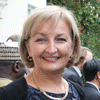 Negodić, Jadranka
The Balkan nation of Bosnia and Herzegovina has sent a new ambassador to the U.S. Jadranka Negodić succeeds Mitar Kujundžić, who served as Bosnia’s man in Washington starting in February 2009.
Born circa 1956, Negodić earned a law degree at the University of Sarajevo in 1979. During the breakup of Yugoslavia and the Bosnian War, she fled Sarajevo to the relative safety of Dubrovnik, Croatia. After the war, she took a job at the new Bosnian Ministry of Foreign Affairs, which made sense to her because she “had always enjoyed travel and contact with other people.” Few of Bosnia’s diplomats had served under the Yugoslavian regime, and with no formal diplomatic academy Negodić got on-the-job training, including opportunities when she visited the foreign affairs ministries in Japan, Turkey, the US, Italy and Greece. Early on she headed the Department for Neighboring Countries, which required her legal expertise in dealing with post-conflict issues such as border delimitation, restitution of property and refugees, with the former Yugoslav republics of Serbia, Croatia, Slovenia and Kosovo.
Negodić served as minister-counsellor at the Bosnian embassy in London, UK, from 2003 to 2006. After that posting, she returned home to serve as assistant minister of foreign affairs from 2007 to 2008. In January 2008, Negodić was appointed head of Bosnia’s mission to the European Commission in Brussels, Belgium. During her tenure, Bosnia signed the Stabilization and Association Agreement with the EU on June 16, 2008, which set Bosnia on the road toward EU membership. She returned to London in December 2008 to serve as ambassador to the UK until 2012.
-Matt Bewig
- Table of Contents
- News
- Overview
- Basic Information
- History
- Newspapers
- History of U.S. Relations with Bosnia and Herzegovina
- Current U.S. Relations with Bosnia and Herzegovina
- Where Does the Money Flow
- Controversies
- Human Rights
- Debate
- Past Ambassadors
- Ambassador to the U.S.
- Embassy Web Site in the U.S.
- Comments
- Leave a comment

U.S. Ambassador to Bosnia and Herzegovina
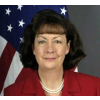
On January 6, 2014, President Barack Obama nominated Maureen Cormack, a career Foreign Service officer, as ambassador to Bosnia and Herzegovina. On March 6, 2014, the Senate Foreign Relations Committee held a hearing to consider her nomination.
Cormack received her B.A. in performing arts management from the University of Illinois and did not go immediately into government service. She worked for a Chicago law firm, Shefsky, Saitlin, and Froelich, and from 1980 to 1985 she worked for the Ravinia Festival, an outdoor music series near Chicago, in fundraising, public relations, and artistic management. The Festival is the summer home of the Chicago Symphony Orchestra.
Cormack then attended the University of Chicago, earning an M.A. in international relations in 1989. At that point, she joined the State Department. Much of her career in the Foreign Service has been spent in public and cultural affairs. Cormack’s first assignments were as director of the American Centers in Kwangju, South Korea and Warsaw, Poland. In the mid-1990s, she was back in Washington as European personnel officer for the former U.S. Information Agency.
In 1999, Cormack was in France as deputy cultural attaché at the U.S. Embassy in Paris and as first consul at the American Presence Post in western France, covering the regions of Brittany, Normandy, and the Loire.
Cormack returned to South Korea in 2002 as press attaché at the embassy in Seoul, remaining there until 2005. At that time, she became a Pearson Fellow, working on Capitol Hill. The Pearson Fellowships allow Foreign Service officers to spend a year learning about the inner workings of Congress. Cormack worked with the House Homeland Security Committee.
In 2006, Cormack moved back to the State Department, becoming deputy director for Korean Affairs, serving in that post until 2009. Towards the end of her tenure, she helped deal with the arrest of two American journalists, Euna Lee and Laura Ling, by North Korea. The two were eventually freed after negotiations between former U.S. President Bill Clinton and North Korean leader Kim Jong-il.
Cormack moved over to become director of the Office of Western European Affairs, where she served until 2010. Cormack then was named executive assistant in the Office of the Under Secretary for Public Diplomacy and Public Affairs. In July 2011, Cormack became principal deputy coordinator of the Bureau of International Information Programs. On April 15, 2013, she was promoted to acting coordinator for international programs after a critical report by the State Department’s Office of Inspector General led to the resignation of Coordinator Dawn McCall.
Cormack’s husband, William, is a construction engineer with the State Department. The Cormacks have three children, Elizabeth, Margaret and William.
-Steve Straehley
To Learn More:
Statement to Senate Committee on Foreign Relations (pdf)
morePrevious U.S. Ambassador to Bosnia and Herzegovina
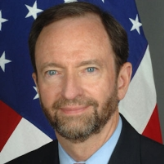
After more than 30 years as a diplomat, Patrick S. Moon is finally getting his first crack as an ambassador. After holding a variety of posts covering issues from Africa to Europe to South Asia, he was sworn as U.S. ambassador to Bosnia and Herzegovina on September 10, 2010.
Comments