



Zambia is located in southern Africa, bordered by Angola, the Democratic Republic of the Congo, Tanzania, Malawi, Mozambique, Zimbabwe, Namibia and Botswana. Originally settled by hunter-gatherers more than 2,000 years ago, the area remained relatively untouched for centuries until the 19th century, when European explorers, missionaries and traders made their way to the central part of the country. Westerner David Livingstone was the first European to see the great waterfalls in the Zambezi River, in 1855, and named it Victoria Falls, after Britain’s Queen Victoria. Northern and Southern Rhodesia, as Zambia and Zimbabwe were then known, both came under Britain’s sphere of influence in the early 20th century, and briefly formed a federation with Nyasaland (now Malawi) before becoming independent in October 1964.
Lay of the Land: Zambia is a kidney-shaped country of high plateaus and temperate climate located on the fringe of southern Africa. The magnificent Victoria Falls, one of the world’s most spectacular waterfalls, thunders down the Zambezi River, a waterway that separates Zambia from its southern neighbor, Zimbabwe. Also to the south is the Caprivi Strip, a narrow extension of Namibia that is located between Zambia and northwestern Botswana, nearly joining Namibia with the Zimbabwe frontier.
Diplomatic relations between the United States and Zambia were established on October 24, 1964, when Zambia became independent.
Zambia is a beneficiary of the African Growth and Opportunity Act (AGOA). The US government provides a variety of technical assistance and other support that is managed by the State Department, US Agency for International Development (USAID), Millennium Challenge Account (MCA), Threshold Program, Centers for Disease Control, Department of Treasury, Department of Defense, and Peace Corps. The majority of US assistance is provided through the President’s Emergency Plan for AIDS Relief (PEPFAR), in support of the fight against HIV and AIDS. The US has also provided considerable emergency food aid during periods of drought and flooding through the World Food Program (WFP) and is a major contributor to refugee programs in Zambia through the UN High Commission for Refugees and other agencies.
US trade with Zambia is dominated by the importation of nonferrous metals (those lacking iron). From 2004 to 2008, American purchases of such metals rose from $27 million to $35 million. The only other import that came close to these values was copper, which the US began to import in 2008 ($10.5 million).
Several Nations Refuse US GMO Food Aid
According to the State Department, Zambian security forces committed unlawful killings during 2008. The Legal Resources Foundation (LRF), an independent human rights organization that counseled victims’ families and represented them in actions against the government, consistently investigated and publicized such incidents. However, the government rarely punished perpetrators.
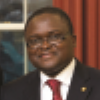 Mulonda, Palan
The landlocked southern African nation of Zambia sent a new envoy to Washington last fall who has never before served as an ambassador. President Michael Sata nominated Palan Mulonda as ambassador to the U.S. in May 2012, succeeding Sheila Siwela, who had served since June 2010. Although the move prompted criticism from opposition leaders for nepotism, as Mulonda is related to Sata through marriage, Mulonda accepted the appointment and presented his credentials to President Barack Obama on January 14, 2013. Mulanda's sister, Encyla Sinjela, is already Zambian ambassador to Switzerland.
Born circa 1972, Mulonda earned an undergraduate law degree (LLB) and a post-graduate certificate in Legislative Drafting at the University of Zambia in 1995 and a Masters degree in International Law (LLM) at Lund University in Sweden.
A member of the bar of the High Court of Zambia, Mulonda practiced law as a partner at the firm of Palan & George Advocates, specializing in conveyancing and legal drafting, commercial transactions, probate and succession, human rights, and Zambian constitutional law.
Mulonda has worked for the Zambian Ministry of Justice and served as executive director of the Institute of Human Rights, Intellectual Property and Development Trust (HURID), a private human rights organization in Zambia. He served on the Zambian Human Rights Commission, starting as vice-chairman in November 2007. He taught law at the University of Zambia, and served as director of the Zambia Institute of Advanced Legal Education from December 2009 to December 2012.
Biography (from an opposition website, and thus biased)
Zambia – Country Report (by Palan Mulonda)
- Table of Contents
- News
- Overview
- Basic Information
- History
- Newspapers
- History of U.S. Relations with Zambia
- Current U.S. Relations with Zambia
- Where Does the Money Flow
- Controversies
- Human Rights
- Debate
- Past Ambassadors
- Ambassador to the U.S.
- Embassy Web Site in the U.S.
- Comments
- Leave a comment


U.S. Ambassador to Zambia

The Southern African nation of Zambia will soon have a new ambassador in the person of Eric T. Schultz, a longtime diplomat who most recently served as deputy chief of mission at the U.S. Embassy in Kyiv, Ukraine, from 2010 to 2013. If confirmed by the Senate as expected, Schultz would succeed Mark C. Storella, who served in Lusaka starting in August 2010.
Born circa 1960, Schultz earned a B.A. at Macalester College in Minnesota in 1982, where he wrote a senior thesis entitled “Ethno-nationalism: Threat and Promise,” and an M.A. at the University of Denver.
A career member of the Senior Foreign Service since the mid-1980s, Schultz served as political officer at the embassy in Tbilisi, Georgia, from 1996 to 1998, and as deputy director for Ukrainian, Moldovan, and Belarusian Affairs at the State Department in Washington from 1998 to 2000.
From 2000 to 2002, he served as deputy chief of mission at the embassy in Ashgabat, Turkmenistan, returning to Washington to serve as deputy director in the Office of European Security Policy from 2002 to 2004.
From 2004 to 2007, Schultz was deputy chief of mission at the embassy in Harare, Zimbabwe, and served as minister counselor for Economic Affairs at the embassy in Moscow, Russia, from 2007 to 2009.
Eric Schultz is married to Klaudia Schultz, with whom he has two sons, Alek and Adam.
-Matt Bewig
Statement before the Senate Foreign Relations Committee (pdf)
morePrevious U.S. Ambassador to Zambia
Comments