



Switzerland is a landlocked country located in the heart of Europe. Originally inhabited by Helvetic Celts, the country came under Roman rule for five centuries, becoming an important trading stop along Roman military roads. Germanic tribes invaded shortly after the decline of the Roman Empire, but ruled only briefly, before the area became part of Charlemagne’s kingdom. As Swiss families allied themselves for both peaceful co-existence and protection, they were able to defeat numerous invasions, including three from the Habsburg Empire of Austria. It became independent of the Holy Roman Empire in 1499, but soon stopped expansionist policies after defeats by the French and Venetians in 1515. Though the country’s three major religions were at odds throughout the Reformation, Switzerland managed to hold onto its confederate localities and remain neutral until Napoleon conquered and annexed much of the country between 1797 and 1798. Switzerland was governed by France until 1815, when the Congress of Vienna restored the old confederation of sovereign states and re-established neutrality. Switzerland became one of Europe’s most industrialized nations during the latter part of the 19th century, before committing itself again to neutrality during both World Wars. After the Second World War, Switzerland followed the economic model of the US, but shied away from joining international bodies. Although it hosted the UN’s European headquarters, Switzerland did not officially join the international organization until 2002. It is not a member of the European Union.
Lay of the Land: Europe’s backbone, watershed, and most mountainous country, landlocked in the heart of the continent. The mighty Alps, Europe’s largest mountain system, cover 60% of Switzerland. The Rhine, Rhone, and feeders of the Danube and Po originate in Switzerland.
Population: 7.6 million.
The territory comprising modern day Switzerland was originally inhabited by Helvetians. These Helvetic Celts came under Roman rule during the Gallic Wars and remained part of the Roman Empire until the 4th century. Cities such as Geneva, Basel and Zurich became thriving trade destinations thanks to the roads linking them to Rome and the northern tribes.
A number of individual Swiss were involved in the earliest colonization efforts in the United States, such as Theobald von Erlach, who was killed along with 900 French soldiers by the Spanish when their ship was wrecked by a hurricane in 1565. Some Swiss settled in the early Jamestown colony, while others settled later in South and North Carolina in colonies founded by Swiss pioneers.
Relations between the US and Switzerland are cooperative. The first four years of cooperation under the US-Swiss Joint Economic Commission (JEC) helped to strengthen ties by including consultations on anti-money laundering efforts, counter-terrorism, and pharmaceutical regulatory cooperation; an e-government conference; and the re-establishment of the Fulbright student/cultural exchange program. The United States and Switzerland signed three new agreements in 2006 that complement the JEC and deepen cooperation.
From 2003 to 2008, US imports from Switzerland included medicinal, dental and pharmaceutical preparations, increasing from $1.9 billion to $4 billion; jewelry watches, and rings, moving up from $1.5 billion to $2.5 billion; clocks, portable typewriters, and miscellaneous household goods, increasing from $566.2 million to $864 million; other industrial machinery, moving up from $488.8 million to $547 million; and electrical equipment, increasing from $407.5 million to $467million.
Switzerland’s Banks Accused of Aiding Tax Fraud
Switzerland has generally not been found in violation of any major human rights issues. However, there are reports of societal abuse and discrimination against religious groups and women and violence by right-wing extremists.
Theodore S. Fay
Appointment: Jun 29, 1853
Presentation of Credentials: Presented recall, Jul 1, 1861
Note: Nominated Feb 25, 1856, to be Envoy Extraordinary and Minister Plenipotentiary; nomination withdrawn before the Senate acted upon it.
Appointment: Mar 28, 1861
Presentation of Credentials: Jul 1, 1861
Termination of Mission: Presented recall, Oct 16, 1865
Appointment: Jul 7, 1865
Presentation of Credentials: Oct 16, 1865
Termination of Mission: Presented recall, Jul 20, 1869
Note: Commissioned during a recess of the Senate; recommissioned after confirmation on Jan 22, 1866.
Appointment: Apr 20, 1869
Presentation of Credentials: Jul 20, 1869
Termination of Mission: Presented recall, Sep 7, 1876
Appointment: Aug 15, 1876
Presentation of Credentials: Sep 7, 1876
Termination of Mission: Left post Oct 1, 1876
Appointment: May 1, 1877
Note: Commissioned during a recess of the Senate. Took oath of office, but did not proceed to post.
Appointment: Jun 20, 1877
Presentation of Credentials: Aug 7, 1877
Termination of Mission: Presented recall, Aug 24, 1881
Note: Commissioned during a recess of the Senate; recommissioned after confirmation on Oct 30, 1877.
Appointment: May 11, 1881
Presentation of Credentials: Aug 25, 1881
Termination of Mission: Promoted to Minister Resident/Consul General
Appointment: Jul 13, 1882
Presentation of Credentials: Aug 14, 1882
Termination of Mission: Presented recall, Jul 9, 1885
Appointment: May 7, 1885
Presentation of Credentials: Jul 9, 1885
Termination of Mission: Presented recall, May 24, 1889
Note: Commissioned during a recess of the Senate; recommissioned after confirmation on Jan 21, 1866.
Appointment: Mar 12, 1889
Presentation of Credentials: May 24, 1889
Termination of Mission: Promoted to Envoy Extraordinary and Minister Plenipotentiary
Appointment: Jul 30, 1890
Presentation of Credentials: Dec 13, 1890
Termination of Mission: Left post Aug 10, 1892
Appointment: Dec 13, 1892
Presentation of Credentials: Jan 26, 1893
Termination of Mission: Presented recall, Jan 29, 1893
Appointment: Apr 7, 1893
Presentation of Credentials: Jul 5, 1893
Termination of Mission: Appointment terminated, Nov 1, 1895
Appointment: Nov 18, 1895
Presentation of Credentials: Feb 15, 1896
Termination of Mission: Presented recall, Aug 9, 1897
Note: Commissioned during a recess of the Senate; recommissioned after confirmation on Dec 21, 1895.
Appointment: Jun 9, 1897
Presentation of Credentials: Aug 9, 1897
Termination of Mission: Presented recall, Feb 20, 1901
Appointment: Dec 20, 1900
Presentation of Credentials: Apr 3, 1901
Termination of Mission: Presented recall, Jan 29, 1903
Appointment: Sep 26, 1902
Note: Commissioned during a recess of the Senate. Did not serve under either of the commissions issued to him.
Appointment: Dec 8, 1902
Note: Did not serve under either of the commissions issued to him.
Appointment: Jan 7, 1903
Presentation of Credentials: Feb 24, 1903
Termination of Mission: Presented recall, Jul 1, 1905
Appointment: Mar 8, 1905
Presentation of Credentials: Jul 1, 1905
Termination of Mission: Superseded, Mar 1, 1910
Appointment: Dec 21, 1909
Presentation of Credentials: Mar 1, 1910
Termination of Mission: Presented recall, May 15, 1911
Appointment: Apr 24, 1911
Presentation of Credentials: May 23, 1911
Termination of Mission: Presented recall, Jul 31, 1913
Appointment: Jun 21, 1913
Presentation of Credentials: Aug 23, 1913
Termination of Mission: Left post Dec 14, 1919
Appointment: Apr 7, 1920
Presentation of Credentials: Jun 3, 1920
Termination of Mission: Left post about Mar 4, 1921
Appointment: Sep 24, 1921
Presentation of Credentials: Nov 1, 1921
Termination of Mission: Left post Mar 22, 1924
Appointment: Mar 18, 1924
Presentation of Credentials: May 19, 1924
Termination of Mission: Presented recall, Apr 29, 1927
Appointment: Feb 26, 1927
Presentation of Credentials: Jun 11, 1927
Termination of Mission: Left post Jul 8, 1937
Appointment: Jul 13, 1937
Presentation of Credentials: Sep 10, 1937
Termination of Mission: Left post Oct 14, 1947
Appointment: Jul 24, 1947
Presentation of Credentials: Oct 21, 1947
Termination of Mission: Left post Jun 9, 1951
Appointment: Mar 22, 1951
Presentation of Credentials: Jun 27, 1951
Termination of Mission: Left post Apr 14, 1953
Appointment: Jul 20, 1953
Presentation of Credentials: Oct 9, 1953
Termination of Mission: Left post May 5, 1957
Appointment: May 9, 1957
Presentation of Credentials: May 31, 1957
Termination of Mission: Left post Feb 28, 1961
Appointment: Jun 22, 1961
Presentation of Credentials: Jul 25, 1961
Termination of Mission: Left post Sep 8, 1963
Appointment: Oct 2, 1963
Presentation of Credentials: Nov 29, 1963
Termination of Mission: Left post Sep 3, 1965
Appointment: Sep 19, 1966
Presentation of Credentials: Nov 18, 1966
Termination of Mission: Left post May 20, 1969
Appointment: May 13, 1969
Presentation of Credentials: Jul 17, 1969
Termination of Mission: Left post Apr 10, 1975
Appointment: Feb 20, 1975
Presentation of Credentials: Apr 25, 1975
Termination of Mission: Left post Jul 10, 1975
Appointment: Nov 20, 1975
Presentation of Credentials: Jan 9, 1976
Termination of Mission: Left post Jul 31, 1977
Appointment: Jul 11, 1977
Presentation of Credentials: Sep 13, 1977
Termination of Mission: Left post Jul 10, 1979
Appointment: Sep 20, 1979
Presentation of Credentials: Oct 19, 1979
Termination of Mission: Left post Sep 1, 1981
Appointment: Sep 28, 1981
Presentation of Credentials: Oct 23, 1981
Termination of Mission: Left post Feb 28, 1983
Appointment: Mar 18, 1983
Presentation of Credentials: May 19, 1983
Termination of Mission: Left post Apr 30, 1985
Appointment: Apr 4, 1985
Presentation of Credentials: May 31, 1985
Termination of Mission: Left post Jun 14, 1988
Appointment: Jul 11, 1988
Presentation of Credentials: Aug 19, 1988
Termination of Mission: Left post Aug 5, 1989
Appointment: Aug 3, 1989
Presentation of Credentials: Aug 23, 1989
Termination of Mission: Left post Mar 1, 1993
Appointment: Feb 9, 1994
Presentation of Credentials: Mar 21, 1994
Termination of Mission: Died at post Jan 9, 1996
Appointment: Aug 8, 1996
Presentation of Credentials: Aug 19, 1996
Termination of Mission: Left post Aug 16, 1999
Note: Also accredited to Liechtenstein, Feb 10, 1997.
Appointment: Oct 29, 1999
Presentation of Credentials: Dec 2, 1999
Termination of Mission: Left post Jul 6, 2001
Note: Also accredited to Liechtenstein; resident at Bern.
Appointment: Aug 3, 2001
Presentation of Credentials: Sep 11, 2001
Termination of Mission: Left post Mar 29, 2003
Note: Also accredited to Liechtenstein; resident at Bern.
Appointment: Oct 7, 2003
Presentation of Credentials: Nov 25, 2003
Termination of Mission: Left post, May 6, 2006
Note: Also accredited to Liechtenstein; resident at Bern.
Appointment: Jul 6, 2006
Presentation of Credentials: Oct 19, 2006
Termination of Mission:
Note: Also accredited to Liechtenstein; resident at Bern.
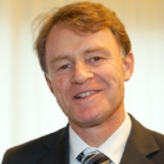 Sager, Manuel
Manuel Sager, the ambassador of Switzerland since December 2010, is no stranger to the United States, having attended graduate school in North Carolina, worked as a lawyer in Arizona and held diplomatic posts in New York and Washington, DC.
- Table of Contents
- News
- Overview
- Basic Information
- History
- Newspapers
- History of U.S. Relations with Switzerland
- Current U.S. Relations with Switzerland
- Where Does the Money Flow
- Controversies
- Human Rights
- Debate
- Past Ambassadors
- Ambassador to the U.S.
- Embassy Web Site in the U.S.
- Comments
- Leave a comment


U.S. Ambassador to Switzerland
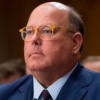
Just as presidents often reward major campaign donors with plum diplomatic posts, so too do they reward their political operatives. In the latter category is Ed McMullen, President Donald Trump’s nominee to be the next ambassador to Switzerland, with concurrent accreditation to Lichtenstein. A longtime politico, McMullen hopped on the Trump train early. In January 2015, he was one of five advisors to Trump’s exploratory committee, which became the Trump for President Campaign. McMullen was South Carolina chairman, a member of the transition team, and vice chairman of the Presidential Inaugural Committee. He has said of Trump, “The only other person who can hold a candle to him in terms of charisma is Ronald Reagan, and [Trump] has more charisma one on one.” On September 2, 2017, Trump rewarded him with an ambassadorial appointment.
Although McMullen said in December 2016 that he would not take a job in the Trump administration because he did not want to leave South Carolina for Washington, DC, apparently he feels differently about leaving Columbia for Bern. If confirmed by the Senate, he would succeed Suzan LeVine, who served from 2014 to the close of the Obama administration. LeVine had been a major fundraiser for Barack Obama’s 2012 reelection campaign.
Born in 1964 in New York, Edward Thomas McMullen Jr. grew up on Long Island Sound. In his youth, McMullen worked at his maternal grandfather’s New York advertising firm, The Cochran Company. He earned a B.A. in Political Science at Hampden-Sydney College in 1986.
After graduation, McMullen started his career as a conservative Republican politico at the Heritage Foundation in Washington, DC, where he was director of development research from 1986 to 1989. He also briefly worked as vice president for development at the Free Congress Foundation, a DC-based group focused on fighting so-called “political correctness.”
McMullen moved to Columbia, South Carolina in 1989, where he worked for the South Carolina Policy Council (SCPC)—effectively a state-based affiliate of Heritage—until 2007, eventually becoming chair.
McMullen has ties to Switzerland. In 1995, the American Swiss Foundation selected him to participate in its “Young Leaders” program. McMullen attended a week-long Young Leaders Conference in Switzerland with others from Switzerland and the US, visiting government officials and politicians. He has since traveled in Switzerland many times.
While still at SCPC, McMullen founded his own advertising and public relations firm in 2005, McMullen Public Affairs, which has offices in Columbia, Charleston and Washington, DC. The firm specializes in representing Republican candidates and issues. McMullen has served as an advisor in several national presidential campaigns, including those of John McCain, Mitt Romney, and Fred Thompson, and statewide campaigns in Virginia and South Carolina.
At the same time he was serving on President Trump’s presidential transition, McMullen was also co-chairman of South Carolina Governor Henry McMaster’s transition team.
McMullen is married to Margaret Ann (Wade) McMullen, with whom he has two children, Thomas and Katherine. He has served as chairman of the National Alumni Association of Hampden-Sydney College.
-Matt Bewig
To Learn More:
Statement at Senate Committee on Foreign Relations Confirmation Hearing
SC Consultant Helped Steer Trump to Improbable Victory (by Bristow Marchant, The State)
Ed McMullen: South Carolina’s ‘Man of the Moment’ (by Charles W. Waring III, Charleston Mercury)
morePrevious U.S. Ambassador to Switzerland
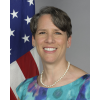
The U.S. ambassador to Switzerland and Lichtenstein from May 2014 to January 2017 was Suzan LeVine, whose posting to Bern was a reward for her fundraising for President Barack Obama. According to the Center for Responsive Politics, between 2008 and 2012, LeVine donated $432,251 to Democratic candidates and organizations, gave $18,840 to Obama’s re-election campaign, and “bundled” at least $500,000 in donations from others. The New York Times reported in September 2012 that LeVine had raised at least $2.3 million for Obama’s campaigns since 2007.
Suzan Gail (Davidson) LeVine was born November 17, 1969, in Atlantic City, New Jersey, to Maurice Davidson, a doctor who had served in Vietnam, and Phyllis (Fox) Davidson, whose father, Phillip Fox, was a co-founder of the American Legion. She has two brothers, Philip and Samuel, and one sister, Hanna Fox. She graduated Atlantic City High School in 1987, and
earned dual degrees at Brown University in 1993: a B.A. in English and a B.S. in Mechanical Engineering with aerospace applications.
Relocating to Seattle after graduation, LeVine began what she likes to call her “non-linear career” as a product manager for Microsoft from 1993 to 1998, where she worked on launching the final versions of MS-DOS and Windows 95.
From 1998 to 2005, LeVine worked for Expedia, Inc., first as a director of marketing and then as the vice president of marketing and sales for the luxury travel division.
From March 2006 to January 2014, she served as the co-founder and then chair of the advisory board for the Institute for Learning and Brain Sciences (I-LABS) at the University of Washington, which is a leading early learning research institute.
For three of her years at I-LABS, 2009 to 2012, LeVine also worked at Microsoft as director of strategic partnerships for student developers and director of communications for education, working with students, school leaders, and educators to promote the advantages of teaching tech skills using Microsoft products.
During her term as ambassador, LeVine became interested in the Swiss dual education system, which emphasizes vocational apprenticeships for many students, and began advocating its adaptation to the U.S. Since resigning her post, LeVine has continued to advance that agenda by joining several relevant organizations: the Career Connect Washington Task Force, the board of CareerWise Colorado, the Seattle Region Partnership, and the board of the Center on the Economics and Management of Education and Training Systems in Zurich.
LeVine has been involved in various social and community initiatives, including co-founding the Kavana Cooperative, an independent Jewish community in Seattle. She has also been active with Hillel at the University of Washington, serving in various capacities, including board chair from July 2009 to June 2011, from 2000 to 2014.
Suzi LeVine and her husband, Eric LeVine, who founded CellarTracker, an online website for those who own wine-cellars, live in Seattle. They have two children, Sidney and Talia.
-Matt Bewig
To Learn More:
State Department Biography (State Department)
Testimony Before the Senate Committee on Foreign Relations (pdf)
Learning From the Swiss About Apprenticeship (by Suzi and Eric LeVine)
An Interview with Suzan LeVine, U.S. Ambassador to Switzerland and Lichtenstein (by Joyce Xi, The Politic)
Geek of the Week: U.S. Ambassador Suzan LeVine draws on tech experience to enlighten and engage (by Kurt Schlosser, GeekWire)
more
Comments