



Trade contracts with India, China and the mainland of Southeast Asia brought outside cultural and religious influences to Indonesia. One of the first Indianized empires, known as Sriwijaya, was located on the coast of Sumatra around the strategic straits of Malacca, serving as the hub of a trading network that reached to many parts of the archipelago more than a thousand years ago.
On neighboring Java, large kingdoms of the interior of the island erected scores of exquisite religious monuments, such as Borobudur, the largest Buddhist monument in the world. The last and most powerful of these early Hindu-Javanese kingdoms, the 14th Century Majapahit Empire, once controlled and influenced much of what is now known as Indonesia, maintaining contacts with trading outposts as far away as the west coast of Papua New Guinea.
Appointment: Dec 28, 1949
Presentation of Credentials: Dec 30, 1949
Termination of Mission: Left post, Feb 27, 1953
Note: Commissioned during a recess of the Senate; recommissioned after confirmation on Feb 2, 1950. Embassy Jakarta was established Dec 27, 1949, under the informal direction of the Consul General pending Ambassador Cochran's arrival and presentation of his letter of credence.
Appointment: Sep 3, 1953
Presentation of Credentials: Oct 15, 1953
Termination of Mission: Left post, Mar 3, 1957
Note: Commissioned during a recess of the Senate; recommissioned after confirmation on Jan 26, 1954.
Appointment: Feb 21, 1957
Presentation of Credentials: Mar 13, 1957
Termination of Mission: Left post, Jan 29, 1958
Appointment: Feb 20, 1958
Presentation of Credentials: Mar 10, 1958
Termination of Mission: Left post, May 24, 1965
Appointment: Jun 4, 1965
Presentation of Credentials: Jul 26, 1965
Termination of Mission: Left post, Mar 26, 1969
Appointment: May 27, 1969
Presentation of Credentials: Jul 19, 1969
Termination of Mission: Left post, Feb 3, 1974
Appointment: Dec 19, 1973
Presentation of Credentials: Feb 27, 1974
Termination of Mission: Left post, Oct 6, 1977
Appointment: Nov 3, 1977
Presentation of Credentials: Dec 10, 1977
Termination of Mission: Left post, Nov 10, 1981
Appointment: Dec 10, 1982
Presentation of Credentials: Feb 19, 1983
Termination of Mission: Left post, Jan 7, 1986
Appointment: Mar 4, 1986
Presentation of Credentials: Apr 11, 1986
Termination of Mission: Left post, May 12, 1989
Appointment: May 22, 1989
Presentation of Credentials: May 31, 1989
Termination of Mission: Left post, July 18, 1992
Appointment: Jul 7, 1992
Presentation of Credentials: Aug 11, 1992
Termination of Mission: Left post, Jul 10, 1995
Appointment: Dec 19, 1995
Presentation of Credentials: Feb 27, 1996
Termination of Mission: Left post Aug 12, 1999
Appointment: Aug 9, 1999
Presentation of Credentials: Oct 18, 1999
Termination of Mission: Left post Oct 14, 2001
Appointment: Oct 1, 2001
Presentation of Credentials: Oct 24, 2001
Termination of Mission: Left post, Aug. 2, 2004
Appointment: Oct 18, 2004
Presentation of Credentials: Nov 25, 2004
Termination of Mission: Left post, Feb 17, 2007
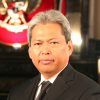 Bowoleksono, Budi
Budi Bowoleksono was appointed to be Indonesia’s ambassador to the United States in February, 2014. It’s the second ambassadorial posting for Bowoleksono.
Bowoleksono graduated from Jakarta’s Krisnadwipayana University in 1984 and began his career with Indonesia’s Ministry of Foreign Affairs in 1986. He has had several assignments to the United Nations, including its missions in Vienna, Austria; Geneva, Switzerland; and its New York headquarters.
Within the Ministry of Foreign Affairs, Bowoleksono worked in the directorates of foreign economic relations, multilateral affairs, ASEAN (Association of Southeast Asian Nations) cooperation and the Secretariat General.
After a stint as deputy director general for Multilateral Affairs, in 2008 Bowoleksono was assigned his first ambassadorial post in Kenya, with responsibility for Seychelles, Mauritius and Uganda, in addition to the United Nations Environment Program and the U.N. High Commission for Refugees. He returned home in 2010 to serve as secretary general in the Ministry of Foreign Affairs. During that time, the Edward Snowden documents revealed that the Australians were using some of their embassies, including the one in Jakarta, for spying activities. Bowoleksono was the official who conveyed his government’s concern about this to the Australian ambassador.
A less serious duty while Secretary General was his enthusiasm for spreading the word about Indonesian cuisine. Bowoleksono said all personnel at Indonesian missions were responsible for “food diplomacy,” hoping to induce curiosity about Indonesia through its cuisine and thus drawing tourism and business.
Bowoleksono and his wife, Reshanty, have a son.
-Steve Straehley
To Learn More:
- Table of Contents
- News
- Overview
- Basic Information
- History
- Newspapers
- History of U.S. Relations with Indonesia
- Current U.S. Relations with Indonesia
- Where Does the Money Flow
- Controversies
- Human Rights
- Debate
- Past Ambassadors
- Ambassador to the U.S.
- Embassy Web Site in the U.S.
- Comments
- Leave a comment


U.S. Ambassador to Indonesia
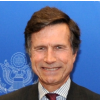
The next ambassador to Indonesia, hoem to the world’s largest Islamic population, will be veteran ambassador Robert O. Blake, Jr., who has served as assistant secretary for South and Central Asian Affairs since May 2009. Blake, whose diplomat father served as ambassador to Mali from 1971 to 1973, has extensive experience in Muslim countries. Nominated by President Barack Obama on July 31, if confirmed by the Senate Blake would succeed Scot Marciel, who has served in Jakarta since August 2010.
Born in 1958, Blake earned his BA from Harvard in 1980 and an MA in International Relations from the Johns Hopkins School of Advanced International Studies in 1984. He joined the U.S. Foreign Service in 1985, and served at the American embassies in Tunisia, Algeria, Nigeria and Egypt. He has also held a number of positions at the State Department in Washington.
In his first South Asian posting, Blake served as deputy chief of mission at the U.S. Embassy in New Delhi, India, from 2003 to 2006. From 2006 to 2009, he served as ambassador to Sri Lanka, which was in the final throes of a twenty-five-year-long civil war between the Tamil Tiger separatists, who wanted an independent homeland for the island’s Tamil minority, and the Sinhalese-dominated government. Blake was criticized for his advocacy of a political solution to the conflict, which he mistakenly argued could not be resolved by force of arms. In February 2007 at a Sri Lankan airbase, Blake sustained minor injuries from a mortar blast fired by Tamil rebels, who claimed they were not informed that Blake was present and were only returning fire from the Sri Lankan Army.
Blake’s only political donations have been to Rhode Island Democrat Sheldon Whitehouse. In 2006, Blake donated $2,600 to Whitehouse’s successful Senatorial campaign, while in 2002 he donated $1,000 to his failed campaign for Governor.
Blake and his wife, Sofia, have three daughters: Kalena, Zara, and Alexie.
-Matt Bewig
To Learn More:
Remarks for the Record Before the Senate Foreign Relations Committee (May 14, 2009) (pdf)
Testimony Before the Senate Foreign Relations Committee (September 25, 2013) (pdf)
U.S.-India Relations: The Making of a Comprehensive Relationship (Speech delivered at the Indian Army War College, Indore, India, August 23, 2004)
US State Dept’s Robert O. Blake, Jr. Addresses Security, Human Rights, and Democratic Reform Challenges in Central Asia (by Robert O. Blake, Jr., Islamicommentary)
more
Comments