



Mali is located in West Africa and encompasses both the Sahara Desert in the north and arable plains in the south. The Niger River enriches the soil nearby, allowing Mali’s agricultural sector to flourish. The area has been ruled by a succession of African kingdoms, including the Ghana, Malinké, and Songhai, until being colonized by the French in 1880s. Calling the region the Soudan, the French appointed a civilian governor in Mali and enriched themselves with the country’s natural resources. But in 1956, the French passed a law that gave Mali control over many of the country’s own internal affairs. A brief federation with Senegal followed, and in 1960, a nationalist movement soon began. This led to independence, and the election of Modibo Keita as Mali’s first president. Since then, the country has moved from extreme nationalization to a more centrist democratic government. Retired General Amadou Toumani Toure became the country’s second democratically elected president in 2002, and he was re-elected to a second five-year term in 2007.
Relations between Mali and the United States have been overshadowed by several controversies. In October 2006, Malian farmers blamed the US government, and its policy of awarding billions of tax dollars to American cotton producers, for pushing them into greater debt. A year earlier, a human rights group sued three US companies in federal court in Los Angeles to end child labor involving Malian children on African farms producing cocoa beans and chocolate products. More recently, drug trafficking from South America to Mali has put the US government on alert, especially for drug smuggling that might profit terrorist groups.
Lay of the Land: Mali is landlocked in central West Africa. Sandstone plateaus, edged by sharp cliffs, interrupt the generally level terrain. The Sahara desert in the north gives way to arable land in the south. The lifeblood of the country is the Niger River, which (hopefully) floods over every year to enrich the nearby soil.
From the beginning of civilization in Mali, the country has been ruled by a succession of ancient African empires—Ghana, Malinké, and Songhai—that occupied the West African savannah. These ancient empires traded with the Mediterranean and Middle Eastern people.
Economic assistance from the US to Mali originated in 1961 and was controlled by a bilateral mission until 1968. US assistance was limited at first. USAID’s strategy was aimed at moderating the socialist leanings of the Mali government through bilateral and regional programs and encouraging cooperative efforts between adjacent states and other Western donors. Three areas of focus were food production, education and training, and rural infrastructure.
A fundamental change in US foreign aid policy was legislated by Congress in 1973. According to the New Directions Mandate, USAID was to concentrate on helping the rural poor rather than on providing general assistance directed at augmenting overall economic development.
Mali cooperates with the US in the fight against international terrorism. It also participates in testing of new malaria medication, and USAID, the Peace Corps, and other US government programs play a role in fostering sustainable economic and social development in the country.
From 2005 to 2009, US imports from Mali were dominated by artwork, antiques, stamps and other collectibles, which increased from $294,000 to $1.42 million. Other imports on the rise included generators, transformers, and accessories, which moved up from $28,000 to $101,000; nonmonetary gold, increasing from $67,000 to $226,000; and semiconductors and related devices, rising from $39,000 to $242,000.
Malian Drug Runners Accused of Working with al-Qaeda
Problems with Mali’s human rights record, as reported by the State Department, included poor prison conditions, arbitrary arrest and detention, lengthy pretrial detention, prolonged trial delays, and restrictions on speech, press, and assembly. Domestic violence and discrimination against women, female genital mutilation (FGM), trafficking in children, hereditary servitude relationships between ethnic groups, child labor, and forced labor, including by children, also occurred.
Note: Embassy Dakar (in the Federation of Mali) was established Jun 20, 1960, with Donald A. Dumont as Chargé d’Affaires ad interim.
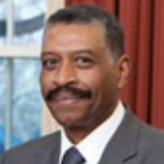 Keita, Al-Maamoun Baba Lamine
The West African nation of Mali’s latest ambassador to the United States is a seasoned diplomat whose career has been focused more on relations with other African nations than with the U.S. Keita presented his credentials to President Barack Obama on January 18, 2012.
- Table of Contents
- News
- Overview
- Basic Information
- History
- Newspapers
- History of U.S. Relations with Mali
- Current U.S. Relations with Mali
- Where Does the Money Flow
- Controversies
- Human Rights
- Debate
- Past Ambassadors
- Ambassador to the U.S.
- Embassy Web Site in the U.S.
- Comments
- Leave a comment

U.S. Ambassador to Mali

On September 17, 2014, President Barack Obama announced the nomination of career Foreign Service officer Paul Folmsbee to be the next U.S. ambassador to Mali. If he’s confirmed by the Senate, it will be the first ambassadorial post for Folmsbee.
Becoming a Foreign Service officer was just about predestined for Folmsbee. He was born in India, and grew up there and in Chiapas, Mexico, where his father, Glenn, was a missionary doctor. Folmsbee is one of four children, one of whom was adopted when the family lived in India. Folmsbee attended Kodaikanal International School in Chennai, India, but returned to the United States to graduate from Taconic Hills High School in Philmont, New York, in 1978.
Folmsbee initially planned to go into aviation and attended Embry-Riddle Aeronautical University. He did earn a pilot’s license, but then decided to change course. He went to Tabor College in Kansas, where he was a wide receiver on the school’s football team, and earned a B.A. in public administration and political science in 1982. Football wasn’t his only sport; at one time Folmsbee was a nationally ranked squash player. Folmsbee then went to the University of Oklahoma, where he earned an M.A. in Social Anthropology in 1985.
Folmsbee joined the Foreign Service in 1987. His first assignments included postings in La Paz, Bolivia; Colombo, Sri Lanka; Libreville, Gabon; and Nairobi, Kenya. He also served at the U.S. Mission to the Arms Control and Disarmament Agency in Geneva, Switzerland and worked in the Department of State’s Bureau of Western Hemisphere Affairs.
In 2000, Folmsbee was sent to the embassy in Dar es Salaam, Tanzania, as management officer. He moved to Port-au-Prince, Haiti, in 2003 in a similar role.
In 2003, Folmsbee published a novel, Flight of the Feathered Serpent, about two Icelanders who are shipwrecked in 12th century Mexico.
Folmsbee was sent to Pakistan in 2006 as director of International Narcotics and Law Enforcement, working on counter-terrorism issues. The following year, he was embedded with the U.S. Army’s 2nd Brigade, 82nd Airborne Division in Iraq as a Provincial Reconstruction Team team leader. His group worked on economic development, governance and rule of law, political reconciliation and infrastructure in the country destroyed by war.
His next assignment was far more pleasant: Folmsbee returned to India as consul general at the U.S. Consulate in Mumbai. He served there three years, delighting in displaying his Indian cooking skills. He was in Mumbai during the 2008 terror attacks and helped coordinate the American response to them.
Folmsbee was brought back to Washington in August 2012 as executive director of the Bureau of African Affairs, where he has served since.
Folmsbee speaks Spanish and French. He and his wife, Juanita, have three children: Christopher, Eric and Megan. Juanita Folmsbee, who trained as a nurse, is the Ukraine country director for an U.S. Agency for International Development entity that helps ensure medical supplies are delivered to needy countries.
-Steve Straehley
To Learn More:
Daddy Cool (Upper Crust India)
State Department Cables 2006-2009 (WikiLeaks)
morePrevious U.S. Ambassador to Mali
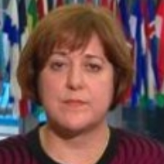
President Barack Obama nominated veteran diplomat Mary Beth Leonard to become the U.S. Ambassador to Mali on June 21, 2011, and she was confirmed by the Senate on October 18. Leonard had previously served as deputy chief of mission at the U.S. embassy in Mali.
Comments