



Formerly known as Ceylon, Sri Lanka is an island nation in the Indian Ocean, not far from the southeast coast of India. Sri Lanka’s two main ethnic groups, the Sinhala and Tamils, have come to define its politics since the British relinquished control. In 1931, Britain granted Ceylon self-rule, and during World War II, it was a strategic base for Britain against the Japanese. Sri Lanka became independent in 1949, and for the next few decades, it struggled to keep the peace between its ethnic groups. In the 1980s, civil war broke out between government forces and the Tamil Tigers. Efforts to establish peace have failed since that time, and a number of highly placed Indian and Sri Lankan political figures have been assassinated, along with 65,000 other fatalities. A 2004 tsunami added to the destabilization of the government, causing widespread devastation. In 2006, the Red Cross evacuated 150 foreigners from the Jaffna region and tried to get needed supplies to civilians there. Extensive human rights abuses continue, and recent controversies include the wounding of the US ambassador from Tamil mortar fire, the arrest of a Tamil leader in New York, and criticism by US lawmakers of a Sri Lankan law that would make it illegal for someone to convert a Sri Lankan to another religion by force. The conflict between the Sri Lankan government and the Tamil Tigers officially ended in May 2009 when the Tamil Tigers admitted defeat. Since the military defeat of the Tamil Tigers, international groups have voiced fears of the beginning of guerrilla warfare government abuses continue and if the concerns of the Tamils are not addressed.
Lay of the Land: Formerly Ceylon, Sri Lanka is a leaf-shaped island in the Indian Ocean, not far from the southeastern coast of India. The Palk Strait, which separates the two countries, is less than 20 miles wide at its narrowest. A low-lying plain covers the northern half of the island and follows the southern coast, while mountains reaching more than 8,000 feet rise in the south central region. The coastline itself contains many coconut-fringed lagoons. Though located in the monsoon belt of Asia, Sri Lanka has two distinct climatic zones. The southwest, where most of the population is located, receives 200 inches of annual rainfall, while the “dry zone,” covering the rest of the island, averages only about 50- inches a year.
Sri Lanka was originally settled by the Balangoda people during the 6th century BC. They were hunters/gatherers, and later developed a sustainable agricultural system on the Horton Plains using sophisticated irrigation. Three hundred years later, they brought Buddhism with them, influencing the culture of Sri Lanka for centuries to come. Today, more than 70% of Sri Lanka’s population identifies as Buddhist.
Since Sri Lanka’s independence in 1948, US assistance has totaled more than $1.6 billion.
The US has established policy toward Sri Lanka to help move the country toward greater unity and encouragement for its economic and social development. As well, the United States is a strong supporter of ethnic reconciliation in Sri Lanka.
Trade between the US and Sri Lanka is dominated by the importation of apparel and household goods, which represents the only billion-dollar commodity exchanged between the two countries. From 2003 to 2007, US imports of cotton clothing rose from $733 million to $1 billion. However, they dropped down to $809 million in 2009 following the worldwide recession.
R&B Star Akon's Music Video Sparks Uproar
According to the State Department, “the government's respect for human rights declined as armed conflict reached its conclusion. Outside of the conflict zone, the overwhelming majority of victims of human rights violations, such as extrajudicial killings and disappearances, were young male Tamils. In May 2010, Human Rights Watch declared the need for an independent international investigation into human rights violations committed by the Sri Lankan government after new photographic evidence was examined. Within the 200 photos are a series documenting what seems to be the execution of a captured LTTE by military forces. HRW claims the commissions created by the government are inadequate, or have failed to take significant investigative steps into the alleged abuses.
Felix Cole
Appointment: Apr 8, 1948
Presentation of Credentials: Aug 3, 1949
Termination of Mission: Left post Oct 30, 1949
Note: Commissioned to Ceylon.
Appointment: Sep 22, 1949
Presentation of Credentials: Nov 19, 1949
Termination of Mission: Left post Jul 25, 1953
Note: Commissioned to Ceylon.
Appointment: Jul 6, 1953
Presentation of Credentials: Sep 19, 1953
Termination of Mission: Left post Sep 27, 1956
Note: Commissioned to Ceylon.
Appointment: Jul 3, 1957
Presentation of Credentials: Sep 19, 1957
Termination of Mission: Left post Oct 2, 1958
Note: Commissioned to Ceylon.
Appointment: Oct 10, 1958
Presentation of Credentials: Nov 22, 1958
Termination of Mission: Left post Jun 3, 1959
Note: Commissioned to Ceylon. Commissioned during a recess of the Senate; recommissioned after confirmation on Jan 29, 1959.
Appointment: Jul 6, 1959
Presentation of Credentials: Aug 24, 1959
Termination of Mission: Left post Mar 1, 1961
Note: Commissioned to Ceylon.
Appointment: Mar 15, 1961
Presentation of Credentials: May 11, 1961
Termination of Mission: Left post Sep 20, 1964
Note: Commissioned to Ceylon.
Appointment: Jul 31, 1964
Presentation of Credentials: Oct 30, 1964
Termination of Mission: Left post Jun 17, 1967
Note: Commissioned to Ceylon; also accredited to Maldives; resident at Colombo.
Appointment: May 24, 1967
Presentation of Credentials: Jul 19, 1967
Termination of Mission: Left post Mar 21, 1970
Note: Commissioned to Ceylon; also accredited to Maldives; resident at Colombo.
Appointment: Feb 16, 1970
Presentation of Credentials: May 3, 1970
Termination of Mission: Left post Dec 12, 1971
Note: Commissioned to Ceylon; also accredited to Maldives; resident at Colombo.
Appointment: Sep 21, 1972
Presentation of Credentials: Oct 27, 1972
Termination of Mission: Left post Apr 21, 1976
Note: Also accredited to Maldives; resident at Colombo.
Appointment: Jun 1, 1976
Presentation of Credentials: Jul 2, 1976
Termination of Mission: Left post Jun 1, 1977
Note: Also accredited to Maldives; resident at Colombo.
Appointment: Jul 14, 1977
Presentation of Credentials: Aug 18, 1977
Termination of Mission: Left post Dec 13, 1979
Note: Also accredited to Maldives; resident at Colombo.
Appointment: Nov 27, 1979
Presentation of Credentials: Jan 21, 1980
Termination of Mission: Left post Jan 17, 1982
Note: Also accredited to Maldives; resident at Colombo.
Appointment: Dec 11, 1981
Presentation of Credentials: Feb 8, 1982
Termination of Mission: Left post Sep 3, 1985
Note: Also accredited to Maldives; resident at Colombo.
Appointment: Nov 6, 1985
Presentation of Credentials: Nov 21, 1985
Termination of Mission: Left post Jun 16, 1989
Note: Also accredited to Maldives; resident at Colombo.
Appointment: Oct 10, 1989
Presentation of Credentials: Nov 29, 1989
Termination of Mission: Left post Aug 27, 1992
Note: Also accredited to Maldives; resident at Colombo.
Appointment: May 26, 1992
Presentation of Credentials: Oct 7, 1992
Termination of Mission: Left post Aug 15, 1995
Note: Also accredited to Maldives; resident at Colombo.
Appointment: Dec 19, 1995
Presentation of Credentials: Jan 19, 1996
Termination of Mission: Left post Aug 1, 1997
Note: Also accredited to Maldives; resident at Colombo.
Appointment: Nov 10, 1997
Presentation of Credentials: Dec 19, 1997
Termination of Mission: Left post Aug 16, 2000
Note: Also accredited to Maldives; resident at Colombo.
Appointment: Sep 15, 2000
Presentation of Credentials: Nov 13, 2000
Termination of Mission: Left post Jun 17, 2003
Note: Also accredited to Maldives; resident at Colombo.
Appointment: May 27, 2003
Presentation of Credentials: Sep 26, 2003
Termination of Mission: 2006
Note: Also accredited to Maldives; resident in Colombo.
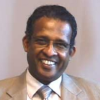 Kariyawasam, Prasad
On June 23, 2014, Prasad Kariyawasam, a longtime member of his country’s Foreign Service, took over as Sri Lanka’s ambassador to the United States.
Kariyawasam was born March 21, 1954, in Galle, near the southern tip of Sri Lanka, to educators Pragnadasa and Anula Kariyawasam. He was a Boy Scout and a cricket player; one of the best of his age group in the country, in fact. He was captain of the Richmond College Galle team in 1972 when, in a match against Mahinda College, Kariyawasam scored an unbeaten 156 runs. He then attended the University of Peradeniya, where he also played cricket and graduated in 1978 with a B.S. in mathematics.
Kariyawasam joined the Sri Lankan Foreign Service in 1981. His early postings included Geneva, Switzerland, from 1983 to 1987; Riyadh, Saudi Arabia from 1989 to 1992; and as a minister in the Washington embassy beginning in 1995. In 1998, Kariyawasam was moved to the Department of the High Commissioner in New Delhi, India.
He returned to Geneva as Sri Lanka’s permanent representative to the United Nations mission there, also serving as consul general to Switzerland, ambassador to the Holy See (Vatican City) and representative to the G-15. He returned home to serve as director general of the Economic Affairs Division and as an additional secretary in the Ministry of Foreign Affairs. With the UN, he served on committees dealing with human rights, racism, migration issues, disarmament and terrorism.
Kariyawasam moved to New York in 2005 as permanent representative to the UN, also serving as high commissioner to Jamaica and the Bahamas, as well as ambassador to Chile and Colombia. In his work at the UN, Kariyawasam fought the proliferation of small arms from Western nations, drawing criticism from the National Rifle Association for his efforts.
A 2005 State Department cable, released by WikiLeaks, praised Kariyawasam enthusiastically, including his “professionalism, good judgment and familiarity with the U.S.”
According to the cable, “His appreciation of the ‘bigger picture’ issues related to US-Sri Lankan relations has been especially beneficial during our recent bilateral MCA discussions. For example, despite his personal reservations about certain MCA [Millennium Challenge Account] requirements, he nonetheless recognized the importance of securing a compact to our overall relations, contributing to the process by pushing a draft proposal through the labyrinthine Sri Lankan bureaucracy and advocating for an improved consultative process.”
Kariyawasam also served in Colombo as director of the Foreign Ministry’s South Asia Division and was the official spokesperson of the Ministry of Foreign Affairs.
In 2009, Kariyawasam was made high commissioner to India, as well as ambassador to Afghanistan and Bhutan. While in New Delhi, Kariyawasam created a controversy when he urged that some Indian Members of Parliament be investigated for ties to the Tamil Tigers, the rebel group that fought a civil war in Sri Lanka for more than 25 years.
Kariyawasam’s wife, Kanthi, whom he married in 1981, is a biomedical researcher at Georgetown University. They have two grown children: a daughter, Mayooka, who graduated from the University of Maryland with a degree in computer science and a son, Pramodh. Kariyawasam speaks English and Sinhala.
-Steve Straehley
To Learn More:
State Department Comments (WikiLeaks)
- Table of Contents
- News
- Overview
- Basic Information
- History
- Newspapers
- History of U.S. Relations with Sri Lanka
- Current U.S. Relations with Sri Lanka
- Where Does the Money Flow
- Controversies
- Human Rights
- Debate
- Past Ambassadors
- Ambassador to the U.S.
- Embassy Web Site in the U.S.
- Comments
- Leave a comment

U.S. Ambassador to Sri Lanka
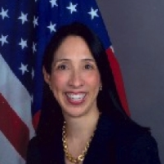
A native of Virginia, Michele J. Sison is the first Filipino-American ambassador from the United States. Her mother is Veronica Sison and her father, Pablo B. Sison was originally from Pangasinan, a province in the Philippines. She was confirmed by the US Senate on August 1, 2008 as the United States Ambassador to Lebanon. She arrived in Beirut on February 5, 2008 as Chargé d’Affaires. She served as ambassador until August 7, 2010.
more
Comments