


This southwestern African nation has only enjoyed independence since 1990, when it finally got out from under the grip of its neighbor, South Africa. For almost the entire 20th century, South Africa ruled over what was then known as South West Africa, first in accordance with a League of Nations mandate and then with the blessing of the United Nations following World War II. But during the 1950s and 1960s, an international chorus grew calling for Namibian independence—calls that went unheard by South African leaders. South Africa was unwilling to part with the mineral rich territory that also featured a deepwater Atlantic port. This intransigence on the part of officials in Pretoria, South Africa, gave rise to a rebel movement (SWAPO) in Namibia that battled South African forces during the 1970s and most of the 1980s. During this time, the United States publicly supported Namibian independence, while not pressuring its South African ally that was fighting Soviet- and Cuban backed movements in other parts of the region, including Angola (from which SWAPO operated secret bases). Eventually, South Africa agreed to allow free elections in Namibia that led to SWAPO officials taking over the new government. Since then, the US has provided substantial amounts of economic aid to Namibia, including millions to help fight AIDS, which has ravaged a large portion of the population in certain areas.
Lay of the Land: Approximately the size of Texas and Louisiana combined, Namibia’s terrain varies from coastal desert to semiarid mountains and plateau. This coastal southern African nation is bordered by Angola and Zambia to the north, Botswana to the east, South Africa to the south and the Atlantic Ocean to the west.
The first people living in Namibia were hunters and gatherers who lived in the region as early as 2,000 years ago. Nama herders entered the region around the 5th century and left behind records in the form of cave paintings. The Herero people settled in the western and northern areas of Namibia around 1600, followed by the Ovambo in the 1800s.
US relations with Namibia were overshadowed by the Cold War of the 1970s and 80s, when American policymakers supported the pro-Western government of South Africa in spite of its system of Apartheid. While US officials publicly called for South Africa to release its control of Namibia and allow its freedom, Washington was reluctant to push the issue while South African forces were fighting leftist elements in nearby Mozambique and Angola. The latter was the focus of considerable US aid to the National Liberation Front of Angola (FNLA) and the National Union for the Total Independence of Angola (UNITA) against the Angolan government that was supported by the Soviet Union and Cuba. Between 1985 and 1992 alone, the US gave UNITA about $300 million in aid to fight a bloody civil war that was widely viewed as a proxy struggle between the US and the USSR. During that time, Namibia was often caught in the middle as UNITA guerrillas would seek refuge in Namibian territory.
Namibia has been included in President George W. Bush’s International Mother and Child HIV Initiative and the Emergency Plan for AIDS Relief. The US Agency for International Development’s (USAID) bilateral presence in Namibia has been extended until 2010.
For the United States, trade with Namibia is all about uranium. The southern African nation is rich in the radioactive material that is key to both military and civilian nuclear programs. From 2003 to 2007, US imports from Namibia have been steadily increasing and totaled $328.6 million in 2009. US imports of nuclear materials from Namibia are by far the US’s largest import totaling $275.6 million in 2009, a slight increase from the $245.1 million worth of nuclear fuel imported in 2008. The second highest imports are unrefined gem diamonds, which totaled $40.8 million in 2009.
Congress Pushes for pro-Israel Stance with Namibia
Congress was particularly concerned that of the 76 resolutions that Namibia voted on at the 2007 UN session, 18 were directed against Israel, while the US voted against each of them. The letter further noted that of the 12 resolutions Namibia supported, two were resolutions that the United States identified as especially harmful to the cause of peace. Namibia’s president questioned the authenticity of the letter and added that shortly after receiving it, he met the Israeli Ambassador at his office and they discussed the letter. The ambassador reportedly expressed satisfaction with the Namibian government. “Israel never complained and we have good diplomatic relations and although we do not agree on some issues, we still respect each other.”
The 2009 State Department Human Rights Report reported problems of excessive use of police force, poor conditions in prison and detention center conditions, arbitrary arrests, prolonged detention and excessive delays in trials. Other human rights violations include harassment and political intimidation, corruption, and societal abuse such as violence against women and children.
The US Liaison Office in Windhoek opened Feb. 24, 1984, with William H. Twaddell as director and closed Feb. 15, 1985. During this time the following officers served as director: Dennis Whyte Keogh (March–April 1984), Howard Jeter (April–May 1984), and William L. Jacobsen, Jr. (May–February 1985). It reopened Jun 1, 1989, with Roger A. McGuire as director. McGuire became Chargé d'Affaires ad interim when the Liaison Office was elevated to embassy status on Mar 21, 1990.
Appointment: Aug 6, 1990
Presentation of Credentials: Aug 30, 1990
Termination of Mission: Left post Sep 6, 1992
Appointment: May 25, 1993
Presentation of Credentials: Jul 7, 1993
Termination of Mission: Left post Jul 12, 1996
Appointment: Jun 11, 1996
Presentation of Credentials: Aug. 21, 1996
Termination of Mission: Left post Mar 14, 1999
Appointment: Aug 9, 1999
Presentation of Credentials: Oct 13, 1999
Termination of Mission: Left post Apr 6, 2001
Appointment: Oct 1, 2001
Presentation of Credentials: Nov 21, 2001
Termination of Mission: Left post Jul 16, 2004
Appointment: Jul 2, 2004
Presentation of Credentials: Oct 27, 2004
Termination of Mission: Left post, Jul 31, 2007
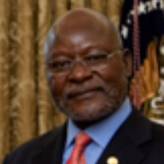 Andjaba, Martin
Martin Andjaba became ambassador of Namibia to the United States in September 2010.
- Table of Contents
- News
- Overview
- Basic Information
- History
- Newspapers
- History of U.S. Relations with Namibia
- Current U.S. Relations with Namibia
- Where Does the Money Flow
- Controversies
- Human Rights
- Debate
- Past Ambassadors
- Ambassador to the U.S.
- Embassy Web Site in the U.S.
- Comments
- Leave a comment

U.S. Ambassador to Namibia
The southwest African nation of Namibia will soon have a new ambassador from the U.S. Nominated July 30, career Foreign Service Officer Thomas F. Daughton had been senior advisor for Security Negotiations and Agreements in the Bureau of Political-Military Affairs of the State Department since July 2011. If confirmed by the Senate as expected, Daughton would succeed Wanda Nesbitt, who has served in Windhoek since November 2010.
Born in Arizona circa 1961, Daughton earned a B.A. at Amherst College in 1983 and a J.D. at the University of Virginia Law School in 1989. After graduating law school, Daughton was an associate at the New York office of the Chicago-based law firm Sidley & Austin.
Joining the Foreign Service in 1989, Daughton served early career foreign postings as vice consul at the embassy in Kingston, Jamaica, from 1989 to 1991, and as political officer at the embassy in Rabat, Morocco, from 1991 to 1993.
Returning to State Department Headquarters in Washington, Daughton served as a staff assistant in the Bureau of Near Eastern Affairs from 1993 to 1994 and as desk officer for the Philippines in the Bureau of East Asian and Pacific Affairs from 1994 to 1996.
Daughton was political and administrative Officer at the Consulate General in Thessaloniki, Greece, from 1997 to 2000, and served as deputy chief of mission and chargé d’affaires ad interim (2001-2002) in Libreville, Gabon, from 2000 to 2003.
After serving as counselor for political affairs at the embassy in Kuala Lumpur, Malaysia, from 2003 to 2006, Daughton served as deputy chief of mission at the embassy in Algiers, Algeria, from 2006 to 2009, where he got involved in a minor kerfuffle over a travel book about author Michael Mewshaw’s 4,000-mile trek across North Africa, including a visit to the U.S. embassy and a chat with Daughton. According to the book, Daughton was unusually—and undiplomatically—frank with Mewshaw, stating for example that Algeria’s “government is sclerotic and self-serving.” The State Department disavowed the quotes, arguing that they were inaccurate and that the conversation was intended to be off the record—which Mewshaw denies.
From 2009 to 2011, Daughton served as deputy chief of mission at the embassy in Beirut, Lebanon.
Daughton speaks French and Greek. He is married to Melinda Burrell.
-Matt Bewig
To Learn More:
Between Terror and Tourism: An Overland Journey Across North Africa (by Michael Mewshaw)
U.S. Takes Issue with Author’s Account of Visit at Embassy in Algiers (by Steven Levingston, Washington Post
Statement Before the Senate Foreign Relations Committee (pdf)
morePrevious U.S. Ambassador to Namibia
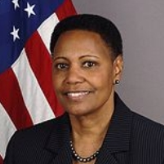
A native of New Jersey, Gail Dennise Mathieu was sworn in as the US Ambassador to Namibia on November 15, 2007.
Comments