



Jamaica occupies a mountainous island in the Caribbean that has become a popular destination for tourists all over the world. Originally settled by the Arawak people of South America, the island nation was subsequently colonized by Christopher Columbus and Spain, in 1510, then by the British, in 1670. During the Spanish reign, the Arawak people were all but eradicated by disease, slavery and war. Though sugar production came to be the country’s most successful export, regional conflicts led the British to outlaw slavery in 1834. Jamaica gained protection from pirates, when it allowed them to make the country a base of operations. In 1962, Jamaica gained its independence from Great Britain. Although political power has see-sawed since that time, the country’s recent leaders have taken steps to strengthen ties with the US and increase privatization. Due to the high levels of drugs, violence and gang activity, especially in the capital of Kingston, many choose to emigrate from Jamaica each year, moving to the US or Canada to make a new life.
Lay of the Land: A mountainous island in the Caribbean 90 miles south of Cuba, Jamaica is green and lush but with a surprisingly mild and temperate climate. Bright-colored birds, coral beaches, and over 200 kinds of orchids are some of Jamaica’s attractions.
The Arawakan-speaking Taino people of South America originally settled the island of Jamaica between 4000 and 1000 BC. When explorer Christopher Columbus first arrived in 1494, claiming Jamaica for Spain, the Arawak had established more than 200 villages.
Historically, the United States’ most important involvement with Jamaica was the slave trade. The US Peace Corps has operated in Jamaica since 1962. In the years since then, more than 3,300 US volunteers have served in the country.
The United States is Jamaica’s most important trading partner, accounting for 40% of the island nation’s total trade. In 2009 US-Jamaica trade in goods was approximately $2 billion.
U.S. Extradition Demand Leads to More than 70 Dead in Jamaica
The State Department reports that while Jamaica’s government generally respected the human rights of its citizens, there were serious problems in some areas, including: “unlawful killings committed by members of the security forces, abuse of detainees and prisoners by police and prison guards, poor prison and jail conditions, impunity for police who committed crimes, an overburdened judicial system and frequent lengthy delays in trials, violence and discrimination against women, trafficking in persons, and violence against person based on their suspected or known sexual orientation.”
Note: Embassy Kingston was established Aug 16, 1962, with Irving G. Cheslaw as Chargé d’Affaires ad interim.
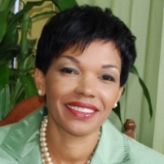 Marks, Audrey
Audrey Patrice Marks became Jamaica’s Ambassador to the United States in May 2010.
- Table of Contents
- News
- Overview
- Basic Information
- History
- Newspapers
- History of U.S. Relations with Jamaica
- Current U.S. Relations with Jamaica
- Where Does the Money Flow
- Controversies
- Human Rights
- Debate
- Past Ambassadors
- Ambassador to the U.S.
- Embassy Web Site in the U.S.
- Comments
- Leave a comment

U.S. Ambassador to Jamaica
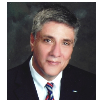
A career Foreign Service Officer who has spent the bulk of his career fighting the so-called “war on drugs” is set to be the next ambassador to the Caribbean island nation of Jamaica, home to more than 29,000 Rastafarians, who regard the smoking of marijuana a holy sacrament. Nominated September 10, Luis G. Moreno would succeed Pamela Bridgewater, who started her tour in Kingston in October 2010. Since June 2011, Moreno has been deputy chief of mission at the U.S. Embassy in Madrid, Spain.
Born circa 1955, Luis Moreno graduated from Staten Island Academy in 1973, going on to earn a BA in History at Fordham University in 1977 and an MA in Education at Kean College in 1981.
After joining the Foreign Service in 1983, Moreno served in the consular section and the Narcotics Assistance Unit at the embassy in Bogotá, Colombia, from spring 1984 to 1986, when he served as American citizens service chief at the embassy in Managua, Nicaragua. From 1987 to 1988, Moreno served as a staff assistant in the Latin American Affairs Bureau of the State Department.
Moreno spent the next five years as a drug warrior. From 1988 to 1990, Moreno served as deputy director of the Narcotics Affairs Section at the embassy in Lima, Peru, where he managed a coca eradication project. From 1990 to 1993, Moreno served as the Colombia desk officer for the Bureau of International Narcotics and Law Enforcement in Washington.
From 1993 to 1995, Moreno took a break from counter-narcotics to serve as refugee coordinator at the embassy in Port-au-Prince, Haiti, while thousands of “boat people” returned to the island, and as political-military officer after the United Nations intervention in 1994.
Intending to get back to drugs, in 1995 Moreno took an assignment at the embassy in Panama as narcotics director and law enforcement coordinator, but was detailed to serve as Kurdish refugee coordinator instead, supervising government efforts to resettle Kurdish refugees in the U.S.
From 1997 to 2001, Moreno served as narcotics affairs director at the embassy in Bogotá, Colombia, where he was one of the primary planners of “Plan Colombia,” an anti-drug effort that spent several billion dollars of U.S. aid to stop the flow of cocaine.
Back in Haiti, Moreno served as deputy chief of mission at the embassy, where he was the primary point of contact with the Multinational Peacekeeping Force, from August 2001 to August 2004. On February 29, 2004, it was Moreno who accompanied Haitian President Jean-Bertrand Aristide to the airport when he was forced out of office in a military coup.
Moreno served his first tour in Mexico, as consul general and principal officer at the consulate in Monterrey, from August 2004 to June 2007, and his first tour in the Middle East, as deputy chief of mission at the embassy in Tel Aviv, Israel, from August 2007 to May 2010. From May 2010 to June 2011, he served at the embassy in Baghdad, Iraq, as political-military affairs minister counselor and as force strategic engagement cell director.
Moreno speaks Spanish, French and some Haitian Creole.
-Matt Bewig
more
Previous U.S. Ambassador to Jamaica
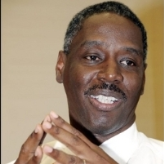
Isiah Parnell took over as U.S. chargé d’affaires in Jamaica in August 2009. Born in High Springs, Florida, Parnell was an “army brat” who attended high school in Germany. He earned B.A. (1978) and M.A. (1980) degrees from the College of William and Mary in Williamsburg, Virginia, in Government and Economics; and an M.A. degree in Urban Planning/Economics from Virginia Commonwealth University in Richmond, Virginia. He served in the Army 1981-1984, after which he joined the Department of State. His eight Foreign Service postings brought him to Mexico, Panama, Paraguay and Ghana. Between 2006 and 2008, Parnell was he Minister Counselor of Management Affairs at the U.S. Embassy in Mexico City.
Comments