



Familiar to classic film buffs from the Hollywood movie Casablanca, Morocco is the United States’ oldest ally. Although always nominally independent, in fact Morocco was run by France from 1912 to 1956. Strategically situated at the Strait of Gibraltar at the Western end of the Mediterranean, Morocco plays an important role in world diplomacy as a moderate Arab nation. It is a long-time ally of the United States. Today, the country controls most of Western Sahara, which the UN declares a “non-self-governing territory.”
Location: Located in Northwestern Africa, Morocco is bordered by Spain (across the Strait of Gibraltar) and the Mediterranean Sea to the north, Algeria to the east, Western Sahara to the south, and the Atlantic Ocean to the west. With a total land area of 172,414 square miles, Morocco is slightly larger than California. Two mountain ranges, the Rif and the Atlas, occupy more than a third of its total area. The vast majority of the population resides between the Atlantic Ocean and those mountains, south and east of which lays the sparsely populated Sahara Desert. The largest city in Morocco is Casablanca, where more than 3.2 million Moroccans live, while Rabat, home to only 627,000, is the capital. Although Morocco has annexed the adjacent territory of Western Sahara, an independence movement is active there, and very few countries have officially recognized Moroccan sovereignty.
The Berbers, a people who now inhabit the lands lying between the Sahara and the Mediterranean Sea, from Egypt to Morocco, were present in Morocco by the end of the second millennium BCE. They were primarily settled farmers, though some were nomadic. Phoenician traders established trading ports along Morocco’s Mediterranean coast in the twelfth century BCE. The northern coast of Morocco was part of the ethnically Phoenician Carthaginian Empire between the 5th century BCE and 146 BCE, when Rome defeated Carthage and extended Roman rule over the coast. In the 5th century, as Rome fell into decline, Morocco fell to the Vandals, Visigoths, and then Byzantine Greeks in rapid succession. During this time, however, the high mountains of Morocco remained in the hands of their Berber inhabitants.
Al Alam (Arabic)
Morocco was the first country to recognize the independence of the United States, which Sultan Sidi Muhammad Ben Abdullah did on December 20, 1777. In 1787, the two countries concluded a Treaty of Peace and Friendship, signed by Thomas Jefferson,John Adams, and Muhammad III, which became the first treaty ratified by the Congress under the Constitution. The treaty was renegotiated in 1836 and is still applicable today, representing the longest unbroken treaty relationship in U.S. history.
Famous Moroccan Americans:
In 2009, US imports from Morocco totaled $468 million and US exports to Morocco were worth $1.6 billion.
Morocco Expels U.S. Christians for Proselytizing
The 2009 US State Department’s Human Rights Report stated that, “According to the constitution, ultimate authority rests with King Mohammed VI.…Citizens did not have the right to change the constitutional provisions establishing their monarchical form of government or the establishment of Islam as the state religion….Corruption was a serious problem in all branches of government.
Should the International Community Allow Morocco to Retain Control of Western Sahara?
Samuel R. Gummere
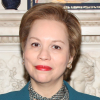 Alaoui, Lalla Joumala Alaoui
Princess Lalla Joumala Alaoui, a cousin of Morocco’s king, who most recently served as her country’s ambassador to the United Kingdom, was appointed in February 2016 to take over the embassy in Washington and was sworn in on October 13, 2016. She presented her credentials to President Donald Trump on April 24, 2017.
Morocco was one of the first countries to recognize the United States as an independent nation.
Lalla Joumala was born in 1962 in Rabat, Morocco, daughter of Princess Lalla Fatim Zahra and Prince Moulay Ali. Lalla Fatima Zohra was the eldest daughter of King Mohammad V and half-sister to the then-king, Hassan II, making her a cousin of current ruler Mohammad VI. Lalla Joumala’s aunt, Princess Lalla Aicha, was the world’s first female Arab ambassador, serving in the United Kingdom from 1965 to 1969. Lalla Joumala was the goddaughter of Marcia Israel, the founder of the Judy’s clothing chain.
Lalla Joumala attended Lycée Descartes in Rabat, then studied at the School of Oriental and African Studies, part of the University of London, where she earned a degree in politics and history. She married an Iranian, Muhammad Reza Nouri Esfandiari, in October 1986.
Lalla Joumala served for a time as an executive at Bank Al Maghrib, but turned her focus to diplomacy in the late 1990s. She served briefly as an attaché at Morocco’s mission to the United Nations in New York from 1999 to 2000. In 2001, Lalla Joumala led her country’s delegation to the UN session on HIV/AIDS.
Lalla Joumala founded the Moroccan-British Society, promoting improved relations between the two countries, in 2003. Then, in January 2009, she followed in her aunt’s footsteps when she took over as ambassador to the United Kingdom. She served there until being tapped for the U.S. post.
Lalla Joumala and her husband have an adult daughter, Lalla Nezha, who was born in 1989.
-Steve Straehley, David Wallechinsky
To Learn More
Lalla Joumala, une Princesse Dans le Vent (by M Sehimi, Maghress)
- Table of Contents
- News
- Overview
- Basic Information
- History
- Newspapers
- History of U.S. Relations with Morocco
- Current U.S. Relations with Morocco
- Where Does the Money Flow
- Controversies
- Human Rights
- Debate
- Past Ambassadors
- Ambassador to the U.S.
- Embassy Web Site in the U.S.
- Comments
- Leave a comment

U.S. Ambassador to Morocco
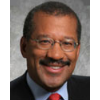
America’s original ally, the first to formally recognize the U.S. as a legitimate nation in 1777, will soon have a new ambassador. Nominated August 1 to serve as the next ambassador to Morocco, businessman Dwight L. Bush, Sr., was a leading campaign contribution bundler for President Barack Obama’s re-election campaign, raising more than $500,000. Bush is the president of D. L. Bush & Associates, a Washington, DC-based financial advisory and business consulting firm.
Born circa 1958 in East St. Louis, Illinois, Dwight Bush was the fourth of five children raised by Charlie and Jessie Bush, who “committed their entire lives to only one mission: to make sure that their children could fully participate in the American Dream,” according to Bush at his Senate confirmation hearing. Describing East St. Louis as “a town of rich history whose boom and bust cycles reflect both the hope and tragedy of industrial America,” Bush pronounced himself “fortunate to have grown up with the working class families, the great teachers, and the mentors that helped me along the way.”
After earning a B.A. in Government at Cornell University in 1979, Bush joined Chase Manhattan Bank, where he enjoyed a 15-year career that included international corporate banking assignments in Latin America, Asia, and the Middle East, and corporate finance and project finance in New York and Washington, D.C.
After 15 years at Chase, Bush had risen to managing director in the Project Finance Group when he resigned and joined Sallie Mae Corporation, serving as vice president of corporate development from 1994 to 1997.
From 1998 to 2006, Bush worked as a principal at Stuart Mill Capital, LLC; vice president and chief financial officer at SatoTravel Holdings, Inc.; and vice chairman at Enhanced Capital Partners, LLC.
Bush was president and CEO of Urban Trust Bank, Urban Trust Holdings and president of UTB Education Finance, LLC from 2006 through 2008. He also has worked as vice chairman of EntreMed, Inc. since 2010 and as a director since 2004.
Bush has worked with a variety of philanthropic and education institutions, including Cornell University, Xavier University (Louisiana), the GAVI Alliance, National Symphony Orchestra, The Vaccine Fund, and the Joint Centers for Social and Economic Studies. He served as a director of JER Investors Trust Inc. until May 28, 2009.
A lifelong Democrat, Bush has made political contributions worth nearly $140,000 over the years, most of it to Democrats, including more than $65,000 to the Democratic National Committee and $5,000 to Barack Obama in 2011. His only donations to Republicans were $500 to Lamar Smith of Texas in 2001, $1,200 to David McSweeney of Illinois in 1998 and 2006, and $2,000 to John McCain in 2000.
Dwight L. Bush, Sr., is married to News Corp attorney Antoinette Cook Bush, with whom he has two children, Dwight Bush Jr. and Jacqueline Bush.
-Matt Bewig
To Learn More:
Biography (Business Week)
Statement Before the Senate Foreign Relations Committee (pdf)
more
Comments