



Thursday, May 07, 2009
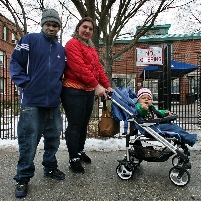 The Turner Family arrives at homeles intake center in the Bronx (AP Photo/Bebeto Matthews)
Not since perhaps the 1980s recession have so many news accounts surfaced about the homeless in America. As was the case then, today’s stories are filled with tales of working-class Americans—or at least those who were working before the economic downturn and housing crisis pushed many out of their jobs and into a bare subsistence life that no longer includes a house or apartment of their own. The accounts describe the lives of the so-called “economic homeless,” who have become displaced by layoffs or foreclosures, and are differentiated from the chronic homeless who suffer from mental illness, drug abuse or alcoholism.
For the “lucky ones,” a motel or a tent constitutes shelter, while for others it’s a county facility, the back of a pickup truck, or just the pavement. Tent cities and shelters from California to Massachusetts report growing demand from the newly homeless. In Sacramento, a burgeoning tent city along one of the city’s two rivers garnered national media coverage, causing city officials to address the problem and avoid further embarrassment on the nightly news.
The National Alliance to End Homelessness predicted in January that the recession would force 1.5 million more people into homelessness over the next two years. The federal stimulus package included more than $1 billion to help people pay rent, utility bills, moving costs or security deposits, but it still won’t be enough, according to Ellen Bassuk, president of the National Center on Family Homelessness.
“We’re hearing from shelter providers that the shelters are overflowing, filled to capacity,” Bassuk told USA Today. “The number of families on the streets has dramatically increased.”
-Noel Brinkerhoff
The New Homeless: Lost Homes, Lost Jobs, Teetering Lives (by Elizabeth Leland, Charlotte Observer)
Economic Casualties Pile into Tent Cities (by Emily Bazar, USA Today)
The New Homeless in Berks County (by Erin Negley, Reading Eagle)
The New Homeless in America (BBC News)
In Sacramento's Tent City, a Torn Economic Fabric (by Maria L. La Ganga, Los Angeles Times)
Comments