



Wednesday, July 15, 2009
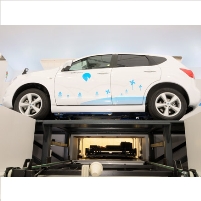 Electric car battery swapping station protoytpe (photo: Better Place)
Electric cars by the thousands could be traveling America’s roads within the next 20 years, assuming industry and car buyers embrace an important new facet of the vehicles: switchable batteries. Economist Thomas Becker at the University of California Berkeley’s Center for Entrepreneurship & Technology argues in his new study that by selling electric vehicles without their expensive batteries, the sticker price can drop dramatically and encourage consumers to try the alternative form of auto transportation.
Under Becker’s model, electric car owners would rely on a network of car battery switching stations and charging stations to drive longer distances than previous electric cars, making the new non-gasoline autos more reliable and affordable. As Becker sees it, this development in electric car sales and ownership could have a positive economic and environmental impact on the nation, including:
- A net gain of up to 350,000 new jobs by 2030 through electric vehicle adoption
- Reduced auto emissions by as much as 62% from 2005 levels
- A decline in oil imports of up to 3.7 million barrels per day, equivalent to the amount currently imported daily from the Persian Gulf region and Venezuela
-Noel Brinkerhoff
UC Berkeley Study Finds Separate Battery Ownership Accelerates Mass-Market Adoption of Electric Cars (PR Web)
Electric Vehicles in the United States: A New Model with Forecasts to 2030 (by Thomas Becker, Center for Entrepreneurship & Technology, UC Berkeley) (PDF)
Better Place Unveils an Electric Car Battery Swap Station (by Chuck Squatriglia, Wired)
Comments