



Saturday, April 25, 2009
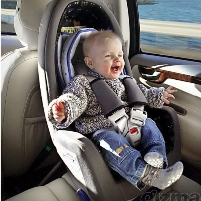
On April 16 Volvo announced its launch of three new child seats that offer a wider range of protection for children up to the age of ten, but the National Highway Traffic Safety Administration (NHTSA) has banned the sale of these child seats in the U.S. because federal laws stipulate that child seats must fit in all car models and cannot be vehicle-specific.
One of the three new child seats allows for children to ride rearward-facing up to the age of six, much older than previous child seats have allowed. According to Volvo, children have weaker necks and their heads are proportionately larger than adults’. When children ride rearward-facing, the impact on a child during a collision is spread out. Volvo recommends that children should ride rearward-facing up to the age of six in order to prevent fatal injuries during a collision. By allowing older children to ride rearward-facing, Volvo’s new child seats can potentially save many children’s lives.
But because these child seats are specific to Volvos, the NHTSA has banned Volvo’s introduction of these child seats in the U.S., even to Volvo drivers. The NHTSA recommends that children only need to ride in the backseat, rearward-facing up to the age of 1. According to U.S. rules, toddlers and older children should ride in backseat forward-facing toddler seats or booster seats.
Volvo owners in Europe and Asia will be able to buy the new seats this summer, but Volvo-driving parents in North America will not.
-Jamie Mei Cheng
Volvo Creates New Child Restraints - But Can't Offer Them in U.S. (by Anita Lienert, Inside Line)
Federal Laws Keeping Volvo from Offering Safer Child Seats (by Jonathon Ramsey, Autoblog)
See all 11
comments
Comments