



Thursday, April 29, 2010
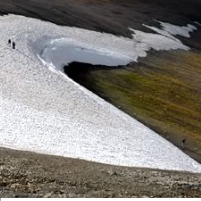 Ice patch in Mackenzie Mountains (photo: Tom Andrews)
In the frozen reaches of Canada, warmer temperatures brought on by climate change have yielded a bounty of historical information for archaeologists. Using the new discipline of ice patch archeology, scientists in recent years have uncovered in the Mackenzie Mountains 2,400-year-old spears, 1,000-year-old snares, and bows and arrows dating back 850 years. Ice patches are accumulations of snow that used to remain frozen all year, but which are now melting and revealing artifacts that have been hidden for centuries.
In addition to archaeologists, biologists have benefited from access to the exposed, once-frozen terrain. Finds include dung containing plant remains, insect parts, pollen and caribou parasites, as well as DNA evidence that’s yielding information on the lineage and migration patterns of caribou.
“We’re just like children opening Christmas presents,” said Tom Andrews, an archaeologist who’s leading the International Polar Year Ice Patch Study. “I kind of pinch myself.”
-Noel Brinkerhoff
Ancient Artifacts Revealed as Northern Ice Patches Melt (Arctic Institute of North America)
Melting Arctic Ice Reveals Hunting Weapons (Shannon Montgomery, Globe and Mail)
Melting Arctic Opens Profit Opportunities for Oil, Gold, Tourism (by Noel Brinkerhoff, AllGov)
The Bright Side of Global Warming (AllGov)
Comments