



Since gaining independence in 1960, Cameroon has been ruled by just two men. Ahmadou Ahidjo used emergency powers lasting 20 years to maintain his dictatorial rule, before giving way to Paul Biya, who has led Cameroon since 1982. Biya’s dominance of the government has not been as heavy-handed as his predecessor, although every election he has won has been marked by either a complete lack of political opposition or accusations of voting irregularities. Human rights abuses have been a consistent and serious problem in Cameroon for many years. The government’s poor treatment of its citizens has not prevented the US from maintaining good relations with Cameroon or conducting business with it. Oil is the primary trade between the two countries, with the United States buying millions of dollars of petroleum each year.
Lay of the Land: On the Gulf of Guinea at the bend below West Africa, Cameroon is covered with rain forest in the south and along the coast; the climate there is exceedingly humid. A central plateau rises to 4,500 feet, and the forested mountains of the west rise above 13,000 feet at Mt. Cameroon. The northern region is primarily savanna, with its rivers draining inland to Lake Chad, rather than to the Atlantic. Inland weather varies considerably, but outside the southern region it is generally much drier than the coast.
The United States established formal diplomatic relations with Cameroon shortly after it achieved independence from France in 1960. Those ties have been maintained without interruption. For many years, the US Agency for International Development (USAID) maintained an office in Cameroon until 1994, when federal budget cuts forced the agency to shut down its program. Cameroon has continued to receive some USAID funding since this decision.
The US State Department characterizes U.S.-Cameroonian relations as “close,” while adding that the African nation’s longstanding poor human rights record has been a cause for concern with American officials. These concerns have not prevented the US government from sending Peace Corps volunteers to Cameroon, where approximately 140 volunteers work in agroforestry, community development, education and health.
Oil represents the most important import from Cameroon for the United States. In 2003, the US imported $167.5 million in oil, down to approximately $101 million in 2007. Fuel oil is another key import, topping out at $111.8 million in 2007. The US has been increasingly buying lumber from Cameroon, going from $8.2 million in 2003 to $35 million in 2007.
The State Department characterizes Cameroon as having a “strong presidency” in reference to the long reign of Paul Biya, who has ruled the country since 1982, thanks to elections marred by “irregularities.” International and domestic observers have noted significant deficiencies in the electoral process, including substantial barriers to registration and insufficient safeguards against fraudulent voting.
Leland Barrows
Appointment: Apr 20, 1960
Presentation of Credentials: Jun 9, 1960
Termination of Mission: Left post, Sep 6, 1966
Robert L. Payton
Appointment: Jan 26, 1967
Presentation of Credentials: Mar 4, 1967
Termination of Mission: Left post, May 27, 1969
Lewis Hoffacker
Appointment: Dec 2, 1969
Presentation of Credentials: Dec 20, 1969
Termination of Mission: Left post, Jun 6, 1972
C. Robert Moore
Appointment: Jun 27, 1972
Presentation of Credentials: Jul 22, 1972
Termination of Mission: Left post, Jul 28, 1975
Herbert J. Spiro
Appointment: Jul 24, 1975
Presentation of Credentials: Sep 1, 1975
Termination of Mission: Left post, May 7, 1977
Mabel M. Smythe
Appointment: May 11, 1977
Presentation of Credentials: Oct 1, 1977
Termination of Mission: Left post, Feb 24, 1980
Hume A. Horan
Appointment: Jun 30, 1980
Presentation of Credentials: Jul 29, 1980
Termination of Mission: Left post, May 17, 1983
Appointment: May 26, 1983
Presentation of Credentials: Sep 8, 1983
Termination of Mission: Left post, Jul 30, 1987
Mark L. Edelman
Appointment: Jul 31, 1987
Presentation of Credentials: Sep 9, 1987
Termination of Mission: Left post, Mar 19, 1989
Frances D. Cook
Appointment: Nov 21, 1989
Presentation of Credentials: Dec 21, 1989
Termination of Mission: Left post, Jan 1, 1993
Harriet Winsar Isom
Appointment: Aug 17, 1992
Presentation of Credentials: Jan 19, 1993
Termination of Mission: Left post Jan 17, 1996
Appointment: Dec 19, 1995
Presentation of Credentials: Feb 28, 1996
Termination of Mission: Left post Aug 17, 1998
Appointment: Oct 22, 1998
Presentation of Credentials: Jan 5, 1999
Termination of Mission: Left post Nov 4, 2001
Appointment: Sep 5, 2001
Presentation of Credentials: Dec 21, 2001
Termination of Mission: Left post, July 10, 2004
Appointment: July 2, 2004
Presentation of Credentials: Oct. 29, 2004
Termination of Mission: 2007
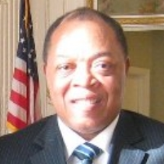 Foe-Atangana, Joseph
- Table of Contents
- News
- Overview
- Basic Information
- History
- Newspapers
- History of U.S. Relations with Cameroon
- Current U.S. Relations with Cameroon
- Where Does the Money Flow
- Controversies
- Human Rights
- Debate
- Past Ambassadors
- Ambassador to the U.S.
- Embassy Web Site in the U.S.
- Comments
- Leave a comment


U.S. Ambassador to Cameroon

The west central African nation of Cameroon is set to receive a new ambassador from the United States. Nominated by President Barack Obama on July 30, career diplomat Michael S. Hoza has been management counselor at the U.S. Embassy in Moscow, Russia since 2010. If confirmed by the Senate, Hoza would succeed Robert P. Jackson, who had served in Yaoundé since September 2010.
Born circa 1957, Hoza earned a B.S. at Georgetown University in 1979 and worked at The Washington Post for several years before joining the Foreign Service circa 1990.
At the State Department, Hoza served as post management officer in the Bureau of African Affairs for the embassies at Luanda, Angola, and Mogadishu, Somalia, from 1991 to 1993. He served as administrative officer at the embassy in Asmara, Eritrea, from 1993 to 1997, and as deputy chief of mission at the embassy in Mbabane, Swaziland, from 1997 to 2000.
Shifting his focus from Africa, Hoza served as the management officer and acting deputy chief of mission at the embassy in Kathmandu, Nepal, from 2000 to 2002; as human resources officer at the embassy in Paris, France, from 2002 to 2004; and as management counselor at the embassy in Madrid, Spain, from 2004 to 2007.
Returning to Africa, from 2007 to 2010 Hoza was management counselor and acting deputy chief of mission at the embassy in Nairobi, Kenya.
Michael Hoza is married to Suzanne Hoza, an international development consultant, with whom he has two sons, Paul and Christopher.
-Matt Bewig
To Learn More:
Statement Before the Senate Foreign Relations Committee (pdf)
morePrevious U.S. Ambassador to Cameroon
Comments