



Slovakian nationalism arose in the late 1800s, and after World War I ended, Slovakia merged with the Czechs to form Czechoslovakia. But when the Czechs were forced to cede territory to the Nazis in World War II, Slovakia became separate again, albeit as a puppet state for the Nazis. After World War II, Czechoslovakia was reunited and fell under Soviet influence. For the next four decades, communism ruled the country until the Velvet Revolution began in 1989. Protests eventually brought down the communist government and opened the way for Slovakia and the Czech Republic to part ways once again. Since then, Slovakia has incorporated many economic and political reforms that led it to join NATO and the European Union in 2004. In 2006, Robert Fico became prime minister and quickly made a name for himself when he stated publicly that he would never allow the United States to build a military base on Slovakian soil, unlike Poland had done. Slovakia has also dealt with the controversy of forced sterilization for Gypsy women, a practice that was commonplace under the Nazi regime.
Lay of the Land: Slovakia is bordered by Austria, the Czech Republic, Hungary, Poland, and Ukraine. Its land mass occupies an area approximately twice the size of New Hampshire. The terrain is mountainous in the north, with low mountains in the center, and hills to the west. The Danube River basin is found in the south of the country.
Slovakia’s early history dates back to the Early Paleolithic Era. Archeological evidence, such as stone tools and human skeletons, show that the culture was trading with Mediterranean and Central European cultures very early on. By the Neolithic Era, the Slovakian culture transitioned to agriculture and became one of the hubs along the European trading routes.
The United States played a major role in the establishment of the original Czechoslovak state on October 28, 1918, with President Woodrow Wilson’s Fourteen Points serving as the basis for the union of the Czechs and Slovaks. Tomas Masaryk, father of the Czechoslovak state and its first president, visited the United States during World War I and used the US Constitution as a model for the first Czechoslovak Constitution.
Noted Slovak-Americans
In 2009, the United States exported $208.2 million and imported $623.2 million worth of goods through trade with Slovakia, leaving a negative current trade balance of n$415 million.. This is a decrease in trade from 2008, during which the US exported $547.5 million and imported $1.3 trillion from Slovakia.
Slovak Prime Minister Raises Objection to US Military Bases
According to the State Department, “Notable human rights problems included some continuing reports of police mistreatment of Romani suspects and lengthy pretrial detention; restrictions on freedom of religion; concerns about the integrity of the judiciary, corruption in national government, local government, and government health services; violence against women and children; trafficking in women and children; and societal discrimination and violence against Roma and other minorities.”
Note: The United States recognized the Slovak Republic as an independent state and established diplomatic relations with it on Jan 1, 1993. Embassy Bratislava was established Jan 4, 1993, with Paul Hacker as Chargé d’Affaires ad interim.
Appointment: Nov 22, 1993
Presentation of Credentials: Dec 16, 1993
Termination of Mission: Left post Mar. 29, 1996
Appointment: Jan 18, 1996
Presentation of Credentials: Apr 4, 1996
Termination of Mission: Left post May 21, 1999
Appointment: Aug 3, 2000
Presentation of Credentials: Sep 7, 2000
Termination of Mission: Left post Apr 15, 2001
Note: Commissioned during a recess of the Senate; a later nomination of Sep 28, 2000, was not acted upon by the Senate.
Appointment: Nov 26, 2001
Presentation of Credentials: Jan 5, 2002
Termination of Mission: Left post Dec 19, 2004
Appointment: Jun 21, 2005
Presentation of Credentials: Aug 23, 2005
Termination of Mission: Left post, Dec 5, 2007
Appointment: Oct 29, 2007
Presentation of Credentials: Dec 12, 2007
Termination of Mission: January 20, 2009
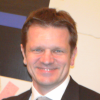 Kmec, Peter
The european nation of Slovakia—which this year celebrates the twentieth anniversary of its independence from the former Czechoslovakia—sent a new ambassador to the U.S. in September 2012, an experienced diplomat who had served in the U.S. before. Peter Kmec presented his credentials to President Barack Obama on September 19, succeeding Peter Burian, who had been Bratislava's man in Washington since 2008.
Born circa 1964, Peter Kmec earned a graduate degree in International Relations and Affairs at the Moscow State Institute of International Relations in 1990, and a degree in International Law and Legal Studies at Comenius University in Bratislava the same year.
Immediately joining the Federal Ministry of Foreign Affairs of Czechoslovakia, Kmec served from 1990 to 1991 in its Department of International Economic Relations in Prague (now part of the Czech Republic), and in 1992 served as an advisor to the chairman of the Chamber of Nations of the Czechoslovak Federal Assembly.
After Slovakia became independent on January 1, 1993, Kmec joined the newly formed Ministry of Foreign Affairs of Slovakia, serving as Second Secretary with the Slovak Permanent Mission to the Organization for Security and Co-operation in Europe (OSCE) in Vienna, Austria, from 1993 to 1997.
After serving as deputy director in the Department of Security Policy at the Slovakian Foreign Ministry in Bratislava from 1997 to 1998, Kmec served as political counselor on another OSCE mission, this one to Georgia, from 1998 to 1999. Returning to Bratislava, he served as deputy chief of the Foreign Minister’s cabinet from 1999 to 2000.
Kmec spent the first half of the new century's first decade as the number two man at two key embassies, serving as deputy chief of mission at Slovakia's embassy in Tel Aviv, Israel, from 2000 to 2002, and holding the same title at Slovakia's embassy in Washington, DC, from 2003 to 2005. Although this was Kmec's first official posting to the U.S., in 1992 he attended a study program at the Library of Congress as part of the Frost Task Force on Parliamentary Development.
Back in Bratislava, Kmec served as chief of the Foreign Minister’s cabinet from 2005 to 2007.
Kmec was appointed to his first ambassadorship in 2007, serving as Slovakia's ambassador to Sweden from August 2007 to July 2012.
Peter Kmec speaks English and Russian. He is married to Monika Kmecová and has two children, Lucia and Adam.
- Table of Contents
- News
- Overview
- Basic Information
- History
- Newspapers
- History of U.S. Relations with Slovakia
- Current U.S. Relations with Slovakia
- Where Does the Money Flow
- Controversies
- Human Rights
- Debate
- Past Ambassadors
- Ambassador to the U.S.
- Embassy Web Site in the U.S.
- Comments
- Leave a comment

U.S. Ambassador to Slovakia
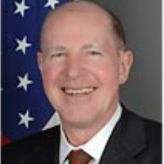
A business executive from the publishing and timber industries, Theodore “Tod” Sedgwick has no experience as a foreign diplomat. But the chosen ambassador to
Slovakiahas donated substantially to Democratic candidates, especially to President Barack Obama’s 2008 campaign. Sedgwick was officially sworn in on July 28, 2010, although he had already taken the oath of office on his front porch on Martha’s Vineyard on July 4.
Previous U.S. Ambassador to Slovakia
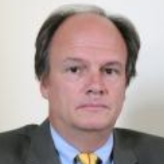
A native of Mississippi, Keith A. Eddins has served as the US Chargé d'Affaires to Slovakia since August 2, 2008. Eddins attended the University of Virginia and received a Bachelor of Arts in 1980. He later earned a Master of Arts from Princeton University’s Woodrow Wilson School of Public and International Affairs. He has studied Slovak, Czech, Russian, French and Spanish.
Comments