



Less than 20 years old, the Czech Republic sprang into being following the fall of communism in Eastern Europe. For most of their modern history, the Czech people had to share their government and nation with the Slovaks in the old Czechoslovakia. Almost half of Czechoslovakia’s history was dominated by the old Soviet Union, which maintained strong control over most of Eastern Europe during the Cold War. An attempt to pull away from Soviet control in 1968 produced the Prague Spring, which was short-lived and forcibly crushed. Once the Soviet Union fell apart, Czech and Slovak leaders decided to go their separate ways and create two independent nations in the 1993. Since that time, the US has courted Czech leaders and established a strong economic and military relationship. With the help of American officials, the Czech Republic joined the North Atlantic Treaty Organization (NATO) in 1999, and in 2008, the Czech government signed an agreement with the US government, to build a radar station in the republic as part of an anti-ballistic missile system that the Bush administration badly wanted. Both of these moves have been vehemently opposed by Russia, which sees the military alliance between the Czech Republic and the West as a threat to Russian security.
Lay of the Land: The Czech Republic is located in Eastern Europe. It is bordered by Germany to the west, Poland to the North, Slovakia to the east and Austria to the south.
Millions of Americans have their roots in Bohemia and Moravia, and a large community in the United States has strong cultural and familial ties with the Czech Republic. President Woodrow Wilson and the United States played a major role in the establishment of the original Czechoslovak state on October 28, 1918. President Wilson’s 14 Points, including the right of ethnic groups to form their own states, were the basis for the union of the Czechs and Slovaks. Tomáš Masaryk, Czechoslovakia’s first president, visited the United States during World War I and worked with American officials in developing the basis of the new country. Masaryk used the US Constitution as a model for the first Czechoslovak constitution.
The US government views relations with the Czech Republic as “excellent.” The Czech Republic has made contributions to international allied coalitions in Afghanistan, Iraq and Kosovo. In early 2008, the Czech Republic established a 200-person Provincial Reconstruction Team (PRT) in Logar Province, Afghanistan. In addition, an Operational Mentoring and Liaison Team (OMLT) was deployed to work alongside the Afghanistan National Air Corps. The deployment of this Czech OMLT complements the ongoing donation of 12 Czech military helicopters to Afghanistan, six of which have been delivered. Additionally, the Czechs will redeploy a Special Forces unit to Afghanistan for a third time as well as a 65-person security detachment to support Dutch forces.
The US imports from the Czech Republic considerably more than it exports. Some of the top purchases in 2007 were electric apparatus and parts ($183 million), automotives parts and accessories ($162.3 million), parts for civilian aircraft ($150 million) and iron and steel products ($101 million). Altogether, the US imported $2.43 billion in goods from the Czech Republic.
Anti-Missile Pact Draws Russian Ire
State Department officials say there exist in the Czech Republic problems with both law enforcement and judicial corruption, and high-level political intervention sometimes resulted in investigations being prematurely closed or reassigned to other jurisdictions. According to the 2007 State Department report, there were some reports of police mistreatment of detainees and official tolerance of inmate-on-inmate abuse in one prison. There were reports that police failed to provide detainees access to an attorney. Child abuse and trafficking in persons for sexual exploitation and forced labor continued to be problems. Random violence, rallies, and vandalism by neo‑Nazis and skinhead groups against Roma (aka Gypsies) occurred throughout the year. Societal discrimination against minorities, especially Roma, continued, and a lack of equitable education, housing, and employment opportunities for Roma persisted.
Adrian A. Basora
Appointment: Jun 15, 1992
Presentation of Credentials: Jul 20, 1992
Termination of Mission: Left post, Jul 15, 1995
Appointment: Jun 27, 1995
Presentation of Credentials: Aug 31, 1995
Termination of Mission: Left post Aug 31, 1998
Appointment: Oct 22, 1998
Presentation of Credentials: Dec 10, 1998
Termination of Mission: Left post Dec 16, 2000
Appointment: Aug 7, 2001
Presentation of Credentials: Aug 28, 2001
Termination of Mission: Left post Dec 16, 2003
Appointment: Oct 6, 2003
Presentation of Credentials: Jan 13, 2004
Termination of Mission: Left post, Sep 15, 2006
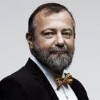 Kmoníček, Hynek
Hynek Kmoníček, a long-time member of his country’s Ministry of Foreign Affairs, who for a time served as deputy foreign minister, took over as the Czech Republic’s ambassador to the United States on March 16, 2017. After the election of Donald Trump as president of the U.S., Kmoníček predicted that “Donald Trump’s administration will be a combination of the aggressive isolationism of Andrew Jackson together with the strategy of Richard Nixon minus Kissinger.”
Kmoníček was born October 22, 1962, in Pardubice, in what was then Czechoslovakia. He attended the University of South Bohemia, studying music and education, and earned a doctorate in Education in 1986. He went on to Prague’s Charles University, where he earned degrees in English and Arabic studies in 1989.
As might be guessed from his original field of study, he started his working life in 1986 as a music teacher, and played lute and classical guitar in concerts as well. Beginning in 1991, he served as a tutor of English and Arabic at the University of Pardubice. He took a year off starting in 1994 to study the modern history of the Middle East, with a specialty in Hebrew and Arabic languages at Hebrew University in Jerusalem.
Kmoníček joined the foreign ministry in 1995 as a desk officer in the Middle East department and by 1997 he was director of the North Africa and Middle East Department. In 1999, Kmoníček was named director general for Asia, Africa and the Americas.
His first ambassadorial assignment came in 2001, when he was made the Czech Republic’s representative to the United Nations in New York. There he was chair of the Fifth Committee, which handled the organization’s budgetary and administrative issues. In 2006, Kmoníček was appointed ambassador to India, with responsibility for Bangladesh, Nepal, Maldives and Sri Lanka. Among his many responsibilities in this position, he helped a Czech scientist who was arrested by Indian officials in 2008 for illegally collecting rare beetles. In 2015, the scientist, Emil Kučera, discovered a beetle in China, which he named Anthaxia Kmoníček for Kmoníček.
Kmoníček returned to Prague in 2009 to serve as deputy foreign minister for legal, consular and political affairs. By the next year, however, Kmoníček had worn out his welcome with Foreign Minister Karol Schwarzenberg, and in 2011 Kmoníček was transferred to the position of ambassador to Australia, with responsibility for New Zealand, the Cook Islands, Fiji, Solomon Islands, Tonga, Vanuatu and Samoa. Schwarzenberg was quoted at the time that if the Czech Republic had an embassy on Mars, he would have sent Kmoníček there.
But Miloš Zeman took over as president of the Czech Republic in 2013, and brought Kmoníček home to serve as his chief foreign policy adviser, director of the Foreign Affairs Department, a role he filled until taking the Washington job.
In 2015, Kmoníček cooled a brewing spat between Zeman and U.S. Ambassador Andrew Schapiro, who suggested that Zeman, as the leader of an EU country, not attend a military parade in Moscow celebrating the anniversary of the end of World War II.
Kmoníček is married to Indira Gumarova and has a son and three daughters. Kmoníček enjoys gourmet cooking and collecting hot sauces.
-Steve Straehley
To Learn More:
U.S. Ambassador Praises Zeman’s Man as Skillful Diplomat (Prague Post)
Hynek Kmoníček (by Indira Gumarova, Czech and Slovak Leaders)
Hynek Kmonícek Of Czech Republic Chairman Of Fifth Committee (United Nations)
- Table of Contents
- News
- Overview
- Basic Information
- History
- Newspapers
- History of U.S. Relations with Czech Republic
- Current U.S. Relations with Czech Republic
- Where Does the Money Flow
- Controversies
- Human Rights
- Debate
- Past Ambassadors
- Ambassador to the U.S.
- Embassy Web Site in the U.S.
- Comments
- Leave a comment

U.S. Ambassador to Czech Republic
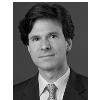
On March 6, 2014, President Barack Obama nominated attorney Andrew H. Schapiro as ambassador to the Czech Republic. Like many of Obama’s nominees, Schapiro was a “bundler,” or someone who helped raise money for the president’s campaigns. Schapiro was very successful in this regard, with some estimates of his fund-raising reaching $1.26 million.
Schapiro is from Chicago, graduating from Homewood-Flossmoor High School in the suburb of Flossmoor in 1981. His mother was a Czech survivor of the Holocaust who became a psychiatrist; his father, Joseph, was a pediatrician. Schapiro’s mother, Raya Czerner Schapiro, co-compiled a book, Letters From Prague: 1939-1941, dealing with the experience of her grandmother and uncle during the Nazi occupation of Prague.
After high school, Schapiro went to Yale, where he graduated with a B.A. in 1985. He was then named a Marshall Scholar at Oxford University, earning his M.A. in Philosophy, Politics and Economics in 1987. Schapiro returned to the United States to enter Harvard Law School, where he was a year ahead of the future president, serving on the Law Review with Obama. Schapiro received his law degree in 1990.
Schapiro then clerked for Judge Richard Posner of the U.S. Court of Appeals Seventh Circuit in Chicago from 1991 to 1992. He then went to Washington to clerk for Supreme Court Justice Harry Blackmun from 1992 to 1993. While there, Schapiro was credited toward moving Blackmun to an “abolitionist position” on the death penalty.
Beginning in 1993, Schapiro worked in the Federal Defenders Office for the Southern District of New York. In 1998, he joined the private sector, signing on with the law firm Mayer Brown, and becoming a partner in 2001.
In 2011, Schapiro was lured to the firm of Quinn Emanuel Urquhart and Sullivan, specializing in appellate work. Among those he represented during his years at the two firms were You Tube/Google, successfully defending them in a $1 billion copyright infringement suit brought by Viacom; Philip Morris, successfully defending the tobacco in an action relating to punitive damages; Las Vegas Sands Corporation CEO Sheldon Adelson in a billion-dollar dispute over ownership of the Venetian Macao hotel and casino; and ex-New York Police Commissioner Bernard Kerik in his unsuccessful appeal of his sentence for tax fraud and lying to White House officials. Schapiro’s pro bono clients have included the Sierra Club, the Asian-American Legal Defense and Education Fund and the Innocence Project.
Schapiro is married to Tamar Newberger, who works in the technology industry in marketing. They have a daughter, Galia, and a son, Alexander.
-Steve Straehley
To Learn More:
Lawyer Selected For Czech Ambassadorship Also Major Obama Fundraiser (by Michael Beckel, Center for Public Integrity)
Another Obama Bundler From Chicago Gets a Plum Diplomatic Post (by Carol Felsenthal, Chicago Magazine)
morePrevious U.S. Ambassador to Czech Republic
Comments