



Encompassing what was once commonly known as the “Occupied Territories,” Palestine today serves as the home for nearly four million Palestinians living in the Gaza Strip and the West Bank. It has long been the source of considerable violence and turmoil between Palestinians and Israelis, who until the 1990s ruled over Gaza and the West Bank. The plight of the Palestinians since World War II has been lamented by many in the West, including in the United States. Official policy out of Washington, DC, has historically favored Israel and supported Israeli defense policy, even when military actions threatened Palestinian human rights. Beginning in the late 1980s, a violent rebellion within the occupied territories, plus a public shift in PLO rhetoric, moved Israeli and Palestinian officials to negotiate the establishment of limited sovereignty for Palestinians over their own affairs. Even with the creation of the Palestinian Authority, troubles and violence continue to plague the region, especially after Hamas gained control of Gaza’s government operations. Rocket attacks by Hamas into Israeli territory prompted a large-scale military response by Israel’s air force beginning December 27, 2008,. On January 3, 2009, the Israeli army launched a ground invasion of northern Gaza. Estimates of the number of Palestinian fatalities vary, but are generally considered to be about 1,400.
Lay of the Land: Palestine consists of the Gaza Strip and the West Bank. Gaza is a coastal strip of land along the Mediterranean Sea bordered by Egypt on the southwest and Israel on the north and east. It is about 25 miles long and 4–7.5 miles wide. The West Bank is entirely landlocked and approximately the size of Delaware. It is bordered by Jordan to the east and by Israel to the north, south and west.
Palestinian concerns have often taken a back seat to the United States’ commitment to Israel. Although American policymakers have expressed concerns over the state of affairs for those living in what was once known as the Occupied Territories, the US has consistently backed Israel in the course of discussions over what to do with a Palestinian state. From the 1960s through most of the 1980s, Washington echoed Israel’s view that Yassar Arafat first had to go, or the PLO had to stop committing acts of terrorism, before any recognition would be given to a Palestinian state.
Since the signing of the Oslo Accord, US policy toward the Palestinians has supported the establishment of a Palestinian state—but only through a negotiated two-state solution with Israel. US administrations have consistently sided with Israel in the course of addressing issues or periods of violence between Israelis and Palestinians. Members of Congress have complained that US funds for Palestinian refugees channeled through the United Nations have been mismanaged or found their way into the wrong hands.
In 2008 the US exported a total of $400,000 in goods to the West Bank and Gaza, while it imported $4.9 million. This was a drastic change from the previous year, during which the US traded $17.6 million in exports and $3.6 million in imports to and from the Palestinian territories. In 2007 the US exported nearly $14 million in wheat to Palestine—$9.3 million to the West Bank and $4.6 million to the Gaza Strip. These figures coincided with a 99% increase from 2006 in US grain exports to destinations worldwide. The US, however, did not export any wheat to Palestine in 2008.
US House Rejects Goldstone Report (Al Jazeera)
Domestic abuse of women, societal discrimination against women and persons with disabilities, and child labor remain serious problems.
Transforming America’s Israel Lobby: The Limits of Its Power and the Potential for Change (by Dan Fleshler, 2009)
 Areikat, Maen Rashid
Palestine does not maintain an embassy in the US, however the Palestine Liberation Organization does operate a mission in Washington, DC.
Mansour met his wife, Caryl Mansour (formerly Caryl Galicia), at YSU when they were both students there. They have a daughter and a son.
- Table of Contents
- News
- Overview
- Basic Information
- History
- Newspapers
- History of U.S. Relations with Palestine
- Current U.S. Relations with Palestine
- Where Does the Money Flow
- Controversies
- Human Rights
- Debate
- Past Ambassadors
- Ambassador to the U.S.
- Embassy Web Site in the U.S.
- Comments
- Leave a comment


U.S. Ambassador to Palestine
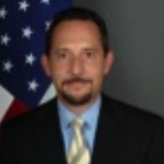
On September 6, 2009, Daniel Rubinstein replaced Jake Walles as the US Consul General and Chief of Mission in Jerusalem.
US Consulate in Jerusalem 2009 Programs and Events
more
Comments