The State Department reported in 2008 that the Eritrean government continued to have a poor human rights record, and authorities continued to commit numerous serious abuses. Problems included: “abridgement of citizens' right to change their government through a democratic process; unlawful killings by security forces; torture and beating of prisoners, sometimes resulting in death; arrest and torture of national service evaders, some of whom reportedly died of abuses while in detention; harsh and life threatening prison conditions; arbitrary arrest and detention, including of family members of national service evaders; executive interference in the judiciary and the use of a special court system to limit due process; infringement on privacy rights; and roundups of young men and women for national service.”
There were also “severe restrictions of basic civil liberties, including the freedoms of speech, press, assembly, association, and religion, particularly for religious groups not approved by the government; restriction of freedom of movement and travel for diplomats, the personnel of humanitarian and development agencies, and the UN Mission to Eritrea and Ethiopia (UNMEE); and restriction of the activities of nongovernmental organizations (NGOs). There was societal abuse and discrimination against women; widespread practice of female genital mutilation (FGM); governmental and societal discrimination against members of the Kunama ethnic group; widespread societal discrimination based on sexual orientation, and reports of discrimination against those with HIV/AIDS.”
The government acted as a principal source and conduit for arms to insurgent groups in Somalia, according to a June report issued by the UN Munitions Monitoring Group.
There were reports of summary executions and of individuals shot on sight near the Ethiopian and Sudanese borders, allegedly for attempting to cross the border illegally. For example, on September 17, 2007, security forces reportedly shot and killed a member of the al-Rashaydeh tribe for refusing to comply with security authorities and trying to escape. The victim sustained bullet wounds to the face and head, according to the family.
There were numerous reports that security forces resorted to torture and physical beatings of prisoners, particularly during interrogations. There were credible reports that several military conscripts died following such treatment. Security forces severely mistreated and beat army deserters, draft evaders, persons attempting to flee the country without travel documents and exit permits, and members of certain religious groups. Security forces subjected deserters and draft evaders to such disciplinary actions as prolonged sun exposure in temperatures of up to 120 degrees Fahrenheit and the binding of hands, elbows, and feet for extended periods. No known action was taken during the year to punish perpetrators of torture and abuse.
Torture was widespread in an unknown number of detention facilities, corroborated by prison escapees. For example, authorities suspended prisoners from trees with their arms tied behind their backs, a technique known as "almaz" (diamond). Authorities also placed prisoners face down with their hands tied to their feet, a technique known as the "helicopter."
According to the State Department, “There were numerous reports that security forces resorted to torture and beatings of prisoners, particularly during interrogations. There were credible reports that several military conscripts died following such treatment. Security forces severely mistreated and beat army deserters, draft evaders, persons attempting to flee the country without travel documents and exit permits, and members of certain religious groups. Security forces subjected deserters and draft evaders to such disciplinary actions as prolonged sun exposure in temperatures of up to 120 degrees Fahrenheit and the binding of hands, elbows, and feet for extended periods.”
“Conditions for the general prison population were harsh and life threatening. There were reports that prisoners were held in underground cells or in shipping containers with little or no ventilation in extreme temperatures. The shipping containers were reportedly not large enough to allow all of those incarcerated together to lie down at the same time.”
“There were credible reports that detention center conditions for persons temporarily held for evading military service were also harsh and life threatening. Unconfirmed reports suggested there may be hundreds of such detainees. Draft evaders were reportedly sent to the W'ia military camp, where typically they were beaten. Some were held for as long as two years before being reassigned to their units. At one detention facility outside Asmara, authorities continued to hold detainees in an underground hall with no access to light or ventilation and sometimes in very crowded conditions. Some detainees reportedly suffered from severe mental and physical stress due to these conditions. There were also reports of multiple deaths at the W'ia military camp due to widespread disease and lack of medical care.”
The government does not recognize dual nationality, and security forces arbitrarily arrested Eritrean citizens with other nationalities during the year, on national security charges. There were reports that plainclothes agents of the National Security Office entered homes without warrants and arrested occupants. There also were reports that security force personnel detained individuals for reasons ranging from evading national service to unspecified national security charges. Reports also indicated that persons with connections to high‑level government officials instigated the arrest of individuals with whom they had personal vendettas.
The government continued to arbitrarily arrest and detain journalists, persons who spoke out against the government, and members of nonregistered religious groups.
There were no developments in the 2002 arrests of individuals associated with the 11 PFDJ National Assembly members who were detained in 2001 or of Eritrean diplomats who were recalled from their posts. At least four Eritrean diplomats arrested in previous years, including former ambassador to China Ermias Debassai (Papayo) remained in detention as did Aster Yohannes, wife of former foreign minister Petros Solomon. Two citizens who worked for a foreign embassy have remained in detention without charge since 2001. One of two citizens who worked for another foreign embassy and were arrested in 2005 and 2006 was released during the year; the other remained in detention. Ten citizens employed with international and local NGOs remained in detention.
There were reports that the government continued to hold without charge numerous members of the Eritrean Liberation Front, an armed opposition group that fought against Ethiopia during the struggle for independence.
Citizens did not have the right to criticize their government in public or in private, and some who did so were arrested or detained. The private press remained banned, and most independent journalists remained in detention or had fled the country, which effectively prevented any public criticism of the government. The government intimidated the remaining journalists into self-censorship.
The government controlled all media, which included three newspapers, three radio stations, and two television stations. The law does not allow private ownership of broadcast or other media. The government banned the import of foreign publications; however, individuals were permitted to purchase satellite dishes and subscribe to international media. The government had to approve publications distributed by religious or international organizations before their release, and the government continued to restrict the right of the religious media to comment on politics or government policies. The press law forbids reprinting of articles from banned publications. The government also required diplomatic missions to submit all press releases for approval before their publication in the government media.
The government permitted two of the three reporters representing foreign news organizations to operate in the country; however, it frequently prevented them from filing stories with their news organizations. A third reporter was told not to report and was expelled from the country after refusing to reveal sources. The Swedish reporter who was held by the government for nearly four years, released for medical treatment in November 2005 and then detained again a few days later, remained in detention without charge at year's end.
The State Department’s annual report stated that,“According to Reporters Without Borders, journalists who remained in detention at year's end included: Eri-TV journalists Ahmed ‘Bahja’ Idris, Johnny Hisabu, Senait Tesfay, Fathia Khaled, and Amir Ibrahim; Radio Dimtsi Hafash employees Daniel Mussie and Temesghen Abay; and Yemane Haile of the Eritrean News Agency. All those detained, except Hisabu, who was held in a detention center in Barentu, were reportedly held in a police-run complex in Asmara known as Agip.”
At least 15 local journalists who were arrested in 2001 remained in government custody at year's end. There were reports in February that former journalist Fessehaye "Joshua" Yohannes, who had been detained since 2001 for publishing an open letter critical of the president, died in detention as a result of life-threatening conditions in the Eiraeiro prison. .
“Only the four religious groups whose registrations had been approved by the government were allowed to meet legally during the year. These were: Orthodox Christians, Muslims, Catholics, and members of the Evangelical Lutheran Church of Eritrea, an umbrella group of several Protestant churches affiliated with the Lutheran World Federation. Security forces continued to abuse, arrest, detain, and torture members of nonregistered churches; at times such abuse resulted in death.”
During the year there continued to be reports that security forces used extreme physical abuse such as bondage, heat exposure, and beatings to punish those detained for their religious beliefs. Numerous detainees were reportedly required to sign statements repudiating their faith or agreeing not to practice it as a condition for release. There also continued to be reports that relatives were asked to sign for detainees who refused to sign such documents. There also continued to be reports that relatives were asked to sign for detainees who refused to sign such documents.
In October there were allegations that government authorities confiscated and burned more than 1,500 Bibles from incoming military trainees. Those who protested the burning were allegedly locked in metal shipping containers.
In November a member of the Full Gospel Church died at the Wi'a Military Training Center after being refused malaria medications. This is reportedly the second death of the year due to withholding of malaria medications, a practice security forces have allegedly used to force trainees to recant their faith.
Citizens could generally travel freely within the country and change their place of residence, but the government restricted travel to some areas within the country and blocked international travel. In August, the government suspended exit visas and passport services to its citizens. By year's end the government provided document and travel service only to known government loyalists. Military police periodically set up roadblocks in Asmara and on roads between cities to find draft evaders and deserters. Police also stopped persons on the street and forcibly detained those who were unable to present identification documents or movement papers showing they had permission to be in that area.




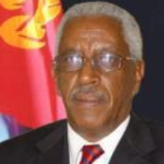 Ghebremariam, Ghirmai

Comments