



Angola exports more $12 billion worth of oil to the United States every year, which amounts to 5.7% of U.S. total oil imports, or about twice as great a share as Kuwait had at the time of the 1990 Gulf War. Angola’s exports to the U.S. and the rest of the world are expected to rise, because the country is rich in natural resources and is enjoying robust economic growth as it rebuilds after twenty-seven years of civil war. The war made elections impossible except during a 1992 truce, and although Angola’s human rights record is far from perfect, legislative elections were held on September 5, 2008, with a presidential election scheduled for 2009.
U.S. relations with Angola have been fraught with tension since Angola’s declaration of independence in 1975.At that time, the United States, along with Zaire (now Democratic Republic of the Congo), China, and the apartheid regime in South Africa, began active support of the National Liberation Front of Angola (FNLA) and the National Union for the Total Independence of Angola (UNITA), against the new government, which was dominated by the Popular Movement for the Liberation of Angola (MPLA) and supported by the Soviet Union and Cuba.Between 1985 and 1992 alone, the U.S. gave UNITA about $300 million in aid to fight a bloody civil war that was widely viewed as a proxy struggle between the U.S. and the USSR.The U.S. did not officially recognize the Angolan government until 1993, after President Bill Clinton took office.Following the end of the civil war upon the death of UNITA leader Jonas Savimbi in 2002, the U.S. has helped Angola recover from its long period of war, and relations between the two countries have gradually become warmer.
As the second largest oil producing country in Africa, Angola is increasingly important to the foreign oil dependent U.S. A 2007 report (PDF) prepared for the Council of Foreign Relations went so far as to state that “few African countries are more important to U.S. interests than Angola.” Perhaps the most significant recent development in U.S.-Angola relations was the September 5, 2008, national legislative elections. Observers from the European Union, gave the elections mixed reviews. On the one hand, they praised the Angolans for staging a calm vote with a high turnout. But on the other hand, they noted that “procedural inconsistencies” gave an unfair advantage to the ruling party. U.S. Ambassador to Angola Dan Mozena was satisfied and proclaimed that the election “has a potential to be a model for the coming elections in Africa if all the actors continue to play their part.” With presidential elections set for 2009, the probabilities are great that U.S.-Angola relations will continue to improve.
Angola has the fastest growing economy in Africa, fueled largely by its huge oil reserves, which are second only to those of Nigeria, the largest oil producing nation in Africa. Chevron, the U.S. oil behemoth, is the principal U.S. corporation with large investments in Angolan oilfields, which are mainly offshore. ExxonMobil, the world’s largest energy company, is also active in Angola. Other major players include Bechtel, Halliburton, and Marathon. Synergy Oil & Gas, based in Houston, is a major supplier of oilfield equipment to Angola. Oil accounts for 92% of Angola’s export earnings, followed by diamonds, which earn 7.5% of export income. Trade relations between the U.S. and Angola likewise revolve around petroleum products, which account for 99% of U.S. imports from Angola, out of more than $12.5 billion. Similarly, drilling & oilfield equipment accounted for nearly 38% of America’s $1.3 billion of exports to Angola in 2007. The U.S. and China are Angola’s main trading partners, purchasing 38% and 34% of Angola’s exports, respectively, while most of Angola’s imports come from the U.S. and Portugal.
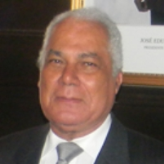 Bento Ribeiro, Alberto
Ambassador from Angola: Who Is Alberto Bento Ribeiro?
- Table of Contents
- News
- Overview
- Basic Information
- History
- Newspapers
- History of U.S. Relations with Angola
- Current U.S. Relations with Angola
- Where Does the Money Flow
- Controversies
- Human Rights
- Debate
- Past Ambassadors
- Ambassador to the U.S.
- Embassy Web Site in the U.S.
- Comments
- Leave a comment

U.S. Ambassador to Angola
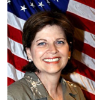
The southwest African nation of Angola—a youthful country sitting on vast reserves of oil and diamonds—will soon have a new ambassador from Washington in the person of Helen La Lime. A career member of the Senior Foreign Service, La Lime lived in Angola as a child because her father worked for Texaco. La Lime has been detailed to the Defense Department since 2011, serving as director of Outreach for the United States Africa Command. Nominated by President Barack Obama on September 10, 2013, La Lime would succeed Christopher McMullen, who served in Luanda starting in October 2010.
Born circa 1951 to Ray and Teresa Meagher, Helen R. Meagher La Lime earned a B.S. at Georgetown University in 1973 and as M.S. at the National Defense University in 1996.
After teaching English in France, Portugal and the Netherlands, she joined the State Department in 1980. La Lime served early career postings as a consular officer in Bern, Switzerland, and Stuttgart, Germany; as a consular officer and general services officer in Warsaw, Poland; and as principal officer and consular officer in Zurich, Switzerland.
Later, La Lime served as an international economist at the Bureau of International Organization Affairs (1993-1995); as deputy chief of mission at the embassy in N’Djamena, Chad (1996-1999); and as deputy director in the Office of Central African Affairs.
After serving as director of the Office of Central African Affairs from 2000 to 2001, La Lime served four consecutive tours in Africa. She served as deputy chief of mission at the embassy in Rabat, Morocco, from 2001 to 2003; as ambassador to Mozambique from April 2003 to December 2006; as consul general in Cape Town, South Africa, from 2006 to 2008; and as deputy chief of mission and chargé d’affaires at the embassy in Pretoria, South Africa, from 2008 to 2011.
Helen Meagher La Lime speaks French, Portuguese, Spanish and Polish. She is married to Robert Q. La Lime, and the couple has two children, Matthew and Adriana.
-Matt Bewig
Statement before the Senate Foreign Relations Committee (pdf)
more
Comments