The Bureau of African Affairs is a division of the US Department of State responsible for advising the Secretary of State on issues relating to sub-Saharan Africa. The bureau seeks solutions in three key areas, including the consolidation of democratic gains among African nations, expanding economic growth and stemming the spread of HIV and AIDS.
Despite pledges by the administration of George W. Bush to help stem the spread of the disease, funding requests for AIDS programs in Africa went down in consecutive years. Also, an attempt to reinvent foreign aid through the Millennium Challenge Corporation has not succeeded as planned by the administration.
The Bureau of African Affairs was founded in August 1958 as a result of Ralph Bunche’s pioneering work in political science, race and justice. A prominent member of the Civil Rights movement of the 1950s, Bunche appealed to President Dwight D. Eisenhower, who created the bureau to give the State Department’s full attention to the African continent. The National Security Council (NSC) had been meeting to determine US policy toward Africa, and the new bureau provided an opportunity to address concerns in the midst of the Cold War. The NSC issued a broad set of policy directives involving Africa, which were: treating all independent African governments as sovereign equals; accepting African neutrality in the Cold War; emphasizing economic development, education and cultural exchange; looking first to the UN Security Council for stabilization solutions; and refraining from sending American troops into violent African conflicts.
Under Secretary of State for Administration Loy Henderson interpreted the new National Security Council policy directives as a mandate to establish an American embassy in every independent African country. Africa was soon swarming with US experts on public health, agronomy, education, water, livestock and public administration.
Eisenhower’s first national security challenge in Africa came when the Belgian Congo gained its independence in June 1960. The fledgling country quickly experienced a breakdown in law and order. Warlords and tribal leaders fought over territory, and Soviet agents began to make political deals with Congolese politicians, including Prime Minister Patrice Lumumba. Determined to prevent a Soviet takeover of this mineral-rich area, Eisenhower requested the establishment of a NATO committee to plan a possible armed intervention, but eventually settled for a UN peace enforcement intervention, which stabilized the region.
Lumumba was subsequently assassinated, and the CIA was accused of having orchestrated the killing. Larry Devlin, the CIA station chief in the Congo in1960, revealed in his memoir, Chief of Station, Congo: Fighting the Cold War in a Hot Zone that he had received instructions to assassinate Lumumba using poisoned toothpaste, but decided to do nothing.
On the economic front, African leaders followed the advice of European socialists in France and the United Kingdom to take control of the economy in order to kick-start and accelerate development. As a result, thousands of enterprises, including banks, insurance companies, construction firms, plantations, transportation operations and mines were legally nationalized, with compensation paid to private owners. However, African one-party states that faced no checks, balances or countervailing power degenerated into corrupt, authoritarian systems. Management of thousands of state-owned enterprises became a daunting challenge.
By the early 1970s, the US had become somewhat disillusioned about Africa’s prospects. Congress was beginning to ask tough questions. What was there to show for all the assistance? Sen. Jesse Helms (R-NC) dismissed foreign aid as “throwing one’s money down a rat hole.” The Nixon and Ford administrations decided to revamp aid to Africa, instituting a “new directions” policy that shifted the focus from channeling resources through governments to delivering services directly to the rural poor. Maternal-child health centers, small water projects, farm-to-market roads and livestock management programs proliferated.
By 1980, it was clear that Africa needed some changes. The World Bank and the
International Monetary Fund offered soft loans for debt restructuring, and bridge financing for vital government functions. In return, African governments had to institute macroeconomic reforms designed to “prime the revenue pump,” make exports competitive, discourage unnecessary imports and curb inflation. This policy, called “structural adjustment,” became controversial because of cuts that were made in basic services for citizens. The Carter administration worked closely with London to pressure the white ruling government of Rhodesia to negotiate with Black nationalist movements, leading to the Lancaster House Agreements and the emergence of the independent Republic of Zimbabwe in 1980.
Meanwhile, South Africa continued to be ruled by an extreme racist ideology, known as apartheid (separation), which allowed the wealthy and powerful two-million-strong white minority to dominate the 30 million South Africans of color. Ending this system was a high priority among many African nations. The Carter administration began its campaign to undermine apartheid by noting that the government in Pretoria was in violation of United Nations and World Court directives to transition Southwest Africa (now Namibia) to independence. Instead, South African leaders were determined to annex the territory. Washington persuaded the UN Security Council to pass a resolution demanding that the colony be freed from South African control. By the time Ronald Reagan took office in 1981, racist minority rule in South Africa had become a significant political issue in the United States. Growing repression and violence against black South African street demonstrations provoked Sunday sermons and campus demonstrations throughout the US. In 1986, Congress enacted economic sanctions in a stunning override of President Reagan’s veto, reflecting the depth of feeling in the nation.
A younger, more moderate generation of white politicians came to power in South Africa in 1990, and oversaw an end of apartheid and the start of majority rule four years later. The difficult and complex political transition in South Africa took place during the George H.W. Bush administration, which sent diplomats to help mediate the transition of power.
By 1990, the economies of certain African countries—namely Ghana, Mali, Botswana, Uganda and Mozambique—began to grow, following the implementation of economic and political reforms. Instead of shrinking by as much as 6% a year, the gross domestic product of these countries began enjoying annual growth of 2-4%, setting the stage for an even greater effort at poverty reduction.
The Bush administration in the early 1990s concentrated its Africa policy on conflict resolution, intervening diplomatically in seven civil wars—Ethiopia, Angola, Mozambique, Sudan, Liberia, Somalia and Rwanda. By the time President Bush left office in January 1993, Ethiopia and Mozambique were in post-conflict transition.
Bill Clinton’s presidency was notable for two major initiatives in Africa, one military and one economic. Observing that African countries were bearing the major burden of supplying troops to UN peacekeeping and enforcement operations on the continent, the Clinton administration created the African Crisis Response Initiative (ACRI) to train African military units at the battalion level for intervention in conflict situations at the request of the UN or the African Union. ACRI proved to be quite successful and continues to the present, although it is now known as the African Contingency Operations Training and Assistance program.
In the economic sector, the Clinton administration worked with Congress to pass the African Growth and Opportunity Act, a trade program allowing eligible African countries to export products to the US duty-free with no requirement to reciprocate. The purpose was to make African products competitive so that investors would set up enterprises there, creating jobs and bringing in revenue. This program quickly became popular, attracting investors to a dozen African countries for the production of apparel under contract to major US retailers.
A major blot on the Clinton record was his refusal to allow UN intervention to put a stop to genocide in Rwanda during the period April-June 1994, when approximately
800,000 ethnic Tutsis were murdered. Clinton later went to Rwanda and apologized for his failure to intervene.
Under President George W. Bush, the US became involved in negotiations to end fighting in the Sudan between government forces and the Southern People’s Liberation Movement. Bush also launched a new initiative on debt relief, including the adoption of a new policy increasing the grant content of World Bank lending to Africa’s poorest nations. Bush’s efforts to promote democracy and market-based economic growth were showcased in Benin, Tanzania and Ghana.
As part of the State Department’s Office of Public Diplomacy and Public Affairs, the Bureau of African Affairs is responsible for advising the Secretary of State on issues affecting sub-Saharan Africa. These have included encouraging democracy, economic prosperity and health care (especially as it relates to HIV and AIDS). The bureau works with the Millennium Challenge Corporation to support budding democracies and economic reform in countries like Burkina Faso, Cape Verde, Madagascar, Mali, Senegal and Tanzania. Through the President’s Emergency Plan for AIDS Relief, the Bureau of African Affairs administers a bilateral program that will spend $15 billion on AIDS work in a dozen sub-Saharan African nations.
The President’s Emergency Plan for AIDS Relief (PEPFAR) - Announced in 2003 when only 50,000 Africans were receiving antiretroviral treatment, the Emergency Plan has worked in partnership with host nations to support this treatment for approximately 822,000 men, women and children as of September 2006. The Emergency Plan supports a variety of prevention efforts, including sexual transmission, mother-to-child transmission, and transmission through unsafe blood and medical injections. The program additionally supports greater HIV awareness through counseling and testing.
Malaria Initiative - In December 2007, President Bush and his wife, Laura, hosted the first-ever White House Summit on Malaria. The President’s Malaria Initiative (PMI), which went into effect in June 2005, aims to reduce Malaria-related deaths by 50% in each of the 15 targeted countries, a group that includes: Tanzania, Uganda, Angola, Senegal and others. The initiative was designed to be five years in duration and is valued at $1.2 billion. Six million people have received lifesaving prevention or treatment services since the inception of PMI by the end of 2006, and an additional 11 million people were expected to receive services in 2007.
Growth Through AGOA - The cornerstone of the United States’ trade policy for sub-Saharan Africa is the African Growth and Opportunity Act (AGOA). This policy is intended to encourage more trade and investment between the United States and Africa by offering one-way trade preferences to countries that meet certain criteria related to: democracy, good governance and economic openness. In 2006, US total trade with sub-Saharan Africa increased 17%, with both exports and imports increasing at similar rates. A 20% increase in crude oil imports accounted for most of the overall growth, but there was also growth among other imports, including: platinum, diamonds, iron and steel.
Healthy Families and WJEI - For those women and children subject to rape or domestic violence, there is a program known as the Women’s Justice and Empowerment Initiative (WJEI). Inspired by a South African program, American policy makers hope that WJEI will provide some comfort to female victims of rape and abuse, by offering social services, care and legal assistance. This $55 million program currently supplements existing efforts in Benin, Kenya, South Africa and Zambia. WJEI funds are used to help raise awareness about gender-based violence, protect and assist victims of rape and domestic violence, and bring justice to perpetrators of violence. The US also assists participating nations by training police, prosecutors and judges; providing shelters and psychosocial services for abused women and children; and developing laws that criminalize violence against women.
- More than two-thirds of sub-Saharan African countries have had democratic elections since 2000. Power has changed hands in a number of nations, from Senegal to Tanzania and from Ghana to Zambia. Over the next two to three years, the goal is to move beyond elections as the measure of freedom, and toward supporting African efforts to fortify government accountability. Through the Millennium Challenge Account (MCA), the US seeks out countries that have already implemented economic reforms and good governance programs to help transform their economies and fight poverty. Half of the countries eligible for funding under the President’s initiative are in Africa, including: Benin, Burkina Faso, Cape Verde, Ghana, Lesotho, Madagascar, Mali, Mozambique, Namibia, Senegal and Tanzania.
According to the State Department’s FY 2009 budget request, the single largest expenditure for Africa is assistance to stop the spread of HIV/AIDS ($3.1 billion). This represents more than half of all US funding for African programs, which total $5.3 billion. Other top programs involve development assistance ($651 million), economic support ($461 million) and political and judicial reforms ($272 million).
In February 2008, Wired reported that the State Department and the Bureau of African Affairs were preparing to issue contracts valued at $1 billion to support AFRICAP (Africa Peacekeeping Program). The current AFRICAP contract, which dates back to 2003, is held by a Lockheed Martin subsidiary, Pacific Architects and Engineers, and DynCorp International, an international security firm.
In March 2008, the Adventist Development and Relief Agency (ADRA) signed an agreement with the Millennium Development Authority (MiDA), a Ghana government agency that implements development contracts funded by the Millennium Challenge Corporation (MCC), a US agency that funds efforts to advance sustainable economic growth in poorer countries. With the $6.4 million, four-year agricultural project, ADRA will expand its ongoing efforts to reduce poverty in central Ghana.
In September 2007, the Millennium Challenge Corporation awarded a five-year, $698 million
to the government of Tanzania to reduce poverty, stimulate economic growth and increase household incomes through targeted infrastructure investments in transport, energy and water. The Millennium Challenge Compact with Tanzania is designed specifically to address each of these constraints, including the: Transport Sector Project ($373 million), Energy Sector Project ($206 million) and Water Sector Project ($66 million). Upon project completion, it is estimated that the program will directly or indirectly benefit approximately 4.8 million Tanzanians.
Since its implementation, PEPFAR has come under a great deal of criticism. Although this is the largest international health initiative ever initiated by one nation to address a single disease, more than 90% of people who need treatment still don't have access to it. PEPFAR Watch, a website run by the Center for Health and Gender Equity and Health, has drawn attention to many of the program's flaws including:
Refusal to fund effective yet “taboo” safe needle exchange programs to prevent HIV transmission among drug users
The mandate that 1/3 of prevention spending be directed towards abstinence-only programs
The use of only a few generic drugs as part of PEPFAR, meaning that it is much more expensive to treat people under PEPFAR than it has to be
The creation of a market for name-brand AIDS drugs that didn't previously exist in much of the global south by purchasing patented drugs. This undermines efforts to get pharmaceutical companies to issue manufacturing licenses to generic companies or to lower the costs on their drugs in the global south.
The requirement of numerous doctors, nurses, and other health care workers, meaning that these physicians are drawn from an already overburdened health system and are no longer able to meet the health needs they were previously meeting.
Millennium Challenge Has Taken Longer Than Expected to Help the Poor
A December 2007 New York Times article reported that the Millennium Challenge Corporation, a federal agency set up to reinvent foreign aid, had taken far longer to help poor, well-governed countries than its supporters expected. Critics warned that the agency’s slow pace was making it politically vulnerable at budget crunch time. Both the House and the Senate have slashed the Bush administration’s 2008 budget request for the agency, but the Senate went a step further, pushing for a change that African leaders said threatened the essence of the agency’s novel approach.
Millennium Challenge Replaces CEO After Complaints
A June 2005 editorial in the New York Times examined the fact that it took five African presidents to get President Bush to address the poor performance of his flagship program (the Millennium Challenge Corporation) to promote development in poor countries. Within days, the White House reported the resignation of Paul Applegarth, the chief executive of the Millennium Challenge Corporation. Applegarth decided to fund just two nations with aid, provoking complaints by the presidents of Botswana, Ghana, Mozambique, Niger and Namibia.
The Bureau of African Affairs. I love my country Nigeria and I want to transform my nation into a better place of living, which is the future. Looking around the world you will see Nigerians across the globe either struggling to survive or causing destruction
which am not proud of. All I ask is help me and my people a developing tomorrow. - construction of railway tracks across Nigeria, I see this as key because many other development will come after it such as : -transportation of goods and services, - job creations,
- agricultural empowerment, - reduction of poverty, - supply of electricity across state, - better medical facilities, - standard security etc. I am a sociologist, a course I am blessed to have studied, I believe that a large amount of money is kept abroad
due to persons who have hidden or stolen the resources of my people. In release of these funds will help Nigeria become an indeed independent nation which will provide for her people : infrastructures, entrepreneurs, positive growth and development reducing
many of us from wanting to go abroad to seek greener pastures. I believe in making Nigeria great and strong again. Thanks.
Nathan Span
9 years ago
Dear Sir/Madam I hope that my e-mail would be directed to the right person or department. I am writing to express my regret at the State Department for supporting President Yoweri Museveni of Uganda who has been in power for over three decades. President
Museveni is responsible for the conflicts taking place in the great Lakes Region. For some reason Museveni has been praised as a peaceful president but records and his actions show anything but peaceful. With the help of previous US administrations, Museveni
has been given military aid and more tools of oppressions by the United states. Museveni also gets weapons from China and also military advisors from North Korea. He is involved in a civil war now taking place in South Sudan where millions of refugees flock
to neighboring countries specifically Uganda. Uganda is a major supplier of military hardware to South Sudan and recently Museveni just bought arms worthy of millions of USD from a European nation and delivered those weapons to South Sudan's government. Museveni
was against an arms embargo to the South Sudan's government and now we know why. His army in Somalia go for months without getting paid resulting in the sell of weapons to Alshabab a terrorist group that is wagging war in Somalia. During his campaign, President
Donald Trump said that if elected president he will not entertain the likes of Museveni like most previous administrations. President Trump condemned Venezuela's government for passing laws through its legislature, laws that would entrench dictatorship in
that country but Museveni is now posed to remove the last safety valve in the Uganda constitution for life presidency. I believe in the democratic principles of this great nation of ours and I hope that this administration would work with people who are determined
to bring peace and tranquility in the Great Lakes Region. Sincerely Nathan Span nathanspan@yahoo.com Federalist Alliance for Democracy and Development in Uganda (FADDU).
folly
13 years ago
Do you that 95% of fund to help Africa go directly to the African corrupted leaders bank account in switzerland, Malta, or Cyprus??? Just leting you know....
Moussa Dahab
14 years ago
i am a us citizen and originally from chad. this country was run by a dictator for over 20 years.before the country falls into chaos , i would like to be involved in securing us interests and guranttee a brighter future for the people of chad . current president has not prepared any one else to step in ,like in yemen, and unity of the country will at stake. knowing the policy makers , effective tribes and dependable elite will help us to secure our interests for generations to come....
Jack D. Rollins
15 years ago
does the bureau of african affairs ever engage academic africanists or highly placed business executives who deal with africa with respect to trade, either as a consultant or advisor--paid or unpaid. it seems as if the bureau never hires anyone outside the beltway. your few advertised positions have such short dates (i.e., 24-48 hours) that, unless you are privy of this position in advance, you are not given a chance even to apply.
jack d. rollins
ps i notice that none of these p...
Dave
15 years ago
Just thought someone should know of this scam.
US AMBASSADOR OFFICE
11 GARIK ROAD LAGOS
LAGOS, NIGERIA
DEAR BENEFICIARY ,
FROM THE US AMBASSADOR TO NIGERIA
BE INFORMED THAT I HAVE RESOLVED WITH THE NIGERIA PRESIDENCY TO DELIVER THE SUM OF US$3.5M BEING THE INTEREST FUND ACCRUED FROM YOUR CONTRACT/INHERITANCE FUND.
I SHALL BE COMING TO THE UNITED STATES FOR AN OFFICIAL MEETING BY NEXT WEEK AND I WILL BE BRINGING YOUR CONSIGNMENT CONTAINING THE FUND WHICH...
Regina Gai
16 years ago
On behalf of our members and the Marginalised People of the Sudan, I submit this complaint regarding United Nation's Mission in Sudan (UNMIS). The issue of ballot cards has arose lately, with allegations by URRP that UNMIS is involved in a ballot card making fiasco which involves card production being shifted from an overseas producer in Slovenia to a local Khartoum producer, allegedly controlled by the NCP with costs that are five times that of the original foreign producer, 5 mill...
Ras Jomo Akono
17 years ago
I am a radio host for 1080 am in Buffalo, NY and we have a 3 hr radio show every week with music history and culture of Africans at home and abroad. I would love to establish a connection with the Bureau of African Affairs to educate our listeners on what is happening with African affairs through and more importantly , to stimulate more concern and proactive interest in supporting Africa and African relations. I would love to interview Assistant Secretary Carson as we are proud of h...
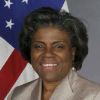
The next head of the State DepartmentBureau of African Affairs, which handles relations with 49 countries in sub-Saharan Africa, will be a career diplomat who has focused her career on Africa. President Barack Obama has nominated Linda Thomas-Greenfield, who has been director general of the Foreign Service and director of Human Resources since April 2012, to be the next Assistant Secretary of State for African Affairs. Assuming she is confirmed by the Senate as expected, she would succeed Johnnie Carson, a former ambassador to Kenya, Zimbabwe and Uganda, who served from 2008 to 2012.
Born in Baker, Louisiana, circa 1952, Linda Thomas-Greenfield earned a BA in Political Science at Louisiana State University in 1974 and an MA in Political Science at the University of Wisconsin in 1976.
Thomas-Greenfield taught political science at Bucknell University before joining the Foreign Service in 1982. Her first assignment came that year as a consular officer in Kingston, Jamaica. In Africa, she has served in Nigeria (for two and a half years), Gambia (for three years) and Kenya.
Her sojourn in Kenya was not without incident. After just nine months there, in 1995 she told Keith B. Richburg of The Washington Post, that her home in Nairobi had been burglarized five times. An electric fence failed to stop intruders so the local police agreed to station two officers on her grounds. But then the officers began demanding side money for their services. “I've gotten to the point where I'm more afraid not to give them money,” she said. “They're sitting outside with automatic weapons.”
In April 1994 she was sent to Rwanda on an official visit to assess refugee conditions, but two days after she arrived, the plane of Rwandan President Juvénal Habyarimana was shot down, and the Rwandan genocide broke out. Six-feet tall and black, Thomas-Greenfield was mistaken for a Tutsi. Hutu soldiers held a machine gun to her head, while she begged for her life, emphasizing her Louisiana accent: “I don't have anything to do with this. I'm not a Rwandan. I'm an American.” She then watched as the soldiers killed a Tutsi gardener. A few days later, she was allowed to leave Rwanda.
Other overseas postings have included stints in Pakistan and Switzerland, where she served at the U.S. Mission to the many UN organizations that have their headquarters there.
In Washington, Thomas-Greenfield served as a staff assistant in the Office of the Director General of the Foreign Service from 1991 to 1993; in the Bureau of Human Resources; as a deputy assistant secretary in the Bureau of Population, Refugees and Migration from 2004 to 2006; and as principal deputy assistant secretary in the Bureau of African Affairs from 2006 to 2008.
From 2008 to 2012, Thomas-Greenfield served as ambassador to Liberia. In 2005, she had led a State Department delegation that observed the Liberian national elections.
Linda Thomas-Greenfield and her husband, Lafayette, have two children, Lindsay and Lafayette II.
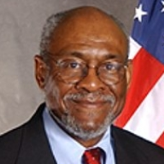
A retired U.S. ambassador, Johnnie Carson spent 37 years working for the Foreign Service, mostly on assignments throughout sub-Saharan Africa. On May 6, 2009, he was confirmed as the Assistant Secretary for African Affairs.
Born on April 7, 1943, in Chicago, IL, Carson attended Drake University, earning a Bachelor of Arts in history and political science in 1965. He then attended graduate school at the University of London, receiving a Master of Arts in international relations in 1975 from the School of Oriental and Africa Studies.
In 1965 Carson entered the Peace Corps and served in Tanzania until 1968.
In 1969 he joined the Foreign Service. His first overseas assignment was in Nigeria, where he worked as a consular and political officer until 1971. Carson then served as the Angola, Mozambique, and Namibia desk officer in the Africa section at the State Department’s Bureau of Intelligence and Research (1971-1974).
In 1975 he was stationed in Mozambique as the Deputy Chief of Mission, until returning to the US in 1978 to serve as staff officer for Secretary of State Cyrus Vance. He was “loaned” to the House of Representatives from 1979 to 1982 to work as staff director for the Africa Subcommittee.
He then returned to overseas duty, working as deputy political counselor at the US embassy in Portugal (1982-1986) and Deputy Chief of Mission in Botswana (1986-1990).
Carson’s first posting as US ambassador was in Uganda (1991-1994), followed by Zimbabwe (1995-1997). From 1997 to 1999, he was Principal Deputy Assistant Secretary for the Bureau of African Affairs, serving under Susan Rice, who would later become President Barack Obama’s ambassador to the United Nations.
From 1999-2003, Carson served as US ambassador to Kenya. During that time, in March 2001, three Kenyan employees of the United Nations High Commissioner for Refugees office in Nairobi were arrested for threatening Carson’s life. The three had sent him a letter, signed “Osama bin Laden,” telling him he had 30 days to leave Kenya, or else. Actually they were not connected with bin Laden, but were trying to cover up an extortion racket.
After retiring from the Foreign Service, Carson joined the National Defense University in Washington D.C., as senior vice president (2003-2006). In September 2006 he moved to the National Intelligence Council to become their National Intelligence Officer for Africa.
Carson is married and has two daughters and a son.
The Bureau of African Affairs is a division of the US Department of State responsible for advising the Secretary of State on issues relating to sub-Saharan Africa. The bureau seeks solutions in three key areas, including the consolidation of democratic gains among African nations, expanding economic growth and stemming the spread of HIV and AIDS.
Despite pledges by the administration of George W. Bush to help stem the spread of the disease, funding requests for AIDS programs in Africa went down in consecutive years. Also, an attempt to reinvent foreign aid through the Millennium Challenge Corporation has not succeeded as planned by the administration.
The Bureau of African Affairs was founded in August 1958 as a result of Ralph Bunche’s pioneering work in political science, race and justice. A prominent member of the Civil Rights movement of the 1950s, Bunche appealed to President Dwight D. Eisenhower, who created the bureau to give the State Department’s full attention to the African continent. The National Security Council (NSC) had been meeting to determine US policy toward Africa, and the new bureau provided an opportunity to address concerns in the midst of the Cold War. The NSC issued a broad set of policy directives involving Africa, which were: treating all independent African governments as sovereign equals; accepting African neutrality in the Cold War; emphasizing economic development, education and cultural exchange; looking first to the UN Security Council for stabilization solutions; and refraining from sending American troops into violent African conflicts.
Under Secretary of State for Administration Loy Henderson interpreted the new National Security Council policy directives as a mandate to establish an American embassy in every independent African country. Africa was soon swarming with US experts on public health, agronomy, education, water, livestock and public administration.
Eisenhower’s first national security challenge in Africa came when the Belgian Congo gained its independence in June 1960. The fledgling country quickly experienced a breakdown in law and order. Warlords and tribal leaders fought over territory, and Soviet agents began to make political deals with Congolese politicians, including Prime Minister Patrice Lumumba. Determined to prevent a Soviet takeover of this mineral-rich area, Eisenhower requested the establishment of a NATO committee to plan a possible armed intervention, but eventually settled for a UN peace enforcement intervention, which stabilized the region.
Lumumba was subsequently assassinated, and the CIA was accused of having orchestrated the killing. Larry Devlin, the CIA station chief in the Congo in1960, revealed in his memoir, Chief of Station, Congo: Fighting the Cold War in a Hot Zone that he had received instructions to assassinate Lumumba using poisoned toothpaste, but decided to do nothing.
On the economic front, African leaders followed the advice of European socialists in France and the United Kingdom to take control of the economy in order to kick-start and accelerate development. As a result, thousands of enterprises, including banks, insurance companies, construction firms, plantations, transportation operations and mines were legally nationalized, with compensation paid to private owners. However, African one-party states that faced no checks, balances or countervailing power degenerated into corrupt, authoritarian systems. Management of thousands of state-owned enterprises became a daunting challenge.
By the early 1970s, the US had become somewhat disillusioned about Africa’s prospects. Congress was beginning to ask tough questions. What was there to show for all the assistance? Sen. Jesse Helms (R-NC) dismissed foreign aid as “throwing one’s money down a rat hole.” The Nixon and Ford administrations decided to revamp aid to Africa, instituting a “new directions” policy that shifted the focus from channeling resources through governments to delivering services directly to the rural poor. Maternal-child health centers, small water projects, farm-to-market roads and livestock management programs proliferated.
By 1980, it was clear that Africa needed some changes. The World Bank and the
International Monetary Fund offered soft loans for debt restructuring, and bridge financing for vital government functions. In return, African governments had to institute macroeconomic reforms designed to “prime the revenue pump,” make exports competitive, discourage unnecessary imports and curb inflation. This policy, called “structural adjustment,” became controversial because of cuts that were made in basic services for citizens. The Carter administration worked closely with London to pressure the white ruling government of Rhodesia to negotiate with Black nationalist movements, leading to the Lancaster House Agreements and the emergence of the independent Republic of Zimbabwe in 1980.
Meanwhile, South Africa continued to be ruled by an extreme racist ideology, known as apartheid (separation), which allowed the wealthy and powerful two-million-strong white minority to dominate the 30 million South Africans of color. Ending this system was a high priority among many African nations. The Carter administration began its campaign to undermine apartheid by noting that the government in Pretoria was in violation of United Nations and World Court directives to transition Southwest Africa (now Namibia) to independence. Instead, South African leaders were determined to annex the territory. Washington persuaded the UN Security Council to pass a resolution demanding that the colony be freed from South African control. By the time Ronald Reagan took office in 1981, racist minority rule in South Africa had become a significant political issue in the United States. Growing repression and violence against black South African street demonstrations provoked Sunday sermons and campus demonstrations throughout the US. In 1986, Congress enacted economic sanctions in a stunning override of President Reagan’s veto, reflecting the depth of feeling in the nation.
A younger, more moderate generation of white politicians came to power in South Africa in 1990, and oversaw an end of apartheid and the start of majority rule four years later. The difficult and complex political transition in South Africa took place during the George H.W. Bush administration, which sent diplomats to help mediate the transition of power.
By 1990, the economies of certain African countries—namely Ghana, Mali, Botswana, Uganda and Mozambique—began to grow, following the implementation of economic and political reforms. Instead of shrinking by as much as 6% a year, the gross domestic product of these countries began enjoying annual growth of 2-4%, setting the stage for an even greater effort at poverty reduction.
The Bush administration in the early 1990s concentrated its Africa policy on conflict resolution, intervening diplomatically in seven civil wars—Ethiopia, Angola, Mozambique, Sudan, Liberia, Somalia and Rwanda. By the time President Bush left office in January 1993, Ethiopia and Mozambique were in post-conflict transition.
Bill Clinton’s presidency was notable for two major initiatives in Africa, one military and one economic. Observing that African countries were bearing the major burden of supplying troops to UN peacekeeping and enforcement operations on the continent, the Clinton administration created the African Crisis Response Initiative (ACRI) to train African military units at the battalion level for intervention in conflict situations at the request of the UN or the African Union. ACRI proved to be quite successful and continues to the present, although it is now known as the African Contingency Operations Training and Assistance program.
In the economic sector, the Clinton administration worked with Congress to pass the African Growth and Opportunity Act, a trade program allowing eligible African countries to export products to the US duty-free with no requirement to reciprocate. The purpose was to make African products competitive so that investors would set up enterprises there, creating jobs and bringing in revenue. This program quickly became popular, attracting investors to a dozen African countries for the production of apparel under contract to major US retailers.
A major blot on the Clinton record was his refusal to allow UN intervention to put a stop to genocide in Rwanda during the period April-June 1994, when approximately
800,000 ethnic Tutsis were murdered. Clinton later went to Rwanda and apologized for his failure to intervene.
Under President George W. Bush, the US became involved in negotiations to end fighting in the Sudan between government forces and the Southern People’s Liberation Movement. Bush also launched a new initiative on debt relief, including the adoption of a new policy increasing the grant content of World Bank lending to Africa’s poorest nations. Bush’s efforts to promote democracy and market-based economic growth were showcased in Benin, Tanzania and Ghana.
As part of the State Department’s Office of Public Diplomacy and Public Affairs, the Bureau of African Affairs is responsible for advising the Secretary of State on issues affecting sub-Saharan Africa. These have included encouraging democracy, economic prosperity and health care (especially as it relates to HIV and AIDS). The bureau works with the Millennium Challenge Corporation to support budding democracies and economic reform in countries like Burkina Faso, Cape Verde, Madagascar, Mali, Senegal and Tanzania. Through the President’s Emergency Plan for AIDS Relief, the Bureau of African Affairs administers a bilateral program that will spend $15 billion on AIDS work in a dozen sub-Saharan African nations.
The President’s Emergency Plan for AIDS Relief (PEPFAR) - Announced in 2003 when only 50,000 Africans were receiving antiretroviral treatment, the Emergency Plan has worked in partnership with host nations to support this treatment for approximately 822,000 men, women and children as of September 2006. The Emergency Plan supports a variety of prevention efforts, including sexual transmission, mother-to-child transmission, and transmission through unsafe blood and medical injections. The program additionally supports greater HIV awareness through counseling and testing.
Malaria Initiative - In December 2007, President Bush and his wife, Laura, hosted the first-ever White House Summit on Malaria. The President’s Malaria Initiative (PMI), which went into effect in June 2005, aims to reduce Malaria-related deaths by 50% in each of the 15 targeted countries, a group that includes: Tanzania, Uganda, Angola, Senegal and others. The initiative was designed to be five years in duration and is valued at $1.2 billion. Six million people have received lifesaving prevention or treatment services since the inception of PMI by the end of 2006, and an additional 11 million people were expected to receive services in 2007.
Growth Through AGOA - The cornerstone of the United States’ trade policy for sub-Saharan Africa is the African Growth and Opportunity Act (AGOA). This policy is intended to encourage more trade and investment between the United States and Africa by offering one-way trade preferences to countries that meet certain criteria related to: democracy, good governance and economic openness. In 2006, US total trade with sub-Saharan Africa increased 17%, with both exports and imports increasing at similar rates. A 20% increase in crude oil imports accounted for most of the overall growth, but there was also growth among other imports, including: platinum, diamonds, iron and steel.
Healthy Families and WJEI - For those women and children subject to rape or domestic violence, there is a program known as the Women’s Justice and Empowerment Initiative (WJEI). Inspired by a South African program, American policy makers hope that WJEI will provide some comfort to female victims of rape and abuse, by offering social services, care and legal assistance. This $55 million program currently supplements existing efforts in Benin, Kenya, South Africa and Zambia. WJEI funds are used to help raise awareness about gender-based violence, protect and assist victims of rape and domestic violence, and bring justice to perpetrators of violence. The US also assists participating nations by training police, prosecutors and judges; providing shelters and psychosocial services for abused women and children; and developing laws that criminalize violence against women.
- More than two-thirds of sub-Saharan African countries have had democratic elections since 2000. Power has changed hands in a number of nations, from Senegal to Tanzania and from Ghana to Zambia. Over the next two to three years, the goal is to move beyond elections as the measure of freedom, and toward supporting African efforts to fortify government accountability. Through the Millennium Challenge Account (MCA), the US seeks out countries that have already implemented economic reforms and good governance programs to help transform their economies and fight poverty. Half of the countries eligible for funding under the President’s initiative are in Africa, including: Benin, Burkina Faso, Cape Verde, Ghana, Lesotho, Madagascar, Mali, Mozambique, Namibia, Senegal and Tanzania.
According to the State Department’s FY 2009 budget request, the single largest expenditure for Africa is assistance to stop the spread of HIV/AIDS ($3.1 billion). This represents more than half of all US funding for African programs, which total $5.3 billion. Other top programs involve development assistance ($651 million), economic support ($461 million) and political and judicial reforms ($272 million).
In February 2008, Wired reported that the State Department and the Bureau of African Affairs were preparing to issue contracts valued at $1 billion to support AFRICAP (Africa Peacekeeping Program). The current AFRICAP contract, which dates back to 2003, is held by a Lockheed Martin subsidiary, Pacific Architects and Engineers, and DynCorp International, an international security firm.
In March 2008, the Adventist Development and Relief Agency (ADRA) signed an agreement with the Millennium Development Authority (MiDA), a Ghana government agency that implements development contracts funded by the Millennium Challenge Corporation (MCC), a US agency that funds efforts to advance sustainable economic growth in poorer countries. With the $6.4 million, four-year agricultural project, ADRA will expand its ongoing efforts to reduce poverty in central Ghana.
In September 2007, the Millennium Challenge Corporation awarded a five-year, $698 million
to the government of Tanzania to reduce poverty, stimulate economic growth and increase household incomes through targeted infrastructure investments in transport, energy and water. The Millennium Challenge Compact with Tanzania is designed specifically to address each of these constraints, including the: Transport Sector Project ($373 million), Energy Sector Project ($206 million) and Water Sector Project ($66 million). Upon project completion, it is estimated that the program will directly or indirectly benefit approximately 4.8 million Tanzanians.
Since its implementation, PEPFAR has come under a great deal of criticism. Although this is the largest international health initiative ever initiated by one nation to address a single disease, more than 90% of people who need treatment still don't have access to it. PEPFAR Watch, a website run by the Center for Health and Gender Equity and Health, has drawn attention to many of the program's flaws including:
Refusal to fund effective yet “taboo” safe needle exchange programs to prevent HIV transmission among drug users
The mandate that 1/3 of prevention spending be directed towards abstinence-only programs
The use of only a few generic drugs as part of PEPFAR, meaning that it is much more expensive to treat people under PEPFAR than it has to be
The creation of a market for name-brand AIDS drugs that didn't previously exist in much of the global south by purchasing patented drugs. This undermines efforts to get pharmaceutical companies to issue manufacturing licenses to generic companies or to lower the costs on their drugs in the global south.
The requirement of numerous doctors, nurses, and other health care workers, meaning that these physicians are drawn from an already overburdened health system and are no longer able to meet the health needs they were previously meeting.
Millennium Challenge Has Taken Longer Than Expected to Help the Poor
A December 2007 New York Times article reported that the Millennium Challenge Corporation, a federal agency set up to reinvent foreign aid, had taken far longer to help poor, well-governed countries than its supporters expected. Critics warned that the agency’s slow pace was making it politically vulnerable at budget crunch time. Both the House and the Senate have slashed the Bush administration’s 2008 budget request for the agency, but the Senate went a step further, pushing for a change that African leaders said threatened the essence of the agency’s novel approach.
Millennium Challenge Replaces CEO After Complaints
A June 2005 editorial in the New York Times examined the fact that it took five African presidents to get President Bush to address the poor performance of his flagship program (the Millennium Challenge Corporation) to promote development in poor countries. Within days, the White House reported the resignation of Paul Applegarth, the chief executive of the Millennium Challenge Corporation. Applegarth decided to fund just two nations with aid, provoking complaints by the presidents of Botswana, Ghana, Mozambique, Niger and Namibia.
The Bureau of African Affairs. I love my country Nigeria and I want to transform my nation into a better place of living, which is the future. Looking around the world you will see Nigerians across the globe either struggling to survive or causing destruction
which am not proud of. All I ask is help me and my people a developing tomorrow. - construction of railway tracks across Nigeria, I see this as key because many other development will come after it such as : -transportation of goods and services, - job creations,
- agricultural empowerment, - reduction of poverty, - supply of electricity across state, - better medical facilities, - standard security etc. I am a sociologist, a course I am blessed to have studied, I believe that a large amount of money is kept abroad
due to persons who have hidden or stolen the resources of my people. In release of these funds will help Nigeria become an indeed independent nation which will provide for her people : infrastructures, entrepreneurs, positive growth and development reducing
many of us from wanting to go abroad to seek greener pastures. I believe in making Nigeria great and strong again. Thanks.
Nathan Span
9 years ago
Dear Sir/Madam I hope that my e-mail would be directed to the right person or department. I am writing to express my regret at the State Department for supporting President Yoweri Museveni of Uganda who has been in power for over three decades. President
Museveni is responsible for the conflicts taking place in the great Lakes Region. For some reason Museveni has been praised as a peaceful president but records and his actions show anything but peaceful. With the help of previous US administrations, Museveni
has been given military aid and more tools of oppressions by the United states. Museveni also gets weapons from China and also military advisors from North Korea. He is involved in a civil war now taking place in South Sudan where millions of refugees flock
to neighboring countries specifically Uganda. Uganda is a major supplier of military hardware to South Sudan and recently Museveni just bought arms worthy of millions of USD from a European nation and delivered those weapons to South Sudan's government. Museveni
was against an arms embargo to the South Sudan's government and now we know why. His army in Somalia go for months without getting paid resulting in the sell of weapons to Alshabab a terrorist group that is wagging war in Somalia. During his campaign, President
Donald Trump said that if elected president he will not entertain the likes of Museveni like most previous administrations. President Trump condemned Venezuela's government for passing laws through its legislature, laws that would entrench dictatorship in
that country but Museveni is now posed to remove the last safety valve in the Uganda constitution for life presidency. I believe in the democratic principles of this great nation of ours and I hope that this administration would work with people who are determined
to bring peace and tranquility in the Great Lakes Region. Sincerely Nathan Span nathanspan@yahoo.com Federalist Alliance for Democracy and Development in Uganda (FADDU).
folly
13 years ago
Do you that 95% of fund to help Africa go directly to the African corrupted leaders bank account in switzerland, Malta, or Cyprus??? Just leting you know....
Moussa Dahab
14 years ago
i am a us citizen and originally from chad. this country was run by a dictator for over 20 years.before the country falls into chaos , i would like to be involved in securing us interests and guranttee a brighter future for the people of chad . current president has not prepared any one else to step in ,like in yemen, and unity of the country will at stake. knowing the policy makers , effective tribes and dependable elite will help us to secure our interests for generations to come....
Jack D. Rollins
15 years ago
does the bureau of african affairs ever engage academic africanists or highly placed business executives who deal with africa with respect to trade, either as a consultant or advisor--paid or unpaid. it seems as if the bureau never hires anyone outside the beltway. your few advertised positions have such short dates (i.e., 24-48 hours) that, unless you are privy of this position in advance, you are not given a chance even to apply.
jack d. rollins
ps i notice that none of these p...
Dave
15 years ago
Just thought someone should know of this scam.
US AMBASSADOR OFFICE
11 GARIK ROAD LAGOS
LAGOS, NIGERIA
DEAR BENEFICIARY ,
FROM THE US AMBASSADOR TO NIGERIA
BE INFORMED THAT I HAVE RESOLVED WITH THE NIGERIA PRESIDENCY TO DELIVER THE SUM OF US$3.5M BEING THE INTEREST FUND ACCRUED FROM YOUR CONTRACT/INHERITANCE FUND.
I SHALL BE COMING TO THE UNITED STATES FOR AN OFFICIAL MEETING BY NEXT WEEK AND I WILL BE BRINGING YOUR CONSIGNMENT CONTAINING THE FUND WHICH...
Regina Gai
16 years ago
On behalf of our members and the Marginalised People of the Sudan, I submit this complaint regarding United Nation's Mission in Sudan (UNMIS). The issue of ballot cards has arose lately, with allegations by URRP that UNMIS is involved in a ballot card making fiasco which involves card production being shifted from an overseas producer in Slovenia to a local Khartoum producer, allegedly controlled by the NCP with costs that are five times that of the original foreign producer, 5 mill...
Ras Jomo Akono
17 years ago
I am a radio host for 1080 am in Buffalo, NY and we have a 3 hr radio show every week with music history and culture of Africans at home and abroad. I would love to establish a connection with the Bureau of African Affairs to educate our listeners on what is happening with African affairs through and more importantly , to stimulate more concern and proactive interest in supporting Africa and African relations. I would love to interview Assistant Secretary Carson as we are proud of h...
The next head of the State DepartmentBureau of African Affairs, which handles relations with 49 countries in sub-Saharan Africa, will be a career diplomat who has focused her career on Africa. President Barack Obama has nominated Linda Thomas-Greenfield, who has been director general of the Foreign Service and director of Human Resources since April 2012, to be the next Assistant Secretary of State for African Affairs. Assuming she is confirmed by the Senate as expected, she would succeed Johnnie Carson, a former ambassador to Kenya, Zimbabwe and Uganda, who served from 2008 to 2012.
Born in Baker, Louisiana, circa 1952, Linda Thomas-Greenfield earned a BA in Political Science at Louisiana State University in 1974 and an MA in Political Science at the University of Wisconsin in 1976.
Thomas-Greenfield taught political science at Bucknell University before joining the Foreign Service in 1982. Her first assignment came that year as a consular officer in Kingston, Jamaica. In Africa, she has served in Nigeria (for two and a half years), Gambia (for three years) and Kenya.
Her sojourn in Kenya was not without incident. After just nine months there, in 1995 she told Keith B. Richburg of The Washington Post, that her home in Nairobi had been burglarized five times. An electric fence failed to stop intruders so the local police agreed to station two officers on her grounds. But then the officers began demanding side money for their services. “I've gotten to the point where I'm more afraid not to give them money,” she said. “They're sitting outside with automatic weapons.”
In April 1994 she was sent to Rwanda on an official visit to assess refugee conditions, but two days after she arrived, the plane of Rwandan President Juvénal Habyarimana was shot down, and the Rwandan genocide broke out. Six-feet tall and black, Thomas-Greenfield was mistaken for a Tutsi. Hutu soldiers held a machine gun to her head, while she begged for her life, emphasizing her Louisiana accent: “I don't have anything to do with this. I'm not a Rwandan. I'm an American.” She then watched as the soldiers killed a Tutsi gardener. A few days later, she was allowed to leave Rwanda.
Other overseas postings have included stints in Pakistan and Switzerland, where she served at the U.S. Mission to the many UN organizations that have their headquarters there.
In Washington, Thomas-Greenfield served as a staff assistant in the Office of the Director General of the Foreign Service from 1991 to 1993; in the Bureau of Human Resources; as a deputy assistant secretary in the Bureau of Population, Refugees and Migration from 2004 to 2006; and as principal deputy assistant secretary in the Bureau of African Affairs from 2006 to 2008.
From 2008 to 2012, Thomas-Greenfield served as ambassador to Liberia. In 2005, she had led a State Department delegation that observed the Liberian national elections.
Linda Thomas-Greenfield and her husband, Lafayette, have two children, Lindsay and Lafayette II.
A retired U.S. ambassador, Johnnie Carson spent 37 years working for the Foreign Service, mostly on assignments throughout sub-Saharan Africa. On May 6, 2009, he was confirmed as the Assistant Secretary for African Affairs.
Born on April 7, 1943, in Chicago, IL, Carson attended Drake University, earning a Bachelor of Arts in history and political science in 1965. He then attended graduate school at the University of London, receiving a Master of Arts in international relations in 1975 from the School of Oriental and Africa Studies.
In 1965 Carson entered the Peace Corps and served in Tanzania until 1968.
In 1969 he joined the Foreign Service. His first overseas assignment was in Nigeria, where he worked as a consular and political officer until 1971. Carson then served as the Angola, Mozambique, and Namibia desk officer in the Africa section at the State Department’s Bureau of Intelligence and Research (1971-1974).
In 1975 he was stationed in Mozambique as the Deputy Chief of Mission, until returning to the US in 1978 to serve as staff officer for Secretary of State Cyrus Vance. He was “loaned” to the House of Representatives from 1979 to 1982 to work as staff director for the Africa Subcommittee.
He then returned to overseas duty, working as deputy political counselor at the US embassy in Portugal (1982-1986) and Deputy Chief of Mission in Botswana (1986-1990).
Carson’s first posting as US ambassador was in Uganda (1991-1994), followed by Zimbabwe (1995-1997). From 1997 to 1999, he was Principal Deputy Assistant Secretary for the Bureau of African Affairs, serving under Susan Rice, who would later become President Barack Obama’s ambassador to the United Nations.
From 1999-2003, Carson served as US ambassador to Kenya. During that time, in March 2001, three Kenyan employees of the United Nations High Commissioner for Refugees office in Nairobi were arrested for threatening Carson’s life. The three had sent him a letter, signed “Osama bin Laden,” telling him he had 30 days to leave Kenya, or else. Actually they were not connected with bin Laden, but were trying to cover up an extortion racket.
After retiring from the Foreign Service, Carson joined the National Defense University in Washington D.C., as senior vice president (2003-2006). In September 2006 he moved to the National Intelligence Council to become their National Intelligence Officer for Africa.
Carson is married and has two daughters and a son.




 ; South Africa; Sudan; Swaziland; Tanzania; Togo; Uganda; Zambia; and Zimbabwe.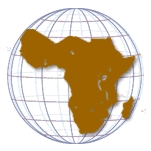
Comments