



Saturday, May 19, 2012
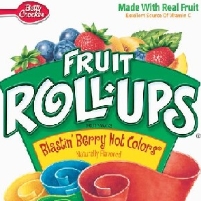
Fruit Roll-Ups and other manufactured fruit snacks by General Mills do not contain real fruit, but that’s okay, said a federal judge ruling in a lawsuit seeking an end to the misleading advertising.
Bay Area mother Annie Lam filed a class action case last fall against General Mills, arguing that the company was deceiving consumers by claiming its fruity snacks included actual fruit ingredients.
U.S. District Judge Samuel Conti seemed to agree with the plaintiffs when he made his ruling last week. Conti wrote “a reasonable consumer might be surprised to learn that a substantial portion of each serving of the Fruit Snacks consists of partially hydrogenated oil and sugars.”
Conti also said General Mills had used deceptive language in claiming its products were “made with real fruit.”
But, he added, the company did not violate the law because the Nutrition Labeling and Education Act allows companies to say something contains specific fruit flavoring when in fact it does not contain fruit. “A product may be labeled as ‘fruit flavored’ or ‘naturally flavored,’ even if it does not contain fruit or natural ingredients. So long as that product ‘contains natural flavor’ which is ‘derived from’ the ‘characterizing food ingredient,’ it will not run afoul of the regulation,” Conti said in the decision.
“While the regulation’s logic is troubling, the court is bound to apply it,” Conti wrote.
-Noel Brinkerhoff
To Learn More:
Fruit Roll-Ups Labels Misleading, Judge Says (by Maria Dinzeo, Courthouse News Service)
Annie Lam v. General Mills (U.S. District Court, Northern California) (pdf)
General Mills and Kellogg Accused of Advertising Fake Fiber (by Noel Brinkerhoff, AllGov)
FDA Says Cheerios Health Claims Unsubstantiated (by Noel Brinkerhoff, AllGov)
Comments