



South Korea served as the flash point of the beginning of the Cold War when the United States engaged in the first of many proxy wars with North Korean Communist forces backed by the Soviet Union and the People’s Republic of China. In 1950, a series of onslaughts by North Korean troops overwhelmed South Korean and United States forces, which threatened to bring the entire Korean peninsula under communist rule. Led by the U.S. military, the United Nations responded with a counter assault that turned the tide of the conflict in favor of Western forces —that is until China’s entrance into the war. Under Mao Zedong, the Chinese government supplied hundreds of thousands of troops to the North Korean cause, reaching an ultimate count of more than two million troops to prevent the U.S. from taking control of Korea. Eventually, the war settled into a stalemate with the fighting ending after two years, but without a formal declaration of peace.
Although no significant fighting occurred after the end of the Korean War, the U.S. continued to station large numbers of American troops in South Korea near the North Korean border, for fear of another invasion during the Cold War. The U.S. continued to support the South Korean government even after its military seized power in the early 1960s and ruled the country for the next 20 years. Gradually, South Korea moved towards opening its political system in the 1980s, while at the same time developing its economy into a regional power that bloomed in the 1990s. Since the end of the Cold War, the U.S. has relaxed its military stature in South Korea, though a significant number of American infantry and aircraft are still stationed there, owing to North Korea’s unpredictable behavior. Relations between South Korea and the U.S. are fairly stable, though the conclusion of a free trade agreement prompted fears among many groups in South Korea over the importation of beef from the U.S. , following the mad cow disease controversy in 2003.
Lay of the Land: Located in northeast Asia, the Korean Peninsula juts south from Manchuria into the Pacific Ocean, dividing the Sea of Japan from the Yellow Sea. Mountains cover most of the northern and southwestern regions of the peninsula, and a coastal plain runs along the eastern coast.
Languages
: Korean (official)
South Korea came into being after World War II, the result of a 1945 agreement reached by the Allies at the Potsdam Conference. The 38th parallel was established at the boundary between a northern zone of the Korean peninsula, which was to be occupied by the USSR, and a southern zone that would be controlled by U.S, forces.
The first significant wave of immigration occurred in 1882, when Congress passed the Chinese Exclusion Act. Deprived of cheap Chinese labor, Hawaiian agribusiness interests contacted Horace Allen, the American ambassador to Korea, asking for help in bringing over Koreans to work in the sugar plantations. Allen turned to David Deshler, a banker and entrepreneur who loaned as much as $100 to Koreans interested in emigrating (he also was paid $55 for each recruit, in contrast to the monthly wages of $14 paid to plantation laborers).
Other policymakers, however, felt that United States troops should gradually be leaving South Korea. They argued that South Korea in the late 1980s was more economically, militarily, and politically capable of coping with North Korea. Moreover, they doubted that Pyongyang could contemplate another military action, given its acrimonious relationships with Moscow and Beijing. In Washington, meanwhile, an increasing number of policymakers advocated gradual troop withdrawal for budgetary reasons. During Secretary of Defense Dick Cheney’s February 1990 visit to South Korea, consultations on restructuring the Washington-Seoul security relationship marked the beginning of the change in status of United States forces from a leading to a supporting role in South Korea’s defense. In addition, Seoul was asked to substantially increase its contribution to defense costs.
Noted Korean-Americans
U.S.-Korea Relations in the Obama Era
(The Hankyoreh)
Trade and investment ties have become an increasingly important aspect of the US-South Korea relationship. Korea is the United States’ seventh-largest trading partner (ranking ahead of larger economies such as France and Italy), and there are significant flows of manufactured goods, agricultural products, services and technology between the two countries.
Free Trade Agreement Prompts Protests over US Beef Imports
The State Department reports that in 2008, the South Korean government continued to investigate incidents of possible abuse under the country’s former military regimes. Since the Commission for the Restoration of Honor and Compensation to Activists of the Democratization Movement’s creation in 2000, 11,241 of the 13,348 cases reported had been reviewed and determined that compensation was due for 8,908 of cases.
Lucius H. Foote
Appointment: Feb 27, 1883
Presentation of Credentials: May 20, 1883
Termination of Mission: Left post, Feb 19, 1885
Appointment: Feb 19, 1886
Presentation of Credentials: Jun 12, 1886
Termination of Mission: Left Korea, Sep 3, 1886
Appointment: Jan 12, 1887
Presentation of Credentials: Apr 13, 1887
Termination of Mission: Presented recall, May 26, 1890
Appointment: Mar 30, 1889
Note: Declined appointment.
Appointment: Jan 30, 1890
Presentation of Credentials: May 26, 1890
Termination of Mission: Presented recall, Jun 27, 1893
Appointment: Jan 12, 1894
Presentation of Credentials: Apr 30, 1894
Termination of Mission: Presented recall, Sep 13, 1897
Appointment: Jul 17, 1897
Presentation of Credentials: Sep 13, 1897
Termination of Mission: Left Korea, Jun 9, 1905
Note: Commissioned during a recess of the Senate; recommissioned after confirmation on Dec 10, 1901.
Appointment: Mar 18, 1905
Presentation of Credentials: Jun 26, 1905
Termination of Mission: Japan assumed direction of Korean foreign relations, Nov 17, 1905
Note: Morgan closed the Legation, Nov 28, 1905, and left Korea, Dec 8, 1905.
Appointment: Apr 7, 1949
Presentation of Credentials: Apr 20, 1949
Termination of Mission: Left Korea, Sep 8, 1952
Appointment: Aug 25, 1952
Presentation of Credentials: Nov 25, 1952
Termination of Mission: Left post, Apr 12, 1955
Note: Commissioned during a recess of the Senate; recommissioned after confirmation on Jul 28, 1953.
Appointment: Mar 24, 1955
Presentation of Credentials: May 12, 1955
Termination of Mission: Left post, Oct 20, 1955
Appointment: May 29, 1956
Presentation of Credentials: Jul 14, 1956
Termination of Mission: Left post, Oct 2, 1959
Appointment: Oct 5, 1959
Presentation of Credentials: Dec 17, 1959
Termination of Mission: Left post, Apr 12, 1961
Note: Commissioned during a recess of the Senate; recommissioned after confirmation on Jan 21, 1960.
Appointment: Jun 12, 1961
Presentation of Credentials: Jun 27, 1961
Termination of Mission: Left post, Jul 10, 1964
Appointment: Jul 31, 1964
Presentation of Credentials: Aug 14, 1964
Termination of Mission: Left post, Jun 10, 1967
Appointment: Jun 9, 1967
Presentation of Credentials: Aug 23, 1967
Termination of Mission: Left post, Aug 18, 1971
Appointment: Sep 30, 1971
Presentation of Credentials: Oct 10, 1971
Termination of Mission: Left post, Aug 19, 1974
Appointment: Aug 23, 1974
Presentation of Credentials: Sep 18, 1974
Termination of Mission: Left post, Jun 21, 1978
Appointment: Jun 27, 1978
Presentation of Credentials: Jul 24, 1978
Termination of Mission: Left post, Jun 10, 1981
Appointment: Jul 18, 1981
Presentation of Credentials: Aug 12, 1981
Termination of Mission: Left post, Oct 25 1986
Appointment: Oct 16, 1986
Presentation of Credentials: Nov 26, 1986
Termination of Mission: Left post, Jan 3, 1989
Appointment: Sep 14, 1989
Presentation of Credentials: Sep 27, 1989
Termination of Mission: Left post, Feb 27, 1993
Appointment: Oct 15, 1993
Presentation of Credentials: Nov 2, 1993
Termination of Mission: Left post, Feb 5, 1996
Appointment: Oct 24, 1997
Presentation of Credentials: Dec 15, 1997
Termination of Mission: Left post Feb 10, 2001
Appointment: Aug 3, 2001
Presentation of Credentials: Sep 12, 2001
Termination of Mission: Left post, Apr 17, 2004
Appointment: May 12 2004
Presentation of Credentials: Sep 1, 2004
Termination of Mission: Left post, Apr 12, 2005
Appointment: Oct 12, 2005
Presentation of Credentials: Oct 17, 2005
Termination of Mission: 2008
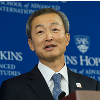 Ahn Ho-Young
When Ahn Ho-Young presented his credentials as South Korea’s ambassador to the United States to President Barack Obama on July 18, 2013, it represented a change in policy by the Korean government. In general, South Korea has sent politicians or military experts to represent it in Washington. In Ahn, however, South Korea has a trade expert conveying its views to the Obama administration.
Ahn was born July 5, 1956. He attended Seoul National University, graduating in 1978 with a degree in political science and soon thereafter joined South Korea’s Ministry of Foreign Affairs. In 1981, he came to the United States to study at Georgetown University. Ahn received his Master’s from the university’s School of Foreign Service in 1983.
India was the site of Ahn’s first foreign posting, serving as second secretary in Korea’s embassy beginning in 1984. Ahn returned to the United States in 1990 as first secretary of the Korean embassy, serving in that post until the end of 1992.
Ahn returned home in 1993, serving as director of treaties in a division of the Ministry of Foreign Affairs. In 1994, he was made director of international trade in another division of the ministry.
Ahn went to Paris in 1996 as counsellor to Korea’s permanent mission to the Organization of Economic Cooperation and Development. There, he negotiated the terms of South Korea's accession to the OECD. He stayed in that post until moving to Switzerland in 1998 as counselor to South Korea’s permanent mission to the United Nations Secretariat and International Organizations in Geneva, working on dispute settlement and rules issues.
Ahn was brought home in January 2002 to assume the post of deputy director of the international trade law division in the Ministry of Foreign Affairs. He remained at the ministry for several years, advancing to posts as director general in the multilateral trade bureau, director general of the economic cooperation bureau.
In May 2008, Ahn was named deputy minister for trade. In this post he served as “sherpa,” laying the groundwork for South Korean President Lee Myung-bak during run-ups to G20 and G8 trade conferences.
In March 2011, Ahn was named as South Korea’s ambassador to Belgium and head of its mission to the European Union.
In February 2012, Ahn became South Korea’s first vice minister for Foreign Affairs and Trade. Among the issues he addressed in this post was pressing Japan for reparations for that country’s practice of using Korean women as sex slaves, or so-called “comfort women,” during World War II.
Since being named ambassador to the United States, Ahn has lobbied some state officials over what to call the body of water east of the Korean peninsula in textbooks. In most books, it’s referred to as the Sea of Japan, but Korea prefers it to be known as the East Sea. Despite counterlobbying by the Japanese government, Ahn was successful in Virginia. That state’s textbooks will use both names for the body of water.
Ahn is married with two sons.
-Steve Straehley
To Learn More:
Official Biography (pdf)
The Leaderboard: Ahn Ho-Young (CogitASIA)
- Table of Contents
- News
- Overview
- Basic Information
- History
- Newspapers
- History of U.S. Relations with Korea, South
- Current U.S. Relations with Korea, South
- Where Does the Money Flow
- Controversies
- Human Rights
- Debate
- Past Ambassadors
- Ambassador to the U.S.
- Embassy Web Site in the U.S.
- Comments
- Leave a comment


U.S. Ambassador to Korea, South

On May 1, 2014, President Barack Obama nominated Mark W. Lippert, who is currently serving as chief of staff to Defense Secretary Chuck Hagel, to be the ambassador to South Korea. The Senate Foreign Relations Committee held a hearing on Lippert’s nomination on June 17, 2014.
Lippert was born in Cincinnati on February 28, 1973. Growing up there, he played baseball, football and basketball, with the latter skill coming in handy later in life. He attended Stanford University, earning a B.A. in political science in 1997 and an M.A. in international policy studies the following year. He took time out from Stanford to study Mandarin at Peking University.
After graduation, Lippert went to Washington, working for Sen. Dianne Feinstein (D-California), and then, starting in 1999, as foreign and defense policy adviser to Sen. Tom Daschle (D-South Dakota) and the Democratic Policy Committee. In 2000, he became a staffer on the Senate Appropriations Committee, advising Sen. Patrick Leahy. It was there that he met the woman who would become his wife, Robyn Schmidek, another committee staffer. She is now a lobbyist for UnitedHealthcare.
In 2005, Lippert began work for then-Sen. Obama as foreign policy adviser and sometime basketball opponent. That same year, Lippert, whose mother’s family had a strong military tradition, joined the Navy Reserve as an intelligence officer. He was called to active duty in 2007, serving in Iraq with Naval Special Operations Forces.
Lippert came home in 2008 to work on Obama’s presidential run as a senior foreign policy advisor for the campaign and subsequently deputy director of foreign policy on Obama’s transition team.
After Obama’s inauguration, Lippert was a deputy assistant to the president and then was named chief of staff for the National Security Council (NSC). Lippert left the NSC in 2010 and served another tour with the Navy, this time in Afghanistan with Seal Team Six. He was seen as having been pushed out of his NSC post by National Security Advisor Jim Jones, who thought that Lippert had been talking to reporters.
Lippert returned in 2012 and was nominated as assistant secretary of defense for Asian and Pacific Security Affairs. However, it was a while before he could assume his post. His nomination was first held up by Sen. John McCain (R-Arizona), who wanted details of Lippert’s departure from the NSC. When McCain finally lifted his hold, Sen. John Cornyn (R-Texas) put on one of his own to protest the administration’s failure to sell F-16 fighter jets to Taiwan. Lippert was finally confirmed in April 2012.
He ended up serving just more than a year in that post, becoming chief of staff to Hagel in May 2013.
If confirmed, Lippert will be the first political appointee to head the Seoul embassy; the job has previously been filled by career Foreign Service appointees. However, the South Korean government is reportedly eager to have an ambassador with such close ties to Obama.
-Steve Straehley
To Learn More:
Obama Confidant To Be Next Ambassador To South Korea (by Josh Rogin, Daily Beast)
Testimony to Senate Foreign Relations Committee (pdf)
morePrevious U.S. Ambassador to Korea, South
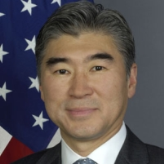
Sung Y. Kim was nominated to be the United States’ next ambassador to South Korea in June, 2011, and received his Senate confirmation in October. He was sworn in on November 3 and arrived in Seoul a week later. He is the first American of Korean descent to serve as U.S. ambassador to South Korea.
Comments