Argentina

Bookmark and Share
News
more less
Overview
Argentina is the second largest country in South America, and the most prosperous country in Latin America. Having survived a brutal dictatorship and economic crisis in recent years, the country is politically stable and growing economically again. It is one of the world’s leading agricultural producers, and has a strong manufacturing sector as well. Culturally, it is considered the most “European” country in South America, with a small population of native South Americans and many citizens descended from a large immigration from Europe.
 
more less
Basic Information
Lay of the Land: Argentina is a wedge-shaped country occupying southeastern South America, bordered by Chile to the west, Bolivia and Paraguay to the north, Brazil, Uruguay, and the Atlantic Ocean to the east, and Chile and the Atlantic Ocean to the South. With a surface area of 1,078,757 square miles (approximately the size of the United States east of the Mississippi River), Argentina is the second largest country in South America and the eighth largest in the world. The central geographical feature of Argentina is the Pampa, where most of the population and all of the largest cities are located. A vast, treeless, grassy plain covering 293,000 square miles, the fertile Pampa is a key element in the country’s livestock and agricultural production. In the northeast lie the Chaco plain and the area known as Mesopotamia, a fruit and rice producing region. To the south is Patagonia, named after the Patagonian (“big feet”) Indians. It is a region of high mountains and thick forests, of snowcapped volcanoes and many small lakes. Known as Argentina’s Lake District, the area is home to a thriving tourist industry centered on the small alpine town of San Carlos de Bariloche. Although Argentina has a long coastline, it has few good natural harbors. The best one, located at the mouth of the Río de la Plata, is the capital of Buenos Aires, a large metropolitan area with a population of 13 million, or almost a third of all Argentines. 
 
Population: 40.7 million
 
Religions: Catholic 70%, non-religious 16.2%, Protestant 9%, Muslim 1.5%, Jewish 0.8%, other 2.5%.
 
Ethnic Groups: white (mostly Italian and Spanish) 97%, mestizo (mixed white and Amerindian ancestry), Amerindian, or other non-white groups 3%
 
Languages: Spanish (official) 88.9%, Quecha (South Bolivian, Santiago del Estero) 2.5%, Mapudungun 0.3%, Wichí Lhamtés/“Mataco” language cluster (Güisnay, Nocten, Vejoz), Welsh 0.06%, Toba 0.05%, Guaraní (Mbyá, Western Argentine) 0.05%. There are 25 living languages in Argentina.


more less
History
Although human habitation in Argentina dates to about 11,000 BC, pre-Columbian Argentina was sparsely populated. In 1480, the Inca of Peru established hegemony over northwest Argentina, while the Guaraní lived farther east and north east. The Quechua peoples dominated the north, and Patagonia was inhabited by the Tehuelches. Spanish navigator Juan Díaz de Solís visited the territory which is now Argentina in 1516, but it was not until 1580 that the Spanish established a permanent colony on the site of what would become Buenos Aires. Until 1776, Argentina was part of the Viceroyalty of Peru, and thus was governed from Lima. This arrangement made Argentina a provincial backwater of Peru, so that population growth and economic development were slow. A war for self-governance began in 1810, followed by a declaration of independence on July 9, 1816. Although independent thereafter, Argentina did not stabilize as a single, unified country until 1861, as two separate states—the Republic of Buenos Aires and the Argentine Confederation—vied for dominance. In 1853, a constitution was ratified, and in 1861, Argentines achieved the final unification of their country. 
 
From that time until the 1930s, Argentina developed economically into one of the world’s wealthiest nations. By 1929, Argentina had the world’s fourth highest per capita GDP. Like the U.S., Argentina experienced mass immigration. More than 3.6 million immigrants arrived between 1857 and 1940, most of them Italian and Spanish, but also including many French, Germans, Poles, Turks and Russian Jews, while another 3 million passed through as seasonal workers, often moving on to the United States or returning home. By 1914, one third of Argentina’s 8 million people had been born elsewhere. Despite this diversity, Argentina was ruled by an oligarchy of 300 families whose power was rooted in their control of the vast interior, until political reform in 1912 led to universal male suffrage and secret ballot elections. The Radical Party governments of the 1920s initiated important labor reforms, but the Great Depression of the 1930s hit Argentina hard, and demands for more social and economic reform alarmed the conservative military leadership, which engineered a coup that brought on 16 years of conservative rule, based on electoral fraud, intimidation and military support. Yet, it was a military officer within the junta, Juan Perón, who ended the “Infamous Decade,” by winning the presidential election of 1946. With his wife Eva, popularly known as Evita, Perón initiated populist policies that included nationalizing the banks and railways, investing in industrialization, and spending on social welfare for workers and the poor.
 
These changes provoked hostility among economic elites, the Roman Catholic Church and the military, which unseated him in a 1955 coup d’état that ushered in twenty years of political instability and economic uncertainty. With Perón living in exile in Spain, the government suppressed Perónism, and the military interfered when the government promoted progressive policies. Allowed to run for election again in 1973, Perón returned from exile and won 61% of the vote. His sudden death in 1974, and the shock of the rise in the price of oil, yielded yet another military coup in 1976. This military junta then engaged in the “dirty war,” in which up to 30,000 Argentines were “disappeared,” i.e., they were secretly kidnapped, tortured and executed by the government. The junta’s serious failures to address economic problems, public corruption, human rights abuses and, finally, the country's spectacular 1982 defeat by the United Kingdom in the Falklands War following Argentina's unsuccessful attempt to seize the Falkland Islands, combined to discredit the military regime. Under strong public pressure, the junta lifted bans on political parties and gradually restored basic political liberties.
 
Those liberties were put to the test during the 1980s and 1990s, as the conservative Perónist government (Perónism has both right and left wing tendencies) of President Carlos Menem pursued neoliberal policies, including free trade, privatization, and debt reduction, which reduced inflation, but by the late 1990s led to 20% unemployment and a serious economic crisis in 2001-2002. Nevertheless, the Argentine military remained on the sidelines, and left wing Perónist candidates Néstor Kirchner and Cristina Kirchner won election to the Presidency in 2003 and 2007, respectively. Since that time, the economic situation has improved, and Argentina is enjoying a period of stability. 


more less
Argentina's Newspapers
more less
History of U.S. Relations with Argentina
Since the coup d’état of 1930, U.S.-Argentine relations have followed a familiar pattern: the two countries are generally closer when Argentina is governed by democratically-elected leaders, and less so when military juntas or pressure suppress democratic politics.  The U.S. was openly critical of the military junta of the 1940s, for example, because it openly admired the fascism of the Axis powers. The United States was likewise publicly critical, although privately supportive, of the military regime that ran Argentina’s “dirty war” from 1976 to 1983 and attacked the Falkland Islands. Relations were probably their best ever during the presidency of conservative Perónist Carlos Menem, who was notable for his policy of “automatic alignment” with the U.S., meaning that Argentina gave almost instant approval to U.S. international policy. Indeed, Menem turned more than a few heads when, in 1990, he described the U.S.-Argentine alliance to be a “carnal relationship,” although he did not indicate which nation was on top. Since the elections of Néstor Kirchner and Cristina Kirchner in 2003 and 2007, however, that policy has been abandoned, and Argentina pursues a more independent course on the world stage. 
 
more less
Current U.S. Relations with Argentina
Since the restoration of democracy, relations between the U.S. and Argentina have been basically friendly. However,since the elections of Néstor Kirchner and Cristina Kirchner in 2003 and 2007, Menem’s policy of “automatic alignment” has been abandoned, and Argentina pursues a more independent course on the world stage. At times, this has yielded tension, for example in 2003 when Argentina declined to participate in the U.S.-led invasion of Iraq. Another source of friction is the island nation of Cuba, with which Argentina has pursued closer relations despite U.S. policies designed to isolate one of the world’s last communist regimes. 
 
In 2007, 270,000 Americans visited Argentina, a number that has been increasing since the end of Argentina’s 2001-2002 economic crisis. The number of Argentines traveling to America has grown consistently in recent years, with visits up from a post-crisis low of 150,719 in 2003 to 212,096 in 2006. Lured partly by the low cost of living in Buenos Aires, 35,000 American citizens were registered in 2005 with the U.S. Embassy as permanent residents in Argentina. About three times that number of Argentines, 100,864, live in the U.S. Argentine immigration to the U.S. is a relatively recent phenomenon, as the 1970 census counted only 44,803 Argentine-Americans. New York City has attracted the largest number of Argentines, no doubt drawn by the cosmopolitanism and opportunity available there, and in Los Angeles, which also claims a large Argentine-American population. 
 
more less
Where Does the Money Flow
Argentina benefits from rich natural resources, a highly educated population, a globally competitive agricultural sector, and a diversified industrial base. Argentina is one of the most developed countries in Latin America, as measured by its GDP per capita and its Human Development Index. Argentina’s economy has sustained a robust recovery following the severe 2001-2002 economic crisis, with five consecutive years of more than 8% real growth in gross domestic product (GDP). Economic expansion is improving the lot of ordinary people, with poverty levels dropping dramatically and unemployment down from more than 21% in 2002 to 8.8% in the third quarter of 2007. Manufacturing is the largest single sector of the economy, with 22% of GDP. 
 
Agriculture, however, dominates Argentina’s exports by accounting for 55% of their value, and Argentina ranks third worldwide in production of soybeans, fifth in corn, and eleventh in wheat.  Argentina’s foreign trade situation has improved recently, with a $12 billion trade surplus in 2006, falling to $11.2 billion in 2007 due to a strong increase in imports. The country’s main trading partners are Brazil, the U.S. and China. Argentina’s imports from the U.S. totaled $5.8 billion in 2007, while its exports to the U.S. totaled $4.9 billion. This trade covers an immense variety of goods and types of goods. 
More than 450 U.S. companies are currently operating in Argentina and employ more than 150,000 Argentine workers. U.S. investment in Argentina is concentrated in telecommunications, petroleum and gas, electric energy, financial services, chemicals, food processing, and vehicle manufacturing. The stock of U.S. direct investment in Argentina approached $16 billion at the end of 1999, according to embassy estimates.
 
All of the $1.6 million in U.S. aid to Argentina in 2006 was dedicated to Peace and Security. International Military Education and Training received $1.2 million, and Nonproliferation, Antiterrorism, Demining and Related Programs received $400,000. The budget estimate for 2008 increased aid to $2 million, with similar a distribution of funds. The budget request for 2009 will bring aid back to $1.7 million. International Military Education and Training will receive $900,000, Nonproliferation, Antiterrorism, Demining and Related Programs will receive $450,000, and International Narcotics Control and Law Enforcement will receive $305,000.
 
more less
Controversies
Simpsons Stir Up Perónists in Argentina
A recent episode of the popular American television show, “The Simpsons,” contained inaccurate dialog referring to Juan Perón as a dictator who “disappeared” people, which has led to criticism from Perónists. 
“Simpsons” stirs uproar in Argentina (by Charles Newbery, Variety)
 
more less
Human Rights
Argentina is a democratic republic, whose 2007 elections were deemed generally free and fair. During the rule of a right-wing military junta, from 1976 to 1983, as many as 30,000 people were kidnapped, tortured, and/or killed by the government in what is called the “dirty war.” Although such abuses are a thing of the past for Argentina, some difficulties have arisen in bringing the perpetrators to justice, because in 1990 the Menem administration issued a blanket amnesty. In 2007, however, pursuant to an Argentine Supreme Court decision overturning the amnesty, the government continued trials that had been suspended, and convicted several people. The investigations and trials are ongoing. Argentina generally respects human rights, including rights to free expression, religious liberty, and fair criminal procedure. Further, in 2008, Argentina abolished capital punishment. Nevertheless, problems remain, including killings by police or security forces and use of unwarranted or excessive force; violent, overcrowded, substandard, and life-threatening prison and jail conditions; occasional arbitrary arrest and detention; prolonged pretrial detention; continued weak judicial independence; official corruption; domestic violence and sexual harassment against women; trafficking in persons for sexual and labor exploitation, primarily within the country; and child labor. 
 
more less
Debate
Since the beginning of Argentina’s recovery from the 2001-2002 economic crisis, a debate has ensued on whether the left of center policies of Presidents Nestor and Cristina Kirchner have helped or hindered economic growth. The conservative Heritage Foundation argues that the recovery occurred despite these policies, while the progressive Center for Economic and Policy Research maintains that some of the Kirchners’ decisions have fostered economic good times (PDF).
 
more less
Past Ambassadors
Name: Caesar A. Rodney
State of Residency: Delaware
Title: Minister Plenipotentiary
Appointment: Jan 27, 1823
Presentation of Credentials: Dec 27, 1823
Termination of Mission: Died at post, Jun 10, 1824
Note: Commissioned as Minister Plenipotentiary at Buenos Aires.
 
Name: John M. Forbes
State of Residency: Massachusetts
Title: Chargé d'Affaires
Appointment: Mar 9, 1825
Presentation of Credentials: [Aug 20, 1825]
Termination of Mission: Died at post, Jun 14, 1831
 
Name: Francis Baylies
State of Residency: Massachusetts
Title: Chargé d'Affaires
Appointment: Jan 3, 1832
Presentation of Credentials: Jun 15, 1832
Termination of Mission: Left post, Sep 26, 1832
Note: Commissioned to the Republic of Buenos Aires.
 
Name: William Brent, Jr.
State of Residency: District of Columbia
Title:. Chargé d'Affaires
Appointment: Jun 14, 1844
Presentation of Credentials: Nov 15, 1844
Termination of Mission: Presented recall, Jul 7, 1846
Note: Commissioned to the Republic of Buenos Aires.
 
Name: William A. Harris
State of Residency: Virginia
Title: Chargé d'Affaires
Appointment: Feb 19, 1846
Presentation of Credentials: Jul 7, 1846
Termination of Mission: Probably presented recall before Sep 12, 1851
Note: Commissioned to the Argentine Confederation.
 
Name: John S. Pendleton
State of Residency: Virginia
Title: Chargé d'Affaires
Appointment: Feb 27, 1851
Presentation of Credentials: Sep 12, 1851 or soon thereafter
Termination of Mission: Relinquished charge from Montevideo, Uruguay, as of Mar 31, 1854.
Note: Commissioned to the Argentine Republic. Pendleton served as Chargé d'Affaires to Chile from 1841 to 1844, and Minister to Brazil in 1852. 
 
Name: James A. Peden
State of Residency: Florida
Title: Minister Resident
Appointment: Jun 29, 1854
Presentation of Credentials: Jan 22, 1855
Termination of Mission: Left Buenos Aires about May 1, 1857
Note: Commissioned on May 22, 1854, as Chargé d'Affaires to the Republic of Buenos Aires, but did not proceed to post in this capacity. Nominated Feb 25, 1856, to be Envoy Extraordinary and Minister Plenipotentiary to the Argentine Confederation; nomination withdrawn before the Senate acted upon it. The dates given on the second line [see entry below] are for Peden's service as Minister Resident to the Republic of Buenos Aires; those in brackets on the third line relate to his service as Minister Resident to the Argentine Confederation, with its capital at Parana.
 
Name: James A. Peden
State of Residency: Florida
Title: Minister Resident
Appointment: Jun 25, 1856
Presentation of Credentials: [Dec 1, 1854]
Termination of Mission: [Presented recall, Dec 1, 1858]
 
Name:Benjamin C. Yancey
State of Residency: Georgia
Title: Minister Resident
Appointment: Jun 14, 1858
Presentation of Credentials: Dec 1, 1858
Termination of Mission: Transmitted recall by note from Montevideo, Uruguay, Sep 30, 1859
Note: Commissioned to the Argentine Confederation.
 
Name: John F. Cushman
State of Residency: Mississippi
Title: Minister Resident
Appointment: Jul 18, 1859
Presentation of Credentials: Dec 22, 1859
Termination of Mission: Relinquished charge Feb 17, 1861
Note: Commissioned to the Argentine Confederation. Commissioned during a recess of the Senate; recommissioned after confirmation on Jan 24, 1860.
 
Name: Robert M. Palmer
State of Residency: Pennsylvania
Title: Minister Resident
Appointment: Mar 28, 1861
Presentation of Credentials: Oct 5, 1861
Termination of Mission: Left post about Apr 12, 1862
Note: Commissioned to the Argentine Confederation.
 
Name: Robert C. Kirk
State of Residency: Ohio
Title: Minister Resident
Appointment: Mar 4, 1862
Presentation of Credentials: Jun 21, 1862
Termination of Mission: Left post, Jul 26, 1866
Note: Commissioned to the Argentine Confederation.
 
Name: Alexander Asboth
State of Residency: Missouri
Title: Minister Resident
Appointment: Mar 12, 1866
Presentation of Credentials: Oct 20, 1866
Termination of Mission: Died at post, Jan 21, 1868
Note: Commssioned to the Argentine Republic. Accredited also to Uruguay; resident at Buenos Aires. Asboth, born in Hungary, served the United States Army with distinction as a Brigadier General during the Civil War. 
 
Name: H. G. Worthington
State of Residency: Nevada
Title: Minister Resident
Appointment: Jun 5, 1868
Presentation of Credentials: Sep 11, 1868
Termination of Mission: Presented recall, Jul 8, 1869
Note: Commssioned to the Argentine Republic. Accredited also to Uruguay; resident at Buenos Aires.
 
Name: Robert C. Kirk
State of Residency: Ohio
Title: Minister Resident
Appointment: Apr 16, 1869
Presentation of Credentials: Jul 8, 1869
Termination of Mission: Presented recall, Nov 4, 1871
Note: Commssioned to the Argentine Republic. Accredited also to Uruguay; resident at Buenos Aires.
 
Name: Julius White
State of Residency: Illinois
Title: Minister Resident
Appointment: Dec 12, 1872
Presentation of Credentials: May 6, 1873
Termination of Mission: Left post, Nov 14, 1873
Note: Commssioned to the Argentine Republic.
Commissioned during a recess of the Senate Jul 23, 1872; declined appointment. White served the U.S. Army with distinction as a Brigadier General during the Civil War. 
 
Name: Thomas O. Osborn
State of Residency: Illinois
Title: Minister Resident
Appointment: Feb 10, 1874
Presentation of Credentials: May 21, 1874
Termination of Mission: Recommissioned as Minister Resident/Consul General
Note: Commssioned to the Argentine Republic.
 
Name: Thomas O. Osborn
State of Residency: Illinois
Title: Minister Resident/Consul General
Appointment: Jul 7, 1884
Termination of Mission: Probably presented recall on or before Oct 15, 1885
Note: Commssioned to the Argentine Republic.
Commissioned during a recess of the Senate; recommissioned after confirmation on Jul 7, 1884.
 
Name: Bayless W. Hanna
State of Residency: Indiana
Title: Minister Resident/Consul General
Appointment: Jun 17, 1885
Presentation of Credentials: Oct 15, 1885
Termination of Mission: Promoted to Envoy Extraordinary and Minister Plenipotentiary
Note: Commissioned to the Argentine Republic. Commissioned during a recess of the Senate; recommissioned after confirmation on Apr 28, 1886.
 
Name: Bayless W. Hanna
State of Residency: Indiana
Title: Envoy Extraordinary and Minister Plenipotentiary
Appointment: Jul 1, 1887
Presentation of Credentials: Feb 15, 1888
Termination of Mission: Left post, Jul 8, 1889
Note: Commssioned to the Argentine Republic. Commissioned during a recess of the Senate; recommissioned after confirmation on Dec 15, 1881.
 
Name: John R. G. Pitkin
State of Residency: Louisiana
Title: Envoy Extraordinary and Minister Plenipotentiary
Appointment: Jul 26, 1889
Presentation of Credentials: Oct 31, 1889
Termination of Mission: Left post, Aug 15, 1893
Note: Commssioned to the Argentine Republic. Commissioned during a recess of the Senate; recommissioned after confirmation on Jan 9, 1890.
 
Name: William I. Buchanan
State of Residency: Iowa
Title: Envoy Extraordinary and Minister Plenipotentiary
Appointment: Jan 26, 1894
Presentation of Credentials: May 19, 1894
Termination of Mission: Left post, Jul 11, 1899
Note: Commssioned to the Argentine Republic.
 
Name: William P. Lord
State of Residency: Oregon
Title: Envoy Extraordinary and Minister Plenipotentiary
Appointment: Oct 16, 1899
Presentation of Credentials: Feb 14, 1900
Termination of Mission: Left post, Mar 27, 1903
Note: Commssioned to the Argentine Republic.
Commissioned during a recess of the Senate; recommissioned after confirmation on Dec 14, 1899. Lord served as a Justice on the Oregon Supreme Court from 1880 to 1894, and as Governor of Oregon from 1895 to 1899.  
 
Name: John Barrett
State of Residency: Oregon
Title: Envoy Extraordinary and Minister Plenipotentiary
Appointment: Jul 2, 1903
Presentation of Credentials: Dec 21, 1903
Termination of Mission: Left post, Apr 27, 1904
Note: Commssioned to the Argentine Republic. Commissioned during a recess of the Senate; recommissioned after confirmation Nov 16, 1903. Barrett served as Minister to Siam (Thailand) from 1894 to 1898, Minister to Panama from 1894 to 1895, Minister to Colombia from 1895 to 1896, and Director General of the Pan American Union (now the Organization of American States) from 1907 to 1921. 
 
Name: Arthur M. Beaupre
State of Residency: Illinois
Title: Envoy Extraordinary and Minister Plenipotentiary
Appointment: Mar 17, 1904
Presentation of Credentials: Jun 17, 1904
Termination of Mission: Left post, May 2, 1908
Note: Commssioned to the Argentine Republic.
 
Name: Spencer F. Eddy
State of Residency: Illinois
Title: Envoy Extraordinary and Minister Plenipotentiary
Appointment: Apr 2, 1908
Presentation of Credentials: Aug 27, 1908
Termination of Mission: Left post, Jan 2, 1909
Note: Commssioned to the Argentine Republic.
 
Name: Charles H. Sherrill
State of Residency: New York
Title: Envoy Extraordinary and Minister Plenipotentiary
Appointment: Apr 1, 1909
Presentation of Credentials: Jun 30, 1909
Termination of Mission: Left post, Sep 16, 1910
Note: Commssioned to the Argentine Republic.
 
Name: John W. Garrett
State of Residency: Maryland
Title: Envoy Extraordinary and Minister Plenipotentiary
Appointment: Dec 14, 1911
Presentation of Credentials: Feb 29, 1912
Termination of Mission: Left post, Nov 22, 1913
 
Name: Frederic Jesup Stimson
State of Residency: Massachusetts
Non-career appointee
Title: Ambassador Extraordinary and Plenipotentiary
Appointment: Oct 1, 1914
Presentation of Credentials: Jan 8, 1915
Termination of Mission: Left post, Apr 21, 1921
 
Name: John W. Riddle
State of Residency: Connecticut
Foreign Service officer
Title: Ambassador Extraordinary and Plenipotentiary
Appointment: Nov 18, 1921
Presentation of Credentials: Mar 8, 1922
Termination of Mission: Left post, May 28, 1925
 
Name: Peter Augustus Jay
State of Residency: Rhode Island
Foreign Service officer
Title: Ambassador Extraordinary and Plenipotentiary
Appointment: Mar 18, 1925
Presentation of Credentials: Sep 24, 1925
Termination of Mission: Left post, Dec 30, 1926
 
Name: Robert Woods Bliss
State of Residency: New York
Foreign Service officer
Title: Ambassador Extraordinary and Plenipotentiary
Appointment: Feb 17, 1927
Presentation of Credentials: Sep 9, 1927
Termination of Mission: Left post, Apr 29, 1933
 
Name: Alexander W. Weddell
State of Residency: Virginia
Foreign Service officer
Title: Ambassador Extraordinary and Plenipotentiary
Appointment: Jun 3, 1933
Presentation of Credentials: Sep 18, 1933
Termination of Mission: Left post, Oct 29, 1938
Note: Weddell served as Ambassador to Spain from 1939 to 1942. 
 
Name: Norman Armour
State of Residency: New Jersey
Foreign Service officer
Title: Ambassador Extraordinary and Plenipotentiary
Appointment: May 18, 1939
Presentation of Credentials: Jun 19, 1939
Termination of Mission: Normal relations interrupted Feb 24, 1944; new Government of Argentina still unrecognized by the United States when Armour left post, Jun 29, 1944. 
Note: In a long career as a foreign service officer, Armour served as Chief of Mission to eight countries (France, 1929; Haiti, 1932-1935; Canada, 1935-1938; Chile, 1938-1939; Argentina, 1939-1944; Spain, 1945; Venezuela, 1950-1951; and Guatemala, 1954-1955), and as Assistant Secretary of State for Political Affairs from 1922 to 1924. While serving in Russia during the 1917 Revolution, he met and eventually married a Russian princess. 
 
Name: Spruille Braden
State of Residency: New York
Non-career appointee
Title: Ambassador Extraordinary and Plenipotentiary
Appointment: May 8, 1945
Presentation of Credentials: May 21, 1945
Termination of Mission: Left post, Sep 23, 1945
Note: Braden was one of the owners of the Braden Copper Company in Chile, a prominent shareholder of the United Fruit Company, an officer in the W. Averell Harriman Securities Corporation, and an agent of Standard Oil. He held several brief but important ambassadorships, to Colombia (1939-1942), Cuba (1942), Argentina (1945), Guatemala (1953-1954), and Chile (1975-1976). His diplomatic activities in these countries often coincided with coups d’etats and other interventions in internal politics. 
 
Name: George S. Messersmith
State of Residency: Delaware
Foreign Service officer
Title: Ambassador Extraordinary and Plenipotentiary
Appointment: Apr 12, 1946
Presentation of Credentials: May 23, 1946
Termination of Mission: Left post, Jun 12, 1947
Note: Messersmith served as the head of the U.S. Consulate in Nazi Germany during the rise of the Nazi party.
 
Name: James Bruce
State of Residency: Maryland
Non-career appointee
Title: Ambassador Extraordinary and Plenipotentiary
Appointment: Jul 12, 1947
Presentation of Credentials: Aug 21, 1947
Termination of Mission: Left post, Aug 20, 1949
 
Name: Stanton Griffis
State of Residency: Connecticut
Non-career appointee
Title: Ambassador Extraordinary and Plenipotentiary
Appointment: Sep 22, 1949
Presentation of Credentials: Nov 17, 1949
Termination of Mission: Left post, Sep 23, 1950
 
Name: Ellsworth Bunker
State of Residency: New York
Non-career appointee
Title: Ambassador Extraordinary and Plenipotentiary
Appointment: Mar 13, 1951
Presentation of Credentials: May 8, 1951
Termination of Mission: Left post, Mar 12, 1952
Note: Although not a career foreign service officer, Bunker was an experienced diplomat. He served as ambassador to Italy from 1952 to 1953, India from 1956 to 1961, the Organization of American States from 1964 to 1966, and South Vietnam from 1967 to 1973. 
 
Name: Albert F. Nufer
State of Residency: New York
Foreign Service officer
Title: Ambassador Extraordinary and Plenipotentiary
Appointment: May 29, 1952
Presentation of Credentials: Aug 14, 1952
Termination of Mission: Left post, May 12, 1956
 
Name: Willard L. Beaulac
State of Residency: Rhode Island
Foreign Service officer
Title: Ambassador Extraordinary and Plenipotentiary
Appointment: May 10, 1956
Presentation of Credentials: Jun 1, 1956
Termination of Mission: Left post, Aug 2, 1960
Note: Nominated July 17, 1953 to be Ambassador to Argentina; nomination withdrawn before the Senate acted upon it; renominated in 1956. Beaulac served as ambassador to Paraguay from 1944 to 1947, Colombia from 1947 to 1951, Cuba from 1951 to 1953, and Chile from 1953 to 1956. He also wrote five books on foreign affairs. 
 
Name: Roy Richard Rubottom, Jr.
State of Residency: Texas
Foreign Service officer
Title: Ambassador Extraordinary and Plenipotentiary
Appointment: Aug 27, 1960
Presentation of Credentials: Oct 20, 1960
Termination of Mission: Left post, Oct 19, 1961
Note: Commissioned during a recess of the Senate Jul 29, 1960; declined appointment.
 
Name: Robert McClintock
State of Residency: California
Foreign Service officer
Title: Ambassador Extraordinary and Plenipotentiary
Appointment: Feb 6, 1962
Presentation of Credentials: Feb 14, 1962
Termination of Mission: Left post, May 10, 1964
 
Name: Edwin M. Martin
State of Residency: Ohio
Foreign Service officer
Title: Ambassador Extraordinary and Plenipotentiary
Appointment: Jan 29, 1964
Presentation of Credentials: Jun 11, 1964
Termination of Mission: Left post, Jan 5, 1968
 
Name: Carter L. Burgess
State of Residency: New York
Non-career appointee
Title: Ambassador Extraordinary and Plenipotentiary
Appointment: Jul 24, 1968
Presentation of Credentials: Aug 21, 1968
Termination of Mission: Left post, Mar 14, 1969
 
Name: John Davis Lodge
State of Residency: Connecticut
Non-career appointee
Title: Ambassador Extraordinary and Plenipotentiary
Appointment: May 27, 1969
Presentation of Credentials: Jul 23, 1969
Termination of Mission: Left post, Nov 10, 1973
Note: Lodge served as a Republican Congressman from Connecticut from 1947 to 1951, Governor of Connecticut from 1951 to 1955, Ambassador to Spain from 1955 to 1961, and Switzerland in 1983. 
 
Name: Robert C. Hill
State of Residency: New Hampshire
Non-career appointee
Title: Ambassador Extraordinary and Plenipotentiary
Appointment: Dec 19, 1973
Presentation of Credentials: Feb 15, 1974
Termination of Mission: Left post, May 10, 1977
Note: Hill served as ambassador to Costa Rica from 1953 to 1954, El Salvador from 1954 to 1955, Mexico from 1957 to 1960, and Spain from 1969 to 1972. 
 
Name: Raul H. Castro
State of Residency: Arizona
Non-career appointee
Title: Ambassador Extraordinary and Plenipotentiary
Appointment: Sep 15, 1977
Presentation of Credentials: Nov 16, 1977
Termination of Mission: Left post, Jul 30, 1980
Note: The Mexican-born Castro served as ambassador to El Salvador from 1964 to 1968, and to Bolivia from 1968 to 1969. He was the first Hispanic Governor of Arizona from 1975 to 1979. 
 
Name: Harry W. Shlaudeman
State of Residency: California
Foreign Service officer
Title: Ambassador Extraordinary and Plenipotentiary
Appointment: Oct 2, 1980
Presentation of Credentials: Nov 4, 1980
Termination of Mission: Left post, Aug 26, 1983
 
Name: Frank V. Ortiz
State of Residency: New Mexico
Non-career appointee
Title: Ambassador Extraordinary and Plenipotentiary
Appointment: Nov 18, 1983
Presentation of Credentials: Nov 29, 1983
Termination of Mission: Left post, Aug 29, 1986
 
Name: Theodore E. Gildred
State of Residency: California
Non-career appointee
Title: Ambassador Extraordinary and Plenipotentiary
Appointment: Oct 16, 1986
Presentation of Credentials: Nov 6, 1986
Termination of Mission: Left post, May 31, 1989
 
Name: Terence A. Todman
State of Residency: Virgin Islands
Foreign Service officer
Title: Ambassador Extraordinary and Plenipotentiary
Appointment: Apr 20, 1989
Presentation of Credentials: Jun 13, 1989
Termination of Mission: Left post, Jun 28, 1993
Note: Todman served as ambassador to Chad from 1969 to 1972, Guinea from 1972 to 1975, Costa Rica from 1975 to 1977, Spain from 1978 to 1983, and Denmark from 1983 to 1989.
 
Name: William Graham Walker
State of Residency: Maryland
Foreign Service officer
Title: Ambassador Extraordinary and Plenipotentiary
Note: Nomination of May 12, 1992, was not acted upon by the Senate.
 
Name: James Richard Cheek
State of Residency: Arkansas
Foreign Service officer
Title: Ambassador Extraordinary and Plenipotentiary
Appointment: May 28, 1993
Presentation of Credentials: Jul 19, 1993
Termination of Mission: Left post, Dec 18, 1996
Note: Ronald D. Godard served as Chargé d'Affaires ad interim, Dec 1996- .
 
Name: Hassan Nemazee
State of Residency: New York
Non-career appointee
Title: Ambassador Extraordinary and Plenipotentiary
Appointment: Jan 6, 1999
Note: Nomination returned without confirmation Aug 5, 1999.
 
Name: James Donald Walsh
State of Residency: Pennsylvania
Foreign Service officer
Title: Ambassador Extraordinary and Plenipotentiary
Appointment: Jun 14, 2000
Presentation of Credentials: Jul 3, 2000
Termination of Mission: Left post May 21, 2003
 
Name: Lino Gutierrez
State of Residency: Florida
Foreign Service officer
Title: Ambassador Extraordinary and Plenipotentiary
Appointment: Apr 16, 2003
Presentation of Credentials: Oct 15, 2003
Termination of Mission: Left post, April 8, 2006
 
 
more less
Argentina's Ambassador to the U.S.
ambassador-image Arguello, Jorge

As Argentina grows more vocal in its criticism of British plans to drill for oil in the waters around the disputed Falklands Islands (called by Argentines the Islas Malvinas), the South American nation has sent a new ambassador to the U.S. who is well known for his advocacy of Argentina’s claims to the islands over which Argentina and the U.K. fought a brief war in 1982. Jorge Argüello is a politician and former representative to the United Nations who attended high school in the U.S. and is also well known internationally for his support for measures to reverse global warming. 

 
Born on April 20, 1956, in Cordoba, Argentina, Argüello soon moved with his family to Neuquen Province, where he lived until attending high school at Rochester Community High School in Rochester, Indiana, from which he graduated in 1974. Argüello returned to Argentina to earn a Law degree at the University of Buenos Aires in 1985 and later a Master’s degree in public administration at the University of San Andrés.
 
Early on, Argüello became involved in Peronism, a left-of-center populist Argentine political movement, and was elected in 1987 to the Buenos Aires City Council and then to the Argentine Chamber of Deputies, where he served from 1991 to 1995. In 1994, Argüello served as host organizer of the first official visit to Argentina of a British Parliamentary delegation since the Falklands War of 1982, and later represented Latin America in the 1994-95 meeting of the organization Parliamentarians for Global Action.
 
Leaving the Chamber of Deputies after one term, Argüello was elected to the 1996 convention to amend the Constitution of the City of Buenos Aires, and served as president of the Peronist bloc during the convention. In 1997, Argüello was elected to the newly-created Legislative Assembly of the City of Buenos Aires, where he served two three-year terms, from December 4, 1997 to December 10, 2003. Elected again to the Chamber of Deputies, Argüello served from December 10, 2003 to June 18, 2007, becoming chairman of the Foreign Relations Committee in 2005 and organizing the office of the Parliamentary Observer for the Falkland Islands. Argüello also served as Vice President of the Peace and Security Committee of the Inter-Parliamentary Union in 2006 and 2007.
 
Perhaps in recognition of Argüello’s work on the Falklands issue, Argentine President Nestor Kirchner appointed Argüello Permanent Representative of Argentina to the United Nations in June 2007. At the U.N., Argüello continued to press Argentine claims to the Falklands, and created controversy in 2011 by contending that the British government had exempted the territory from austerity-driven budget cuts to prevent emigration to Argentina, which was not cutting its budget. British officials denied this claim.
 
Argüello was appointed chairman of the UN Special Committee on Decolonization in 2008, and of the Group of 77 for their 2011 session. His tenure was highlighted by his support for the Kyoto Protocol for reducing global warming. President Cristina Kirchner named him ambassador to the United States in November 2011, and he presented his credentials to President Barack Obama on January 18, 2012.
 
Argüello is married to journalist Erika Grinberg and has four children.
 

more less
Argentina's Embassy Web Site in the U.S.
more less

Comments

Leave a Comment

captcha

U.S. Ambassador to Argentina

Martínez, Vilma
ambassador-image

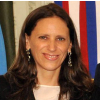
While not a career diplomat, Vilma S. Martínez, the U.S. ambassador to Argentina, has a long history of straddling the worlds of corporate boardrooms and legal defense of minorities.  One of the leading voices in Hispanic civil rights since the 1970s, Martínez has run the Mexican American Legal Defense and Educational Fund (MALDEF) and been a part of legal fights on behalf of both documented and undocumented immigrants from Latin America. She also served on the board of directors of beer giant Anheuser-Busch for 25 years.  Martínez was confirmed as ambassador by the Senate July 24, 2009.

 
Martínez was born October 17, 1943, in San Antonio, Texas. The daughter of a construction worker, she grew up in a segregated world that helped push her towards a legal career dedicated to breaking down racial barriers. “We weren’t allowed to go into some of the parks,” Martínez remarked in a 2000 article published by the American Bar Association. “When we went to the movies, we had to sit in the back of the theater.”
 
Her first taste of the legal profession came when she was 15, while volunteering for the firm of a local Hispanic lawyer, Alonso Perales. When her high school guidance counselor refused to help her apply to college, Martínez wrote to the University of Texas at Austin and asked how she could apply. She financed her education at UT by washing beakers and test tubes in the biochemistry lab. She received her Bachelor of Arts in 1964, after just two and a half years, and then attended law school at Columbia University, earning her law degree in 1967.
 
That same year Martínez’s professional career began with the NAACP Legal Defense Fund, where she worked for three years defending poor and minority clients. She also was part of the legal team involved in the landmark affirmative action case Griggs v. Duke Power Company, which was decided by the Supreme Court in 1971. 
 
In 1970, Martínez accepted a position as an equal employment opportunity counselor for the New York State Division of Human Rights in New York City. The next year she joined the firm of Cahill, Gordon & Reindel in New York as a litigation associate specializing in labor law.
 
Martínez’s association with the Mexican-American Legal Defense and Educational Fund began in the early 1970s, when she became one of the first two women to join its board of directors. In 1973, when she was 29 years old, she was selected president and general counsel of MALDEF, and served in that capacity for nine years. Under her leadership, MALDEF helped push to expand the Voting Rights Act in 1975 to cover Mexican-Americans.
 
In 1976, she was appointed to the University of California’s Board of Regents, where she served until 1990, including a stint as chair from 1984 to 1986.
 
In 1982, Martínez became a partner at the Los Angeles law firm of Munger, Tolles & Olson, where she specialized in federal and state court litigation, including defense of wrongful termination and employment litigation and other commercial litigation. In 1994, she helped in the fight against California’s Proposition 187—which sought to ban illegal immigrant children from attending the state’s public schools—while representing the Los Angeles Unified School District
 
Among the corporate boards Martínez has served on was that of Anheuser-Busch, for which she was a director for 25 years, beginning in 1983. When the company was sold to Belgian-Brazilian InBev in 2008, she received $4.8 million in stock options and deferred compensation. Anheuser-Busch was the number one corporate donor to MALDEF.
 
Her participation on other company and banking boards includes Fluor (1993), Burlington Northern Santa Fe railroad (1998), Shell Oil (1998),Sanwa Bank California, and Bank of the West. She also served as a member of Wal-Mart’s Employment Advisory Panel.
 
According to her financial disclosure statement when she was nominated to be ambassador to Argentina, Martínez received $361,044 in salary from Munger, Tolles & Olson, $147,800 in board fees from Anheuser-Busch (in addition to $4.8 million from its sale), $135,000 in fees from Flour, $92,250 in board fees frm Burlington Northern Santa Fe and $35,700 in board fees from Bank of the West.
 
During the 1990s, Martínez was also vice-chair of the Edward W. Hazen Foundation and a member of the board of People for the American Way and The Ninth Judicial Circuit Historical Society, and she has served on the boards of several non-profit organizations, including the Los Angeles Philharmonic Association.
 
Martínez has contributed more than $9,800 to Democratic candidates and groups since 1989, including at least $1,900 to Obama, according to OpenSecrets.org.
 
Martínez married attorney Stuart R. Singer in the early 1970s and the couple had two sons.
 
Obama Donor Named Ambassador (by Jim McElhatton, Washington Times)

more

Previous U.S. Ambassador to Argentina

Wayne, Earl Anthony
ambassador-image

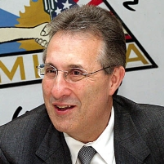
Earl Anthony Wayne was nominated by President Bush to be Ambassador of the United States to Argentina on April 4, 2006, and the Senate confirmed his nomination on July 28, 2006. Wayne was born in 1950 in Concord, California. He earned his BA in Political Science from the University of California at Berkeley in 1972, and subsequently received an MPA from Harvard University’s Kennedy School of Government, an MA from Princeton University, and another MA from Stanford University. He joined the Foreign Service in 1975. Early in his career, Wayne was posted as a political officer in Rabat, Morocco, and as an analyst of Chinese domestic and foreign policies in the Bureau of Intelligence and Research. Wayne was Special Assistant to Secretaries of State Alexander Haig and George Shultz from 1981 to 1983, and from 1984 to 1987, he served as First Secretary at the embassy in Paris. From 1987 to 1989, Wayne took a leave of absence from the Foreign Service and worked as National Security Correspondent for the Christian Science Monitor
 
From 1989 to 1991, Wayne was Director for Regional Affairs for the U.S. Ambassador-at-Large for Counter-Terrorism, formulating and implementing counter-terrorism policy cooperation during the first Iraq war and the fall of the Iron Curtain. From June 1991 to June 1993, he was Director for Western European Affairs at the National Security Council (NSC). Wayne was Deputy Chief of Mission at the U.S. Mission to the European Union from July 1993 until July 1996, served as Deputy Assistant Secretary for Europe and Canada from 1996 to 1997, and as Principal Deputy Assistant Secretary for the bureau of European Affairs from 1997 until spring 2000. From June 2000 to June 2006, he was Assistant Secretary of State for Economic and Business Affairs, where he played a lead role coordinating reconstruction assistance to countries hit by the December 2004 Asian tsunami, and the international response to the October 2005 earthquake in Pakistan. Wayne speaks French. 


more