



The next time you bite into a chocolate bar or other chocolate confection, give a thought to the West African nation of Côte d’Ivoire, the world’s leading exporter of cocoa beans, the raw agricultural product from which chocolate is made. Alhough torn apart by strife and civil war since 2002, the recent installation of a new President, who won elections deemed free and fair by neutral observers, may eventually lead to the restoration of peace. Although it is often referred to in the English-speaking world as Ivory Coast, the official name of this French-speaking country is in French, and since 1983 the Ivoirian government has emphasized the correct use of the name.
Lay of the Land: Situated on the west coast of Africa, Côte d’Ivoire is bordered by Liberia and Guinea to the west, Mali and Burkina Faso to the north, Ghana to the east, and the Gulf of Guinea on the Atlantic Ocean to the south. With an area of 124,502 square miles, Côte d’Ivoire is slightly larger than New Mexico. Côte d’Ivoire is basically a large plateau rising gradually from sea level in the south to elevations of nearly 1700 feet in the north. The southeast coast is marked by inland lagoons that start at the Ghanaian border and stretch nearly 200 miles along the coast. The southwest is covered with dense tropical moist forest, which is less thick in the southeast. The mountains of the Dix-Huit Montagnes region, in the west of the country near the border with Guinea and Liberia, is home to Mount Nimba, which at 5,748 feet is the country’s highest point. A forest-savanna belt extends across the middle of the country from east to west, and is the transition zone between the coastal forests and the interior savannas. Northern Côte d’Ivoire is a subtropical grassland savanna, with sandy soils and decreasing vegetation from south to north. The largest city and former capital of Côte d’Ivoire is Abidjan; its population of 5 million makes it the third-largest French-speaking city in the world, after Paris and Kinshasa, Congo, but before Montréal, Canada. The capital, since 1983, is Yamoussoukro (population, 242,744), located 150 miles northwest of Abidjan, the hometown of long time President Félix Houphouët-Boigny, who ruled the country from 1960 to 1993. However, many, if not most, government offices remain in Abidjan.
The origin of human presence in Côte d’Ivoire is difficult to fix because the country’s climate destroys remains quickly and completely, but ancient weapon and tool fragments have been dated to the Upper Paleolithic period (15,000 to 10,000 BC), or at least the Neolithic period (10,000 BC to 4,000 BC). Historians believe that they were displaced and/or absorbed by the ancestors of the present inhabitants. Peoples who arrived before the 16th century include the Ehotilé, Kotrowou, Zéhiri, Ega and Diès. Newcomers after that time established five important states in Côte d’Ivoire in the pre-colonial era. In the early 16th century, the Abron, an Akan group fleeing the developing Asante confederation in present-day Ghana, started the kingdom of Gyaaman, whose capital, the northeast town Bondoukou, became a major center of commerce and Islam whose Quranic scholars attracted students from all over West Africa. In the early 18th century in north-central Côte d’Ivoire, the Juula established the Muslim empire of Kong, which became a prosperous center of agriculture, trade, and crafts, though ethnic strife and religious discord gradually weakened it. In the mid-eighteenth century in east-central Côte d’Ivoire, other Akan groups fleeing the Asante established a Baoulé kingdom at Sakasso and two Agni kingdoms, Indénié and Sanwi. The Baoulé, like the Asante, created a centralized political structure under three successive rulers, but it finally split into smaller chiefdoms. Despite the breakup of their kingdom, the Baoulé strongly resisted French subjugation.
The US and Côte d’Ivoire had friendly relations during the regime of Félix Houphouët-Boigny, who supported the US in its Cold War rivalry with the former Soviet Union and welcomed American investment in his country. After the outbreak of the Ivoirian civil war in 2002, relations cooled as the US suspended non-humanitarian aid.
Along with the rest of the international community, the US urged President Laurent Gbagbo to relinquish power after the 2010 elections were determined to have elected rival Alassane Ouattara to the Presidency. With the success of Ottara’s forces in ousting Gbagbo, it is widely expected that relations will become friendly once again.
Côte d’Ivoire is the world’s largest producer of cocoa, and US imports of cocoa are mainly responsible for the large trade deficit ($1.013 billion in 2010) between the two. US imports from Côte d’Ivoire more than tripled between 2002 and 2010, from $376.4 million in 2002 to $1.17 billion in 2010. The 2010 imports were dominated by cocoa beans ($593.9 million or 50.5%); crude oil ($230 million or 19.5%); bakery and confectionary products ($143.9 million or 12.2%); natural rubber and similar gums ($78.5 million or 6.7%); and fuel oil ($61.5 million or 5.2%). US exports to Côte d’Ivoire have grown more slowly, not quite doubling between 2002 and 2010, from $76.1 million to $162.6 million. Exports are led by plastic materials ($29.1 million or 17.9%); industrial engines ($17.6 million or 10.8%); industrial machinery ($16.2 million or 9.9%); motor vehicles, parts and accessories ($15.4 million or 9.5%); marine vessels ($10 million or 6.2%); specialized mining and excavation machinery ($8.6 million or 5.3%); drilling and oilfield equipment ($8.2 million or 5%); newsprint ($6.9 million or 4.2%); and chemicals ($6 million or 3.7%).
The chaos that has dominated Ivoirian life since the outbreak of civil war in 2002 has been inimical to human rights, for while the country was divided, credible allegations of human rights violations were made against both the government and the Forces Nouvelles. The 2010 elections, which many hoped would bring peace to Côte d’Ivoire, instead yielded still more violence and dislocation. On December 2, 2010, the Independent Electoral Commission (CEI) declared Alassane Ouattara the winner of the runoff with 54.1 percent of the vote as compared with 45.9 percent for Laurent Gbagbo. The UN and international and domestic observer missions declared the vote fair and democratic and recognized Ouattara as the country’s properly elected president. Gbagbo refused to accept the results, and on December 3, the Constitutional Council, which was made up entirely of Gbagbo appointees, overturned the CEI ruling, citing voter “irregularities.” More than 500,000 votes for Ouattara were annulled, and Gbagbo was declared the winner. A four month stalemate ensued, which was broken in April 2011 by a successful military offensive by forces loyal to Ouattara, and the forcible ouster of Gbagbo from office. Forces loyal to Gbagbo were finally cleared form the field by late May, and Ouattara took office on May 21, 2011.
Note: Embassy Abidjan was established Aug 7, 1960, with Donald L. Norland as Chargé d’Affaires ad interim. Name changed from Ivory Coast to Côte d’Ivoire Oct 15, 1986.
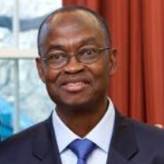 Diabate, Daouda
Daouda Diabaté returned to the United States for a second tour as ambassador from Côte d’Ivoire in February 2011, part of a diplomatic offensive by the internationally-recognized President-elect Alassane Ouattara against incumbent President Laurent Gbagbo, who refused to leave power.
Côte d’Ivoire embassy in the United States
- Table of Contents
- News
- Overview
- Basic Information
- History
- Newspapers
- History of U.S. Relations with Cote D'Ivoire
- Current U.S. Relations with Cote D'Ivoire
- Where Does the Money Flow
- Controversies
- Human Rights
- Debate
- Past Ambassadors
- Ambassador to the U.S.
- Embassy Web Site in the U.S.
- Comments
- Leave a comment

U.S. Ambassador to Cote D'Ivoire
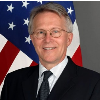
The next ambassador to the West African nation of Côte d’Ivoire will be Terence P. McCulley, a member of the Senior Foreign Service whose diplomatic career has been spent mostly in Africa or working on African issues. If confirmed by the Senate he would succeed Philipp Carter III, who served in Abidjan starting in August 2010.
A native of Medford, Oregon, McCulley grew up in Eugene, where he earned a B.A. in European history and French language and literature at the University of Oregon in 1979. He attended the Université de Haute Bretagne in Rennes, France, from 1979-1980 as a Rotary Foundation Graduate Fellow, and also attended the Fletcher School of Law and Diplomacy at Tufts University.
Joining the Foreign Service in 1985, McCulley’s first three tours were in Niger, South Africa and Chad, working in management, consular and political reporting positions. Following his posting to Chad, he served as consul at the U.S. Consulate General in Mumbai, India.
From 1993 to 1995, McCulley was at the State Department in Washington, DC, serving as the desk officer for Zaire (now the Democratic Republic of the Congo) during the Rwanda genocide, the massive influx of refugees into eastern Zaire and the beginnings of the conflict in Africa’s Great Lakes region.
Back in Africa from 1995 to 2004, McCulley served three consecutive stints as deputy chief of mission at the U.S. embassies in Lomé, Togo, from 1995 to 1998; Dakar, Senegal, from 1998 to 2001; and Tunis, Tunisia, from 2001 to 2004.
In June 2004, he became the deputy coordinator for Iraq assistance in the Bureau of Near Eastern Affairs.
McCulley received his first ambassadorship when President George W. Bush nominated him to be ambassador to Mali in May 2005; confirmed by the Senate in June, McCulley served three years in Bamako.
After serving as deputy chief of mission at the embassy in Copenhagen, Denmark, from 2008 to 2010, McCulley served as ambassador to Nigeria starting in August 2010.
McCulley is fluent in French, and speaks some Zulu and Wolof. He and his wife, Renée, have two sons.
-Matt Bewig
To Learn More:
États-Unis: Terence McCulley, nouvel ambassadeur en Côte d’Ivoire (by Diomandé Mémoué, Fratmat)
From D.C. With Love: The American Mission in Abuja (by Gunner Hamlyn, Chicago Policy Review)
more
Comments