



Rwanda’s history is one marred with perpetual civil war between the majority population of native Hutu people, who are peasant farmers, and the minority population of Tutsi, who arrived from the Horn of Africa in the 15th century. In 1894, the Germans and missionaries known as the “White Fathers” colonized Rwanda and made it a German protectorate. The Germans favored the Tutsi over the Hutu and put the Tutsis into power to operate as proxy rulers. The Tutsi ruling class established a monarchy and formed a feudal society, subjugating the Hutus into serfdom. In 1915, Belgian troops chased the Germans out of the country and took over, continuing Germany’s support for the Tutsi faction until the Hutu Revolution of 1959. Violence broke out and many fled the country, but in 1962, Rwanda was granted full independence under a leader who advanced a Hutu-favoring agenda. However, widespread corruption resulted in a military takeover of the government in 1973, resulting in one-party state.
Lay of the Land: In east Central Africa, perched on an isolated hilly plateau scattered with eucalyptus trees and banana groves, is Rwanda, called “the land of a thousand hills.” Lake Kivu and the Virunga Mountains, capped by 14,787-foot Mount Karisimbi, form a natural barrier to the west and northwest. The Kagera River, the source of the Nile River, is to the east, and the Ankanyaru and Ruzizi rivers are to the south and southeast.
Rwanda’s earliest history maintains that Tutsi cattle breeders came from the Horn of Africa in the 15th century. Soon after, they began to subjugate the Hutu natives by way of a feudal society headed by Tutsis, and established a monarchy under a mwami (king).
Diplomatic relations between the United States and Rwanda were established on July 1, 1962.
Relations between the United States and Rwanda are cooperative, and the U.S. is supportive of Rwanda’s implementation of democratic institutions in the wake of its bloody civil war.
About $34.15 million was exported from the US to Rwanda in 2009, while $19.16 million was imported to the US from Rwanda.
Rwandan Peacekeeping Official on War Crimes Controversy
According to the State Department, “Citizens’ right to change their government was effectively restricted and violence against genocide survivors and witnesses by unknown assailants resulted in deaths.”
Note: The Embassy in Kigali was established on July 1, 1962, with David J.S. Manbey as Chargé d’Affaires ad interim.
 Mukantabana, Mathilde
Mathilde Mukantabana presented her credentials as Rwanda’s ambassador to the United States on July 18, 2013. The Washington post is Mukantabana’s first diplomatic position of any kind. She is also non-resident ambassador to Mexico, Brazil, and Argentina.
Mukantabana was born in Butare, Rwanda, and is a member of the Tutsi ethnic group. Her father was a primary school principal and owned a coffee plantation. Mukantabana and other Tutsis were forced to leave school in Rwanda in 1973, so she went to Burundi to finish high school and subsequently earn a bachelor’s degree in history and geography from the University of Burundi.
She came to the United States in 1980 to attend Sacramento State University, where she earned an M.A. in history in 1986. She also married a professor, Alexandre Kimenyi, who taught linguistics, ethnic studies, French and African languages. He was a Rwandan activist whom she had known in Rwanda. Mukantabana went on to earn another master’s degree, this one in social work, with the hope that it might help her rebuild her country.
Mukantabana began teaching history at Cosumnes River College in Sacramento in 1994. That was also the year of the Rwandan Genocide, in which thousands of Tutsi were massacred by members of that country’s Hutu majority. The same week that she was hired by Cosumnes River, she learned that among those killed were both her parents, three sisters, two brothers, six aunts, four uncles and all of her nieces and nephews.
In response, Mukantabana in 1999 put her social work degree to use, starting a program in that discipline at the National University of Rwanda. Many of those trained in the program work for local governments and non-governmental organizations, still helping survivors deal with the trauma of the genocide.
Also during her time teaching, Mukantabana co-founded and became president of the Friends of Rwanda Association. In 2013, Mukantabana was an executive producer of The Rwandan Night, a documentary on the genocide told from the perspective of seven viewpoints.
Raised Catholic, she said in an interview with Tony Platt of Social Justice Journal, “Until I left Rwanda I was a strong believer in the precepts of Catholicism and some of the beliefs I acquired through religion later enabled me to survive. I think it helps to believe in the idea that someone out there is looking out for you and is protecting you. Later, my views about religion changed when I learned about the relationship between colonialism and the Church. I’m no longer a believer in a traditional sense, but I am still influenced and inspired by the teachings of Christianity.”
Mukantabana has three children; two sons, Gitego and Ndahiro, and a daughter, Saro. Her husband died in June 2010.
-Steve Straehley
To Learn More:
Cosumnes River Professor Mukantabana Named Rwanda’s Ambassador to U.S. (by Stephen Magagnini, Sacramento Bee)
20th Anniversary of the Genocide in Rwanda: An Interview with Mathilde Mukantabana (by Tony Platt, Social Justice Journal)
- Table of Contents
- News
- Overview
- Basic Information
- History
- Newspapers
- History of U.S. Relations with Rwanda
- Current U.S. Relations with Rwanda
- Where Does the Money Flow
- Controversies
- Human Rights
- Debate
- Past Ambassadors
- Ambassador to the U.S.
- Embassy Web Site in the U.S.
- Comments
- Leave a comment

U.S. Ambassador to Rwanda
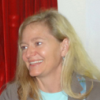
On July 17, 2014, the Senate Foreign Relations Committee held a hearing into the nomination of Erica J. Barks-Ruggles to be the U.S. ambassador to Rwanda. It would be the first ambassadorial post for Barks-Ruggles, a career Foreign Service officer.
Barks-Ruggles is a native of Minnesota who attended Swarthmore College outside Philadelphia. She graduated in 1989 with a bachelor’s degree in biology and English literature. Her first job out of college was as a paralegal with a Washington law firm. Barks-Ruggles’ first experience with Africa came in 1991 while backpacking across the continent with the man who would become her husband, Taylor Ruggles, another career Foreign Service officer. She joined the State Department that year.
Barks-Ruggles’ first overseas assignment came in 1992 when she was vice consul at the U.S. Consulate in Chennai (Madras), India. In 1994, she returned to Washington, first as desk officer in the Bureau of African Affairs and then in 1996 to a post in the Executive Secretariat. Later that year, she was seconded to the National Security Council as director of African Affairs. Barks-Ruggles moved back to the Department of State in 1999 as special assistant to the under secretary for political affairs.
In 2000, she was sent to the Brookings Institution as an international affairs fellow. While there, she prepared briefs about the economic impact of HIV/AIDS in Africa. The following year Barks-Ruggles was sent overseas, this time to the U.S. Embassy in Oslo, Norway, as economic section chief.
She returned to Washington in 2004, first as a member of the State Department’s policy planning staff, focusing on the Middle East. In 2005, Barks-Ruggles was named deputy assistant Secretary of state for Democracy, Human Rights and Labor. While in that post, she focused on Saudi Arabia, Iran, Israel and Palestinian affairs, Jordan, Egypt, Syria and Lebanon. In 2008, Barks-Ruggles was asked by her superiors to tone down a report on human rights in North Korea, removing words such as “repressive” and “regime.”
Barks-Ruggles’ next assignment saw her as deputy to U.N. Ambassador Susan Rice, leading Rice’s Washington office. In 2011, when she went to Cape Town, South Africa, as consul general. Her husband filled a similar role in Durban, South Africa.
Barks-Ruggles speaks French and Norwegian.
-Steve Straehley
To Learn More:
Testimony before Senate Committee on Foreign Affairs (pdf)
State Department Cables 2006-2010 (WikiLeaks)
morePrevious U.S. Ambassador to Rwanda
A career member of the Senior Foreign Service, Donald W. Koran was nominated in April 2011 by President Barack Obama to serve as U.S. ambassador to Rwanda.
Comments