



Vatican City is located within the city of Rome, Italy, but is its own sovereign entity. Consisting of St. Peter’s Basilica, St. Peter’s Square, Belvedere Park, the Papal Palace, and the Vatican gardens, the Vatican was established in 1929 as a result of the Lateran Treaty. Its power is separate from that of the Catholic Church, and it issues passports, has its own transportation network and modern telephone system, pharmacy and post office. Vatican City is ruled by the Pope, and all of its state officials are clergymen of the Church. Its legislative functions are handled by the Pontifical Commission for Vatican City State, which is comprised of seven members nominated by cardinals for a term of five years. The current Pope is Benedict XVI, and Italian Cardinal Giovanni Lajolo serves as president of the Pontifical Commission.
Lay of the Land: The headquarters of the Roman Catholic Church in Rome and seat of its sovereign, the Pope, Vatican City consists of St. Peter’s Basilica, St. Peter’s Square, administrative buildings north of the square, Belvedere Park, the Papal Palace, and the Vatican gardens.
The United States established diplomatic relations with Vatican City on April 7, 1848 (commissioned to the Papal States).
Pope John Paul was strongly against military intervention in both Iraqi Wars. In 2003, he sent a personal envoy, Cardinal Pio Laghi, to try to convince President George W. Bush to avoid attacking Iraq. Cardinal Laghi met with Bush but felt the president had already made up his mind to invade Iraq. The cardinal was strongly critical of the US decision to go to war.
Given the Vatican City’s lack of traditional economy, it is not surprising that very little is traded between it and the United States. In 2008, the US imported only $295,000 in goods and services. Top imports from 2004-2008 included clocks, portable typewriters, and other household goods, increasing from $0 to $55,000; industrial engines, pumps, compressors and generators, moving up from $0 to $17,000; non-textile floor and wall tiles, rising from $0 to $11,000; and computers, increasing from $0 to $10,000.
Pelosi Raises Controversy with Vatican Over Abortion
Jacob L. Martin
Appointment: Apr 7, 1848
Presentation of Credentials: Aug 19, 1848
Termination of Mission: Died at post, Aug 26, 1848
Note: Commissioned to the Papal States.
Appointment: Jan 5, 1849
Presentation of Credentials: Nov 19, 1849
Termination of Mission: Presented recall, Nov 27, 1858
Note: Commissioned to the Pontifical States.
Appointment: Jun 15, 1858
Presentation of Credentials: Nov 27, 1858
Termination of Mission: Presented recall, May 23, 1861
Note: Commissioned as Minister Resident at Rome.
Appointment: Mar 22, 1861
Note: Declined appointment.
Appointment: Aug 6, 1861
Presentation of Credentials: Jun 6, 1862
Termination of Mission: Relinquished charge, Aug 4, 1862
Note: Commissioned as Minister Resident at Rome.
Appointment: Aug 9, 1862
Presentation of Credentials: Nov 26, 1862
Termination of Mission: Left post shortly before May 20, 1863
Note: Commissioned as Minister Resident at Rome. Commissioned during a recess of the Senate; recommissioned after confirmation on Jan 19, 1863.
Appointment: Oct 7, 1863
Presentation of Credentials: Jan 8, 1864
Termination of Mission: Left post, Aug 17, 1867
Note: Commissioned during a recess of the Senate; recommissioned after confirmation on Jan 18, 1864. Commissioned as Minister Resident at Rome.
Note: Not commissioned; letter of credence dated Apr 30, 1869, but later canceled.
Appointment: [see note below]
Presentation of Credentials: [Dec 29, 1941]
Termination of Mission: Left Vatican City, Jul 8, 1944
Note: Used the title Chargé d’Affaires to the Holy See. Neither commissioned nor accredited; given the rank of Chargé d’Affaires, Dec 24, 1941, and designated to act as Chargé d’Affaires under the Act of Feb 23, 1931. Received by the Pope in private audience on Dec 29, 1941.
Note: Not commissioned; nomination of Oct 20, 1951, not confirmed by the Senate.
Appointment: Mar 8, 1984
Presentation of Credentials: Apr 9, 1984
Termination of Mission: Left post, Jul 18, 1986
Appointment: Oct 16, 1986
Presentation of Credentials: Jan 8, 1987
Termination of Mission: Left post, Jul 28, 1989
Thomas Patrick Melady
Appointment: Aug 3, 1989
Presentation of Credentials: Oct 3, 1989
Termination of Mission: Left post, Mar 1, 1993
Appointment: Jul 1, 1993
Presentation of Credentials: Sep 2, 1993
Termination of Mission: Left post, Sep 20, 1997
Appointment: Oct 14, 1997
Presentation of Credentials: Dec 16, 1997
Termination of Mission: Left post Mar 1, 2001
Appointment: Aug 3, 2001
Presentation of Credentials: Sep 13, 2001
Termination of Mission: Left post, Jan 31, 2005
Appointment: Oct 12, 2005
Presentation of Credentials: Nov 12, 2005
Termination of Mission: 2007
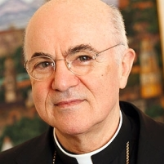 Vigano, Carlo Maria
On October 19, 2011, Carlo Maria Viganò took over as ambassador to the United States from the city-state of Vatican City (Holy See). A Vatican financial reformer who apparently did not want the job, Viganò, who is an archbishop in the Roman Catholic Church, was lobbying for the job of President of the Governorate of Vatican City State, which is the highest legislative and administrative position in Vatican City, and wrote letters to Pope Benedict XVI stating his strong preference for remaining in Italy. According to published reports, his ambition was thwarted by an alliance of doctrinal conservatives and Vatican officials offended by his sometimes aggressive style.
- Table of Contents
- News
- Overview
- Basic Information
- History
- Newspapers
- History of U.S. Relations with Vatican City
- Current U.S. Relations with Vatican City
- Where Does the Money Flow
- Controversies
- Human Rights
- Debate
- Past Ambassadors
- Ambassador to the U.S.
- Embassy Web Site in the U.S.
- Comments
- Leave a comment


U.S. Ambassador to Vatican City
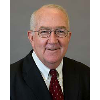
The next U.S. ambassador to Vatican City—the theocratic micro-state with a population of 800 and an area of 110 acres—will be a longtime international aid executive whose focus on the poor should fit in well with the announced priorities of newly-installed Pope Francis. Ken Hackett, president of Baltimore-based Catholic Relief Services (CRS), was nominated by President Barack Obama on June 14. If confirmed by the Senate, he would succeed Miguel Diaz, who served from 2009 to late 2012.
Born circa 1947 in West Roxbury, Mass., Hackett earned a B.S. in Business Administration at Boston College in 1968. Although Hackett says his main interests at college were “lacrosse and women,” at the urging of a lacrosse teammate he signed up for the Peace Corps in his senior year, thinking it would be “an interesting thing to do.” Assigned to rural Ghana, he worked in an agricultural cooperative and saw “the actual impact of American food aid on the health and well-being of very poor kids in a very isolated part of a West African country,” which fueled his intent to spend his career on international aid and development work.
After finishing with the Peace Corps, Hackett joined CRS in 1972. Commencing his career in Sierra Leone, Hackett managed a nationwide leprosy program and a maternal and child health program. Later postings took him to Africa and Asia, as well as to CRS headquarters in Baltimore. As regional director for Africa, he managed the agency’s response to the Ethiopian famine of 1984-1985, and supervised CRS operations in East Africa during the crisis in Somalia in the 1990s.
Hackett was named executive director of CRS in July 1993, and was appointed president in 2003. During his tenure, he started a division focusing on outreach to Catholic dioceses, parishes, organizations, and colleges, and laypeople were first appointed to the CRS board of directors. The organization’s budget—which despite the word “Catholic” comes not from the Church but from governments and private donors—nearly doubled under Hackett, who retired in December 2011.
Hackett has served as North America president of Caritas Internationalis, a Catholic Church relief ornaaization, and has served on the boards of the Pontifical Council Cor Unum (1996 to 2011); the U.S. bishops' Committee on Migration; the U.S. bishops’ Committee on International Policy; and the Africa Society. He is also a member of Legatus, an organization of Catholic business leaders. From 2004 to 2009, Hackett was on the board of directors of the Millennium Challenge Corporation.
Hackett lives in Columbia, Maryland. He and his wife, Joan, have two children.
-Matt Bewig
To Learn More:
Ken Hackett, Former CRS President, Nominated as U.S. Ambassador to Vatican (Catholic News Service)
Charitable Intent (by Jane Whitehead, Boston College Magazine)
Ken Hackett To Be Nominated As Ambassador To Vatican (by Jaweed Kaleem, Huffington Post)
Obama Taps Former CRS Head as New Vatican Envoy (by John L. Allen, Jr., National Catholic Reporter)
Catholic Relief Services has Benefited from Hackett’s Hand (by Paul McMullen, Catholic Review)
more
Comments