



Lay of the Land: Fiji is located in the south central Pacific west of Tonga and right astride where the International Date Line is supposed to pass. The Dateline was moved to the east so that all Fijian islands would be on the same day. The group consists of 300 islands, mostly large volcanic and some smaller volcanic and coral atolls. About 100 of the islands are inhabited.
The United States had some military outposts on Fiji during World War II and Fijian troops fought alongside the Americans against the Japanese in the Solomon Islands. Since Fiji’s independence, relations with the United States were good up until the 1987 coups. Since then the United States has been critical of Fiji’s military for those coups and the coup in 2006.
In 2006, just prior to the most recent coup, then-U.S. Ambassador David Lyons gave an interview to the Fiji Times in which he criticized the Fiji government for considering amnesty for those involved in the 2000 coup. This angered the Fiji government, which essentially told the United States to mind its own business. Lyons warned that Fiji had developed a coup culture, and democratic government would continue to face difficulties, especially if coup perpetrators suffered no consequences for their actions. Ironically, the Fijian government angry at the United States for such meddling was itself ousted in a military coup in December of 2006. The United States does maintain an embassy in Suva, the capital of Fiji, but does not recognize the current Fijian government, the nominally civilian interim government, as legitimate.
In 2007 the United States imported goods worth $152,818,000 from Fiji. Some of the main categories were fish and other food products, lumber, and clothing. Also in 2007 the United States exported goods to Fiji worth $29,947,000. The main categories of the exports were tools, cosmetics, pharmaceuticals, telecommunications equipment, machinery, fish, and soybeans. In late 2006 the United States suspended aid to Fiji until such time as a democratically elected government achieves power. The aid request for 2008 was only $370,000 in security assistance. The United States does provide Peace Corps volunteers for Fiji.
Trading Human Rights Accusations
David L. Lyon 1/9/03-7/23/05
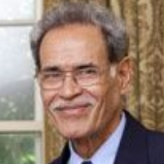 Thompson, Winston
A longtime cabinet minister and diplomat, Winston Thompson came out of retirement in April 2009 to serve as Fiji’s ambassador to the United States. His appointment was announced one week before Fijian President Ratu Josefa Iloilo suspended his nation’s constitution. Thompson has also served as Fiji’s representative to Canada since February 2010.
- Table of Contents
- News
- Overview
- Basic Information
- History
- Newspapers
- History of U.S. Relations with Fiji
- Current U.S. Relations with Fiji
- Where Does the Money Flow
- Controversies
- Human Rights
- Debate
- Past Ambassadors
- Ambassador to the U.S.
- Embassy Web Site in the U.S.
- Comments
- Leave a comment


U.S. Ambassador to Fiji
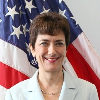
On September 18, 2014, the Senate Foreign Relations Committee approved the nomination of Judith Beth Cefkin to be the next U.S. ambassador to Fiji, also covering Tonga, Kiribati, Tuvalu and Nauru. If confirmed by the full Senate, it would be the first ambassadorial posting for the career Foreign Service officer.
Cefkin was born in 1953 and grew up in Fort Collins, Colorado, where her father John taught political science at Colorado State University. Cefkin attended Smith College, earning a B.A. in government in 1975. She continued her studies at the London School of Economics and Political Science, receiving an M.S. in International Relations from that institution in 1977.
Cefkin didn’t join the Foreign Service immediately after finishing college. Instead, she was a legislative intern in the U.S. Senate, worked in Congress’ Office of Technology Assessment and was a television news producer at network affiliate stations in Denver and Houston.
She joined the State Department in 1983 and her first assignment was in the U.S. Embassy in Mexico City as vice consul. Other early assignments included regional affairs officer in the Bureau of Political-Military Affairs at the Department of State and desk officer for Rwanda, Burundi and the Central African Republic.
In 1990, Cefkin was assigned to the U.S. Embassy in Bangkok, Thailand, as the ambassador’s staff assistant and a political officer. She was moved to Paris in 1993 as political officer and returned to Washington in 1996 as a political officer in the Office of the European Union at the State Department.
Cefkin was sent overseas in 1998 to the embassy in Manila, Philippines, first as deputy political counselor, then as political counselor. She was brought home in 2001 to be deputy director in the Office of Western European Affairs and in 2003 she was made director of the Office of Nordic-Baltic Affairs.
She was sent to Sarajevo in 2006 as deputy chief of mission to the U.S. Embassy to Bosnia and Herzegovina. Cefkin came back to Washington in 2009 to serve as an assessor on the State Department’s Board of Examiners. She returned to Manila in 2010 as the deputy chief of mission.
Since 2013, Cefkin has been senior advisor for Burma (Myanmar). She has spent much of the time working on normalizing relations between the United States and that nation, traveling there as part of that effort.
Cefkin is married to Paul Boyd, who was another Foreign Service officer who came to the State Department in mid-career. In his case, he had served in the Army in Vietnam and as a police investigator in New Mexico before joining the Foreign Service.
-Steve Straehley
To Learn More:
Testimony to Senate Foreign Relations Committee (pdf)
State Department Cables (2006-2009) (WikiLeaks)
morePrevious U.S. Ambassador to Fiji
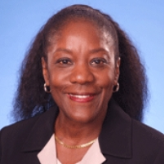
Career diplomat Frankie Annette Reed has been chosen to serve as ambassador to the Pacific island nations of Fiji, Tonga, Kiribati, Tuvalu and Nauru. Her Senate confirmation hearing was held on June 29, 2011, and she was confirmed on August 3.
Comments