History:
The Federal Bureau of Investigation (FBI) was created in 1908, thanks to the vision of President Theodore Roosevelt and Attorney General Charles Bonaparte. At the time, the Attorney General (AG) lacked manpower to conduct investigations, relying mostly on the Secret Service when situations called for the AG’s office to handle an important law enforcement matter. Roosevelt agreed that the situation required changes and gave his blessing to Bonaparte to appoint a force of Special Agents within the Department of Justice (DOJ). The first Special Agents consisted of ten former Secret Service employees and a number of DOJ investigators. On July 26, 1908, Bonaparte ordered them to report to Chief Examiner Stanley W. Finch, which is considered the official beginning of the FBI.
By the following year, as Bonaparte and President Roosevelt were heading out of office, the AG recommended that the force of 34 agents become a permanent part of DOJ. The new Attorney General, George Wickersham, named the force the Bureau of Investigation on March 16, 1909. At that time, the title of chief examiner was changed to chief of the Bureau of Investigation.
The first major expansion for the new bureau came in June 1910 when the
Mann Act was passed, making it a crime to transport women over state lines for prostitution. It also gave federal investigators a new means for pursuing criminals who evaded state laws but had no other federal violations. Finch became Commissioner of White Slavery Act violations in 1912 and former Special Examiner A. Bruce Bielaski became the new Bureau of Investigation chief.
Over the next few years, the number of Special Agents grew to more than 300, and these individuals were complemented by another 300 Support Employees. Field offices existed from the bureau’s inception. Each field operation was controlled by a Special Agent in Charge who reported to bureau headquarters in Washington, DC. Most field offices were located in major cities. However, several were located near the Mexican border where they concentrated on smuggling, neutrality violations and intelligence collection (regarding the Mexican revolution).
When the US entered World War I, the bureau’s responsibilities grew to include activities involving espionage, Selective Service and acts of sabotage. Bureau agents also assisted the Department of Labor by investigating enemy aliens. As part of this work, a young man named Herbert Hoover was hired to work for the Justice Department. A graduate of George Washington University’s law school, Hoover, in his mid-twenties, helped lead DOJ’s enemy alien operations during World War I and, in the General Intelligence Division under Attorney General A. Mitchell Palmer, assisted with investigating suspected anarchists and communists.
In 1919, William J. Flynn, former head of the Secret Service, became Director of the Bureau of Investigation and was the first to use that title. Flynn would serve five years as director. During that time, Washington was awash in political scandals emanating from the administration of Warren G. Harding, including the infamous
Teapot Dome scandal which destroyed the president’s reputation. Following Harding’s death in 1923, Calvin Coolidge assumed the presidency and replaced many of Harding’s disgraced cabinet members. For the new Attorney General, Coolidge appointed attorney Harlan Fiske Stone. Stone then selected Hoover to head the Bureau of Investigation in 1924.
When Hoover took over, the Bureau of Investigation had approximately 650 employees, including 441 Special Agents who worked in field offices in nine cities. By the end of the decade, there were approximately 30 field offices, with divisional headquarters in New York, Baltimore, Atlanta, Cincinnati, Chicago, Kansas City, San Antonio, San Francisco and Portland. Hoover fired any agents he deemed unqualified and adopted important changes to the bureau’s operations. For instance, the bureau’s seniority rule of promotion was abolished, replaced by uniform performance appraisals. In January 1928, Hoover established a formal training course for new agents and mandated an age requirement of 25-35 for new recruits. He also gave preference to agents with law or accounting experience.
The following year, 1929, the stock market crashed, ushering in the Great Depression and an era of increased crime. It was during the 1930s that the bureau began to earn a national reputation and Hoover solidified his law enforcement empire. Noting the widespread interest of the media to report on crime, Hoover began to use newspapers to carry his message that the Bureau of Investigation was working to secure the safety of honest Americans. In 1932, the first issue of the FBI Law Enforcement Bulletin - then called Fugitives Wanted by Police, was published. High profile cases such as the kidnapping of the Lindbergh baby in 1932 gave Hoover’s bureau a chance to involve itself in a case that received constant media attention. The bureau also went after infamous gangsters like John Dillinger and Al Capone, leading to sensational captures.
The Bureau of Investigation was renamed the US Bureau of Investigation on July 1, 1932. Then, beginning July 1, 1933, the Department of Justice experimented for almost two years with a Division of Investigation that included the Bureau of Prohibition. Public confusion between Bureau of Investigation Special Agents and Prohibition Agents led to a permanent name change in 1935 that brought about the Federal Bureau of Investigation.
As the threat of war grew in Europe, President Franklin Roosevelt ordered federal investigators to keep tabs on fascist and communist organizations operating in the U.S.
A 1939 Presidential Directive further strengthened the FBI's authority to investigate suspected subversives in the United States, and Congress reinforced it by passing the
Smith Act in 1940, outlawing advocacy of violent overthrow of the government. When Congress instituted the military draft in 1940, the FBI was put in charge of locating draft evaders and deserters. Federal agents also collected information on would-be spies in the U.S. to help prevent German or Japanese sympathizers from committing acts of sabotage. The FBI uncovered the
Frederick Duquesne spy ring, one of the largest ever discovered up to that time, leading to the arrest and conviction of 33 spies.
But the FBI also failed to uncover other important spy operations during World War II before it was too late. The Manhattan Project, America’s top secret program to build the first atomic weapons, experienced two critical leaks of highly secret information. One was by
Klaus Fuchs, a German-born physicist who worked on the Manhattan Project, who gave nuclear secrets to the Soviet Union before getting caught. The other spy scandal involved
Julius and Ethel Rosenberg, who were eventually tried, convicted and executed for giving the Soviets classified documents from the Manhattan Project
The Fuchs and Rosenberg scandals helped feed the post-WWII frenzy that gripped Washington and later the nation over Communist infiltration of American institutions. The era of McCarthyism proved a golden opportunity for Hoover who further expanded his power by employing his agents in critical investigations of Americans suspected of being Communists or helping expand the Soviet Union’s purported efforts to take over the United States. Throughout the 1950s and 1960s, Hoover had his FBI collect data on thousands of Americans of all walks of life. As the Civil Rights movement grew, Hoover targeted for investigation people like Martin Luther King and Malcolm X. At the same time, the FBI conducted criminal investigations of the murder of civil rights workers, inclduing the 1964 slayings of voting registration workers Michael Schwerner, Andrew Goodman and James Chaney in Mississippi.
Most of Hoover’s FBI clandestine activities were not revealed until after the director’s death in 1972, after 47 years in power. His immediate successor was acting Director L. Patrick Gray, whose time in charge was cut short by the
Watergate scandal. The FBI was charged with investigating the break-in of the Watergate Hotel and attempted spying of the Democratic Party by Republican operatives. Suspicions circulated around Washington as to Gray’s role in the conspiracy, which damaged his effectiveness in leading the bureau (Gray was never indicted on any charges). He was replaced in April 1973 by another acting Director, William Ruckleshaus, a former Congressman and the first head of the Environmental Protection Agency. Ruckleshaus was merely a stop-gap measure until Clarence Kelley was appointed in July 1973. Kelley, a former Kansas City Police Chief and twenty-year FBI agent, wound up serving five years as the head of the FBI, during which time he had the task of refurbishing the bureau’s tarnished reputation.
In 1978, William Webster took over the helm of the FBI during the administration of President Jimmy Carter. The Webster era at the FBI was marked by a series of high profile law enforcement campaigns that helped people forget about the bureau’s dark days. A rise in international terrorism led to the FBI taking on a larger role in counterterrorism efforts and investigating attacks and hostage-taking incidents involving U.S. citizens. Espionage cases also became big media stories with the FBI helping to capture spies such as former Navy officer
John Walker and former National Security Agency employee William Pelton.
Another expansion of FBI duties occurred with the Reagan administration’s War on Drugs. Although the bureau had long been involved in the investigation of illegal drugs and alcohol going all the way to Prohibition, the 1980s marked a change for the FBI when Attorney General Edwin Meese gave the FBI concurrent jurisdiction with the Drug Enforcement Administration (DEA) over narcotics violations in the United States.
Webster strengthened the FBI’s response to white-collar crimes, especially cases of public corruption involving politicians. FBI agents investigated members of Congress (
ABSCAM), the judiciary (
GREYLORD) and state legislatures in California and South Carolina. The FBI also uncovered instances of fraud that lay behind many of the savings and loans failures of the 1980s. In 1984, the FBI acted as lead agency for security of the Los Angeles Olympics. In preparing for the Olympics, the bureau established the Hostage Rescue Team (HRT), a special force designed to handle the kind of tragic events that marred the Olympic Games in Munich in 1972. While no hostage events occurred in Los Angeles, the HRT would go on to become involved in several high-profile FBI cases in the 1990s that ended tragically.
In August 1992, the FBI was called into to help with the siege at
Ruby Ridge, Idaho. The incident began with U.S. marshals trying to arrest Randall Weaver on federal weapons charges which resulted in a gunfight that left one marshal and Weaver’s fourteen-year-old son dead. When the stand-off settled into a siege, the marshals requested backup from the FBI, which sent in its Hostage Rescue Team. Initially, the head of the HRT, Richard Rogers, wanted to demolish the cabin that Weaver and others were hold up in by using a special assault vehicle in the HRT’s mobile arsenal. Rogers’ superiors in Washington rejected this plan. But they did authorize an aggressive, shoot-to-kill order that led to an FBI sniper killing Weaver’s wife. The siege ended after Weaver gave himself up.
The handling of the Ruby Ridge incident by federal law enforcement led to one of the most intensive and controversial investigations in recent history. The FBI faced widespread resentment and Attorney General Janet Reno established a Justice Department task force to investigate what had happened. National debates on the case were said to have fueled anti-government sentiments, such as the
bombing of a federal building in Oklahoma City in 1995.
Unfortunately for the FBI, six months later the HRT was again mobilized to contain another crisis, this one touched off by the Bureau of Alcohol, Tobacco and Firearms (ATF). The ATF’s initial raid on the
Branch Davidian compound in Waco, Texas, failed to complete its mission—the capture of cult leader David Koresh—and left four ATF agents dead. In came the HRT, which stood around with other federal law enforcement officers for 51 days until the order was given to raid the compound. This triggered the collective suicide and/or murder of all but a handful of the Branch Davidian members. During subsequent investigations of the handling of the Waco siege, it was revealed that the FBI withheld key information and had lied about its use of gas in the final raid.
As if Ruby Ridge and Waco weren’t enough, the FBI’s reputation declined even further in the wake of two espionage investigations.
Aldrich Ames was a longtime CIA operative-turned-spy who spent years giving American secrets away to the Soviet Union before the FBI caught up with him. The FBI was faulted for its investigation on numerous counts. The bureau’s investigation was turned over to relatively low-level agents and was treated indifferently by FBI leadership. Also, an FBI task force reported to the FBI director without mentioning the fact that the CIA had lost considerable intelligence assets in the Soviet Union—an omission that helped downgrade the importance of the investigation. The FBI also made little effort to work with the CIA in finding Ames.
But as bad as Ames was, the case of
Robert Hanssen was far more damaging for FBI leadership—because Hanssen was FBI leadership. A longtime agent in charge of counterintelligence operations, Hanssen was found to have sold a vast amount of top-secret information to the Soviets for more than a decade before Special Agents finally arrested him in 2001. One account of the FBI’s mishandling the Ames and Hanssen investigations attributed it to “institutional arrogance and professional mediocrity.”
And then there were the trumped up FBI investigations involving America’s nuclear secrets and a bombing threat at the 1996 Summer Olympic games in Atlanta. Richard Jewell was a private security guard who discovered a pipe bomb at the 1996 Games and was initially hailed as a hero for his actions. But then the FBI suspected Jewell may have placed the bomb in an attempt to draw attention to himself, and the subsequent leak by the FBI of Jewell being a suspect set off a media witch hunt against the man. Eventually Jewell was exonerated but not before his life was turned upside down. He died in 2007 at age 44.
Wen Ho Lee had been a computer scientist at Los Alamos National Laboratory for 21 years when he was arrested by the FBI in 1999 and charged with not properly securing classified materials and failing to report meetings with individuals from "sensitive" countries. He was held for a year. Some observers maintained that Lee was a scapegoat for the larger public controversy swirling at the time over Chinese espionage against the U.S., and some Asian Americans charged that Lee’s arrest was motivated by racism. At his trial in September 2000, Lee was convicted on only one of the charges against him—illegally gathering and retaining national security data. The court released him on time served and ordered him to undergo 60 hours of government debriefing.
In spite of its many missteps, the FBI largely got a pass from Congress during the 1990s thanks to Director Louis B. Freeh’s relationship with Republicans on Capitol Hill. Freeh was extremely popular with GOP members because he proved to be no friend of Democratic President Bill Clinton. And although they criticized FBI lapses at Ruby Ridge, Waco and in the Olympic Park bombing case, Congressional Republicans refrained from criticizing Freeh and the bureau’s key leadership.
By the beginning of the 21st Century, the FBI suffered from a serious lack of modern technology. As Director Freeh prepared to depart the bureau, the standard-issue FBI computer was the outdated 386 or 486 PC. Even worse was the state of the FBI’s database. The bureau’s Automated Case Support (ACS) system, a centralized database designed to store and aggregate the mass of information FBI Special Agents assembled in the course of investigations, was plagued by problems from the start in 1995. The system lacked the complex cross-referencing tools that investigators needed to conduct complex data-mining that could have tipped off Special Agents about the plot to hijack American commercial airliners on Sept. 11, 2001.
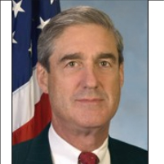
In the aftermath of the terrorist attacks, the federal government’s investigation into what went wrong was especially critical of the FBI. As lawmakers debated what changes to implement, the very state of the bureau was threatened. Some officials wanted to strip the FBI of any domestic intelligence duties and turn it into strictly a law enforcement operation. The FBI’s new director, Robert Mueller, who took over the bureau just days before 9/11, convinced Congress to give the FBI another chance. Mueller then went about beefing up the FBI’s intelligence collection and analysis capacities. He brought in a team of CIA intelligence analysts to FBI headquarters to set up an intelligence analysis unit within the FBI. Mueller also created an information sharing system between the bureau and the Central Intelligence Agency to help facilitate the flow of data that could lead to preventing future terrorist attacks. Today, the FBI even allows CIA agents to be stationed at FBI field offices throughout the country.




Comments