The Federal Housing Administration (FHA) is a division within the Department of Housing and Urban Development (HUD). Founded in 1934 to revive a housing industry leveled by the Great Depression, FHA sought to stimulate homeownership by providing mortgage insurance and regulating interest rates. Over time, the agency has contributed to a dramatic increase in the number of homeowners, across a diverse income-scale. Early programs especially increased the market for single family homes, while special housing initiatives for veterans in the post-WWII era - and for the elderly, disabled and lower-income buyers in subsequent decade - expanded untapped or difficult market areas. Since its inception, FHA has insured 34 million homes, and manages a current insurance portfolio of $400 million. The agency was incorporated into HUD when the latter became a cabinet-level agency in 1965.
As FHA experienced a significant loss of market share in the last several years, attention turned towards reform measures to “modernize” its programs, making them more flexible and accessible to a wider range of buyers - while simultaneously providing stability and a safe alternative to sub-prime lending. (See “Debate” and “Reform” sections).
In 2007, FHA added the new “FHA-Secure” refinancing program to help borrowers hurt by the sub-prime crisis.
The National Housing Act of 1934, signed by President Franklin D. Roosevelt, initiated the FHA home mortgage insurance program, designed to address instability in the housing markets - and damage done by the Great Depression, by promoting buying and lending, and stimulating associated industries like construction. When the FHA was created, only four in ten households owned homes, and limited mortgage loan terms and difficult repayment schedules made the process especially difficult for buyers in the recovering economy.
Starting in the 1940s, FHA began programs to help finance housing for returning veterans and their families. In its Section 608 program, the agency provided mortgage insurance to construct housing for war workers during the war, and then for rental properties to house returning veterans. Designed to counter the postwar housing deficit by easing lenders with a federal guarantee, Section 608 provided insurance for as much as 90% of the mortgage value on rental housing projects. A scandal developed in 1950 following years of abuse by unscrupulous builders - who, in a typical scenario, could procure a high mortgage under the program, build for far less, sell the new property and transfer the mortgage to the new owner, pocketing the sizable difference. Such practices were attributed to lax oversight at the agency and the program was terminated in 1954.
The Housing and Urban Development Acts of 1965 and that of 1968 expanded FHA’s mortgage insurance programs, and charged it with new responsibilities, including the administration of interest rate subsidies and a (then) controversial rent supplement program (whereby disabled, veteran, low-income residents, or those living in substandard housing, and whose income level qualified them for public housing, could pay 25 percent of their income in rent to private or non-profit housing sponsors, with the government picking up the difference until they were able to pay).
In the 1970s, FHA provided emergency financing for housing to those particularly vulnerable to inflation and rising energy costs (elderly, disabled and low-income Americans). During the recession of the 1980s, when housing prices fell and private mortgage insurance receded, the agency helped buyers secure loans. However, comprehensive abuse of the home mortgage insurance and Section 235 homeownership subsidy programs by industry insiders resulted in massive foreclosures. (See Controversy section)
In the time since its founding, the FHA and HUD have insured more than 34 million mortgages, and by 2001, the nation’s homeownership rate hit an all-time high of 68.1 percent. As of 2006, the FHA claimed 4.8 million single family mortgages and 13,000 multifamily projects in its portfolio.
However, conditions in recent years have changed. Amid rising home prices and lending practices that make financing available for buyers with credit constraints, FHA has been pushed out of the market. New reforms promise a “modernized” FHA mortgage insurance system that will cater to the needs of a greater pool of buyers and stabilize the market. (See “Debate” and “Reform” sections for more information)
Lawrence Thompson, who served in senior positions in HUD for more than 25 years, has written an accessible history of HUD, including FHA and the mission to increase homeownership.
FHA History
Making Home Affordable.gov
HUD’s Office of Housing oversees the FHA, which provides a variety of insurance options for qualified loans on existing homes, home construction and repair—for single family and multifamily projects, including hospitals and manufactured housing. The agency holds a current insurance portfolio of $400 billion, and oversees Fannie Mae and Freddie Mac, the government-sponsored enterprises (GSEs) that together account for the largest source of housing finance in the U.S. (See HUD's Regulation of Fannie Mae and Freddie Mac for more information). The agency is also responsible for regulation of the Real Estate Settlement Procedures Act, and the manufactured housing industry.
How it works
FHA doesn’t make loans or plan construction, but insures mortgages made by applicants with outside lending institutions - which might offer or insist on the option of FHA insurance, depending on the credit profile of the borrower. The FHA investigates the applicant and makes a risk assessment, and if favorable, insures the lender for a loss of principal if the borrower defaults. The borrower pays an up-front premium of 1.5% of the loan amount (that can be financed) and premium of .50% on the declining balance (premiums paid on FHA loans are significantly higher than that paid on a conventional mortgage, which, with a minimum of 10% down, is generally as low as .5% up front and .3% monthly). In turn, the borrower benefits from the FHA appraisal and a lower interest rate on the mortgage than the lender might have offered without FHA insurance.
Single Family Mortgage Insurance Program
FHA’s standard Section 203(b) program is a continuance of the agency’s founding program, which offers financing to first-time and other buyers who are excluded by the terms of conventional loans. The program was designed to be self-supporting, relying on insurance premiums paid by borrowers (however, as when in the 1980s defaults eroded FHA reserves, the agency raised insurance premiums to restore them).
Under this program, FHA has insured nearly 8,000,000 homes valued at nearly $60 billion, and currently insures a total of about 7 million loans in its $400 billion portfolio (Mortgage 101). Among the most important features are a provision for low down payments (as low as 3%, as opposed to a conventional average nearer to 10% or more, because FHA-insured loans allow borrowers to finance the rest through their mortgage); the option to finance many closing costs, further reducing the up-front costs of purchase; limits the FHA imposes on certain fees (e.g., administrative) charged by mortgage companies; and the limits FHA sets on the loan value. (The cap was recently lifted as part of the President’s economic stimulus package. See Reform section for more information).
See also:
Regulatory Programs
- including links to
Interstate Land Sales
Manufactured Housing
Minimum Property Standards
, and
Real Estate Settlement Procedures Act (RESPA)
The agency claims to be “self-supporting,” funded entirely from its mortgage programs and without any taxpayer money. New reform measures should generate revenue for FHA. However, if FHA programs falter for any reason, taxpayers might foot the bill in subsidies. In times of economic distress, the agency has also raised insurance premiums.
FHA FY 2009 Budget Proposal (PDF)
1950 - lax oversight at the Department allowed misuse of FHA’s Section 608 (which insured financing for private apartments built for WWII veterans) and resulted in the program’s termination in 1954. (See “History” Section of this article).
1970—Widespread, conspired misuse of the home mortgage insurance and Section 235 homeownership subsidy programs resulted in massive mortgage defaults and foreclosures - and the indictment of realtors, lending institutions, lawyers and some FHA officials on hundreds of criminal acts, including bribery, fraud, conspiracy, and giving false statements to the government.
The Housing and Urban Development Act of 1968 had sought to address racial discrimination and help minorities and poor people living in “high-risk” areas buy homes with either mortgage insurance or subsidized mortgages. A few years into the new programs, however, there were federal Grand Jury investigations and indictments in FHA-administered programs across the country. Professionals involved were essentially fleecing the government through coordinated efforts to inflate reported values of cheap houses in low-income neighborhoods, then to sell them at high prices - leaving FHA to foot the bill when buyers defaulted.
Ghetto Shakedown (Time)
FHA Makeover: The Safe Alternative to Sub-Prime?
Given the increasing sophistication of mortgage markets, many have questioned the logic of keeping FHA programs as a public enterprise, arguing that the private market would lend to “high-risk” borrowers for increasingly low rates just as easily. (FHA borrowers are already serviced by private lenders, but pay a small premium to the agency for coverage in case of default, making the venture risk-free for lenders - thus, in theory, keeping the market steady and liquid).
However, in the wake of the sub-prime crisis, many are looking towards a reformed FHA as a bail-out for the housing industry, one that will provide safe alternatives to risky sub-prime lending.
According to the agency, outdated loan limits and other restrictions account for its recent decline in the market, which currently hovers around 3%: “In many areas of the country, the existing FHA limits are lower than the cost of new construction, eliminating FHA financing as an option for buyers of new homes in those markets. FHA has simply been priced out of the market in other areas, such as California, where FHA insured only about 5,000 home mortgages in all of 2005, down 95 percent from 109,000 in 2000”
Currently FHA requires homeowners to put at least 3% down, with a loan limit of about $363,000. (Recently raised, temporarily, to more than $700,000). Unlike sub-prime loans, FHA mortgages are not traded on Wall Street and subject to erratic conditions, but backed by government bonds. FHA loans typically provide better rates than other sub-prime mortgages, don’t carry prepayment penalties, and most are 30-year fixed rate loans, meaning that the lender won’t make the loan without proof of an ability to make monthly payments. (Accounting, in part, for the sub-prime crisis is the fact that lenders didn’t require a similar proof, but only that borrowers could make payments at the low initial rates of an adjustable-rate mortgage, which would inevitably change and lead to massive foreclosure).
However, since they are administered by a federal agency, FHA-insured loans can be slower and more bureaucratic than their sub-prime counterparts, thus less appetizing to many realtors and borrowers.
Reform measures seek to make the agency and its programs more flexible and consumer-friendly, in part by extending finance options to meet the needs of a diverse range of borrowers. The Expanding American Homeownership Act (H.R. 5121, known as FHA “Reform” or “Modernization”) seeks to expand the breadth of FHA activity by permanently raising loan limits, reducing down payment requirements, and providing more flexibility in insurance premiums to match the credit profile of the buyer. Different versions of the bill passed in the House and Senate in 2007, and differences are expected to be resolved quickly. (See Reform section and CNNMoney article for more information).
Urban/Minority Issues
While the FHA has been criticized for early racial and anti-urban biases, targeting programs almost exclusively to white Americans building homes in the suburbs and contributing to the decline of major cities, it is also argued to have made a great impact on urban development since the 1960s, especially for minorities. Writing in 2001, Albert Monroe (See below) noted that FHA insured 18% of all mortgage loans (other figures, including from the agency itself and the National Association of Realtors, put current figures for FHA-insured loans at only 3% of the total mortgage market, down from 13% in the 1990s, as a result of out-pricing. See Reform section of this article for further reading), and nearly one-half of the agency’s metropolitan area business is located in central cities, with 38% of conforming loans within central cities. Additionally, the agency insures a disproportionate number of Black and Hispanic borrowers - both groups together account for almost a quarter of FHA’s business, but less than one-tenth of the conforming mortgage market. Studies have also indicated that FHA lends to a “riskier” pool, characterizing borrowers as younger, more credit-constrained, and living in lower average-incomes and property-valued areas. (Monroe, 2001)
Minorities, first-time buyers, those with low-credit or who are otherwise classified as “high risk,” are among those most affected by FHA policies - and, in recent years, prone to sub-prime lending practices. According to 2004 Home Mortgage Disclosure Act (HMDA) data, 40 percent of African-Americans and 23 percent of Hispanics pay an interest rate 3% higher than the market rate, while the Center for Responsible lending reports that 51 percent of refinancing lending in African-American neighborhoods are sub-prime. After the fall of the sub-prime market, minorities will be among the groups shut out from access to home mortgage financing. Many are looking to a “modernized” FHA to fill the gap keep the market afloat.
|
Founded: 1934
Annual Budget: Self-funded (through insurance premiums)
Employees:
|
Federal Housing Administration
|
|
|
Montgomery, Brian
Assistant Secretary
|
|
|
Brian D. Montgomery worked in the White House advance office for the first President Bush and as an advance man for George W. Bush when he ran for governor of Texas in 1994. From 1995 to 1999, Montgomery served in then-Governor George W. Bush’s Administration as a communications director at the Texas Department of Housing and Community Affairs and the Texas Department of Economic Development. Before joining HUD, Montgomery worked in the Executive Office of the President, first as Deputy Assistant to the President and Director of Advance for the Bush-Cheney 2000 presidential campaign and then director of advance when Bush moved into the White House. He served as Deputy Assistant to the President and Cabinet Secretary, in charge of coordination among cabinet members, from January 2003 until April 2005. Montgomery was confirmed by the Senate as Assistant Secretary at HUD in 2005, and has overseen efforts on the “FHA Modernization” bill. When asked in 2004 about his most memorable experiences in the White House, Montgomery replied, “Two experiences come to mind. The first was September 11, 2001. I was with the President all day and for the subsequent visits to the Pentagon and the site of the World Trade Center. Those experiences will be with me forever. The second took place in March of this year when I got engaged in the Red Room of the White House. Several White House staff were in on the planning, including the President. I am proud to report she said ‘yes.’”
|
|
|
|
|
|
|
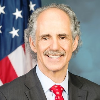
President Barack Obama’s nominee to the Federal Housing Administration, David H. Stevens was born in New York City and raised in Connecticut. After graduating from University of Colorado at Boulder, Stevens joined California’s World Savings Bank in 1983, where he worked in sales and marketing, product development, affordable lending, and communications. Stevens was promoted to group senior vice president and national sales manager for the bank’s mortgage sector. In 1999, Stevens left World Savings Bank and joined Freddie Mac, where he worked until 2005, specializing in single-family businesses. In February 2006, Stevens joined Wells Fargo Home Mortgage as the executive vice president working with mortgage brokers. Later that year, Stevens moved to Long & Foster, the largest privately-owned real-estate firm in the country, and was responsible for the company’s affiliated businesses, such as its mortgage, title and insurance division. In October 2008, Stevens was designated president and chief operating officer of the company.
President Obama announced his intention to nominate Stevens on March 23, 2009, but the Senate Banking Committee delayed action on his confirmation in order to study Stevens’ possible involvement in alleged violations of federal anti-kickback laws by Long & Foster. The committee finally gave Stevens their approval on June 25. Stevens will be the first FHA commissioner in recent years with a significant background in home mortgages.
Stevens and his wife Mary have four children.
|
|
|
|