Bookmark and Share
Overview:
The Office of Policy Development and Research (PD&R) serves as a research, survey, study, and analysis support system for the U.S. Department of Housing and Urban Development (HUD). It assists in oversight of the United States government-sponsored Fannie Mae and Freddie Mac housing mortgage loan enterprises and it is meant to facilitate the formation of partnerships between universities and communities so they can jointly address urban problems.
 
more
History:

The Office of Policy Development and Research was established in 1973, in accordance with the statutory citation in Title V of the 1970 Housing and Urban Development Act, which authorized programs of “research, studies, testing, and demonstrations” to benefit HUD in achieving its mission of increasing home ownership and access to affordable housing free from discrimination. In the 1990s PD&R was also given responsibility for assisting in regulation of the government-sponsored enterprises that comprise the secondary mortgage market, Fannie Mae and Freddie Mac, and in promoting university/community partnerships through technical assistance and grants.


more
What it Does:

The PD&R staff is made up of economists, engineers, planners, policy experts, and social scientists who provide technical oversight to the HUD teams making policy decisions and preparing budget and legislative proposals.

 
According to PD&R, their additional specific duties include:
  • Conducting research on housing and community development issues, and maintaining the most current information and statistics on existing housing programs and needs, market conditions, and urban development, including the American Housing Survey, State of the Cities Data Systems, data on the Low-Income Housing Tax Credit, and annual publication of fair market rents, which are used as a standard for determining rent and subsidy levels in HUD programs and as a measure of the local cost of affordable housing.
  • Supporting and managing HUD User, an in-depth downloadable information source for housing and community development executives, academicians, policymakers, and the American public, as the primary vehicle for federal government reports and other material on housing policies and programs, economic development, and urban planning.
  • Assisting in the program regulation of the government-sponsored enterprises that comprise the secondary mortgage market, Fannie Mae and Freddie Mac, primarily setting their affordable housing goals, and monitoring their performance.
  • Overseeing the administration of all PD&R grants and cooperative agreements for research, development and experimentation; reviewing and monitoring all contract work performed for PD&R; and handling preparation and administration of the PD&R program budget.
  • Running the Office of University Partnerships (OUP), which oversees a variety of grant programs to facilitate the formation of campus-community collaborations that will enable university students, faculty, and neighborhood organizations to work together to help generate jobs, revitalize the economy, and rebuild healthy communities.
  • Managing the HUD component of the Partnership for Advancing Technology in Housing (PATH), a federal interagency and industry partnership that aims to make American housing more affordable, safe, energy-efficient, and disaster-resistant.
  • Coordinating out of the Office of International Affairs HUD’s involvement in international conferences and issues, including designing and managing cooperative information exchange programs in housing and urban policy issues, in tandem with the State Department and American Embassies and Missions abroad, as well as sponsoring international research and forums on topics like housing finance, building technology, and urban reinvestment.
  • Administering the Jobs-Plus welfare-to-work demonstration project, which provides intensive employment-focused programs targeting working age welfare recipients in public housing developments in Baltimore, Chattanooga, Cleveland, Dayton, Los Angeles, St. Paul, and Seattle, with residents playing a role in designing and managing the program, which aims to significantly increase employment and income of public housing residents in those cities.
 
From the Website of PD&R

Research Information Service


more
Where Does the Money Go:

2009 Summary Statement and Initiatives


more
Controversies:

How HUD Mortgage Policy Fed the Crisis (by Carol D. Leonnig, Washington Post)


more

Comments

Leave a Comment

captcha

Founded: 1973
Annual Budget: $54.7 million (2009)
Employees: 141
Office of Policy Development and Research
Bostic, Raphael
Assistant Secretary

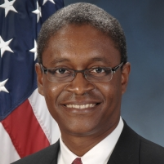
Considered a leading real estate economist, Raphael Bostic was sworn in as Assistant Secretary for Policy Development and Research on July 16, 2009.  He spent most of the previous decade teaching and researching at the University of Southern California, during which time he incorrectly refuted the notion that a “housing bubble” existed in the U.S. real estate market.

 
While in high school, Bostic participated in the Leadership Education and Development program (LEAD), which helps individuals from underrepresented groups get a head start in career fields that have few minorities. At the time of his participation in LEAD in 1982, he was leaning towards a career in chemical engineering. 
 
Once in college, Bostic majored in psychology and economics at Harvard University, earning his Bachelors of Arts degree in 1987. He then pursued his PhD in economics at Stanford. The 1992 Los Angeles riots broke out while Bostic was still at Stanford, and the event caused him to begin focusing on urban economics. The destruction of the inner city intensified his interest in exploring why private investment in underserved areas was not reaching those who should benefit. Eight years after receiving his B.A., he completed his PhD in 1995.
 
Bostic then served as a special assistant to the Assistant Secretary of Policy, Development and Research at HUD, before spending six years on the staff at the Federal Reserve Board of Governors and rising to senior economist.
 
Bostic left the Federal Reserve to join the faculty at the University of Southern California, first in the Marshall School of Business and then in the School of Policy, Planning, and Development. While at USC, he became the founding director in 2002 of the Lusk Center for Real Estate’s Casden Real Estate Economics Forecast, which tracks and models Southern California’s office, industrial, and multifamily apartment markets. He took over the leadership of the school’s Master of Real Estate Development degree program in 2004. He has taught courses in affordable housing development, urban economics, real estate finance, policy and planning analysis, and public finance.
 
In his research, Bostic has studied the roles that credit markets, financing, and policy play in enhancing household access to economic and social amenities. His most recent work examined how mortgage finance institutions, such as Fannie Mae and Freddie Mac, have influenced the flow of mortgage credit through lenders that mainly originate high cost, or subprime, loans and through the Federal Housing Administration insurance program. He also studied the role of the private secondary market in increasing the flow of capital to subprime and possibly predatory loans.
 
Additionally, Bostic’s research has focused on key issues associated with credit scoring, automated underwriting, mortgage and small business lending, bank branching patterns, the Community Reinvestment Act, gentrification, and the effects of anti-discrimination laws on minority homeownership.
 
In addition to teaching at USC, Bostic has worked as a visiting professor at NYU’s Robert F. Wagner Graduate School of Public Service.
 
He also has worked as a senior consultant for CRA International, an international consulting firm that offers economic, financial, and business management expertise to major law firms, industries, accounting firms, and governments around the world.
 
Bostic’s work has been published in a number of academic peer-reviewed journals, including the Journal of Urban Economics, Real Estate Economics, Housing Policy Debate, the Journal of Real Estate Finance and Economics, and the Journal of Banking and Finance.
 
Bostic has held leadership positions in The American Real Estate and Urban Economics Association, the Association of Public Policy and Management, the National Economic Association, and recently served on a National Academies Committee charged with evaluating the research plan of the Department of Housing and Urban Development. He has also been named a Faculty Fellow of the Urban Land Institute and is a Fellow of the Royal Institute for Chartered Surveyors.
 
Before the real estate market completely imploded, Bostic was often quoted as saying there was no housing bubble. “Bubble is a word that you use to characterize markets that are irrational, that don’t have underlying economic fundamentals to explain what’s going on. I don’t think that’s what’s really going on in today’s housing market,” he told the Orange County Register in September 2005.
 
As late as September 2008, Bostic said the economy was merely lingering “on the borderline of recession,” adding, “It’s nothing like what we saw in the early 1990s, when thousands of jobs were lost.”
 
Two sides of the coin on price of homes (by Mary Ann Milbourn, Orange County Register)
more
Williams, Darlene
Assistant Secretary

Darlene F. Williams was nominated for the position of Assistant Secretary for Policy Development and Research by President George W. Bush, and began the job in October 2005. She received a BA from Howard University, an MA and Ph.D from Stanford, and an MBA from the University of Chicago. Williams began her career at Pacific Bell in operations and then worked in marketing management jobs for Eastman Kodak and Ryder Systems. After that, she spent seven years at the energy company TXU, beginning in 1996, first as a “loaned lobbyist” during the 77th Texas Legislative Session, then as Corporate Policy Manager. In 2003 Williams began working at HUD as the General Deputy Assistant Secretary for Policy Development and Research, and after that as General Deputy Assistant Secretary for Administration.


more