Overview
European explorers couldn’t find the Solomon Islands for more than 200 years after the first explorer visited it. However, during World War II, the Solomons couldn’t hide. Numerous naval, air, and ground battles took place in and around Guadalcanal, now the capital. One Japanese destroyer almost changed history when it sliced in half the PT boat of future American President John Kennedy. He survived and the Americans prevailed, wresting Guadalcanal from the stubborn Japanese and starting them on their long, slow slide to defeat. Administered as a colony by the British, upon independence the Solomons inherited a fractured population of almost 100 different tribal groups and languages, almost no modern development, and the worst per capita malaria rates in the world. The government eventually collapsed, as fighting between different groups broke out, prompting Australia and others to send in peacekeepers. Now, several years into the strife, it is still not clear when a stable Solomon Islands will emerge from the turmoil.
more
less
Basic Information
Location: The Solomon Islands are southeast of Papua New Guinea and north of Vanuatu. The total area is 28,450 square kilometers. The group consists of a double chain of six large continental islands and hundreds of smaller ones. The islands are rugged, heavily forested, and malaria infested.
Population: 581,000 (2008)
Religions: Church of Melanesia (Anglican) 32.8%, Roman Catholic 19%, South Sea Evangelical 17%, Seventh Day Adventist 11.2%, United Church 10.3%, Christian Fellowship Church 2.4%, other Christian 4.4%, other 2.4%, unspecified 0.3%, none 0.2%.
Ethnic Groups: Melanesian 94.5%, Polynesian 3%, Micronesian 1.2%, other 1.1%, unspecified 0.2%.
Languages: Melanesian Pidgin is the common language; English is official but spoken only by 2%; there are between 87 and 120 indigenous languages.
more
less
History
The Solomons have been populated for at least 3,000 years, having been settled by Melanesians moving south from the Papua New Guinea area. The first European to see the islands was the Spaniard Álvaro de Mendaña in 1568. He had trouble communicating with the locals because everywhere he stopped, the language was different. Mendaña did discover some gold and back home the rumor spread that Mendana had discovered the source of the supposed long lost treasure of King Solomon of the Hebrews. But Mendana’s longitude reckoning for the group was more than 3,000 kilometers wrong, and, though many tried, no other European was able to find the island group for the next 200 years.
Some beachcombers and traders began to settle in, but it was not easy. Missionaries were not well received, and few converts were made until the 20th century. Many of the Solomon tribes were fierce headhunters, and would take large paddling canoes over to other islands at night to raid enemies to get heads so they could decorate their village with freshly killed skulls. Blackbirders (deceitful recruiters) found willing participants in the Solomons. Islanders wanted to go work in Fiji and other places so they could get money to buy modern goods. Returning to the Solomons, as many did, they would gain much prestige and power from their wealth. But there were also abuses to blackbirding, including often kidnapping and enslaving.
The British, concerned also about German interest in the area, declared a protectorate over the Solomon Islands in the 1890s. The British put an end to most headhunting raids by destroying many of the war canoes and they stopped the blackbirding. World War I was uneventful in the Solomons, but during World War II some of the most critical battles were fought in and around the Solomons. After the war, the Solomon Islands became a British colony. Independence was achieved in 1978.
In 1999 people from Malaita who had moved to Guadalcanal to get jobs found themselves in a full civil war struggle with indigenous Guadalcanal tribal groups. The government was powerless to stop the fighting, and in 2003 the Regional Assistance Mission to the Solomon Islands (RAMSI) was formed. Led by Australia, a coalition of nations sent police, soldiers, and accountants in to stop the violence, confiscate the weapons, and help the government get back in control. The effort seems to have worked, but RAMSI forces remain in the country. The Solomon Islands government was not happy with Australia over its attempts to extradite Julian Moti, attorney general for the Solomons, who was wanted in Australia on child sex charges. In December 2007, after a new government came to power, Moti was dismissed and deported to Australia.
more
less
History of U.S. Relations with Solomon Islands
One of the key battles of World War II was the struggle for Guadalcanal, which began August 7, 1942. This was the first time that U.S. forces captured territory occupied by Japanese troops. Japan tried repeatedly to wrest control back from the Americans. After several attempts on land and several battles at sea, the Japanese were pushed out after seven months of fighting.
In 1984 the Solomon Islands captured a U.S. tuna boat fishing within the Solomons’ 200-mile exclusive economic zone (EEZ). The boat was impounded and the Solomon Islands government threatened to sell it if a fine was not paid and the American tuna boats didn’t stop fishing in the Solomons’ EEZ. The Reagan administration at first refused to recognize the Solomons’ rights, demanded the boat be released, and put an embargo on all Solomon Island imports. The United States considered tuna a migratory fish and thus not bound by exclusive economic zone restrictions. After much negotiation and public posturing on both sides, the United States relented. The fine was paid, the boat released, and the United States eventually signed a treaty with the South Pacific Fisheries Forum Agency that would allow American tuna boats the right to fish in waters of the Agency’s members, including the Solomons.
more
less
Past Ambassadors
Robert W. Fitts 9/11/03-10/2/06 (also accredited to Papua New Guinea and Vanuatu)
Susan S. Jacobs 11/7/00-8/1/03 (also accredited to Papua New Guinea and Vanuatu)
Arma Jane Karaer 4/15/97-5/28/00 (also accredited to Papua New Guinea and Vanuatu)
Richard W. Teare 11/23/93-7/14/96 (also accredited to Papua New Guinea and Vanuatu)
Robert William Farrand 5/1/90-9/13/93 (also accredited to Papua New Guinea and Vanuatu)
Everett E. Bierman 11/11/86-10/30/89 (also accredited to Papua New Guinea and Vanuatu)
Paul Fisher Gardner 9/7/84-10/1/86 (also accredited to Papua New Guinea)
M.Virginia Schafer 11/3/81-5/20/84 (also accredited to Papua New Guinea)
Harvey J. Feldman 9/26/79-5/25/81 (also accredited to Papua New Guinea)
Mary S. Olmsted 1/5/76-7/28/79 (also accredited to Papua New Guinea)
more
less
Solomon Islands's Ambassador to the U.S.
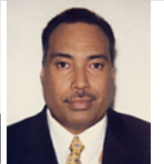 Beck, Colin
Colin David Beck became ambassador of the Solomon Islands to the United States on March 31, 2004. He is also his nation’s representative to the United Nations. Beck received a bachelor’s degree in administration and political science from the University of the South Pacific in Fiji. He holds a foreign services certificate from Oxford University in the United Kingdom, and has a master’s degree in international relations and Southeast Asian politics from the University of Queensland, Australia. In 1988 Beck started his career as a desk officer at the Ministry of Foreign Affairs. He was later promoted to senior desk officer in 1990, and then sent to Australia for three months to establish a consulate general office in Brisbane. From 1993-1995 he served in various locations, including the embassies to Belgium, Germany, and the Netherlands. During that time he also served in the Solomon Islands Permanent Mission to the European Union and the High Commission to the United Kingdom. From 1995 to 2002 he was chief desk officer at the Ministry of Foreign Affairs. In 2002 he served as assistant secretary of the Pacific and Asian Branch’s Political and Security Division at the Ministry of Foreign Affairs. In September 2008, Beck began a one year term as Vice-President of the United Nations General Assembly.
more
less





Comments