Bookmark and Share
Overview:

An agency within the U.S. Department of State, AVC is responsible for ensuring that appropriate verification requirements and capabilities are fully considered and integrated into the development, negotiation, and implementation of new arms control, nonproliferation, and disarmament treaties, agreements, and commitments. It also serves as the main liaison to the U.S. Intelligence Community and other key policymakers for verification and compliance issues.

 
more
History:

Created by Congress in December 1999, the Bureau of Verification and Compliance became fully operational on February 1, 2000, mandated to provide oversight of both policy and resources in all areas relating to verification of compliance with international arms control, nonproliferation, and disarmament agreements and commitments. It was also given responsibility to be the principal policy liaison to the U.S. Intelligence Community for verification and compliance matters, and to serve as a coordinating entity within the Federal government on the Key Verifications Assets Fund, to assist other departments and agencies in their allocation of efforts toward development of new verification technologies.

 
On July 29, 2005, Secretary of State Condoleeza Rice announced the reorganization of some segments of the State Department that included renaming the Bureau of Verification and Compliance the Bureau of Verification, Compliance, and Implementation. Its mandate was expanded, and the agency was given the added responsibility of ensuring the effective implementation of existing nuclear arms control treaties and agreements with Russia, Ukraine, Belarus, and Kazakhstan, and other countries, and similar duties with respect to Euro-Atlantic conventional arms control treaties and agreements.


Archive 1997-2000


more
What it Does:

AVC develops and executes verification, compliance, and implementation policy for a wide range of arms control, nonproliferation, and disarmament treaties, agreements, and commitments, participating in all phases of the process including initial conception, development of the U.S. negotiating position, the negotiations themselves, ratification, implementation, and maintenance of archives. VCI’s offices include: the Office of Nuclear Affairs, the Office of Strategic Issues, the Office of Technology and Assessments, the Office of Biological Weapons Affairs, and the Office of Chemical and Conventional Weapons Affairs. The VCI staff includes political scientists, foreign policy and missile experts, attorneys, engineers, nuclear physicists, seismologists, chemists, biologists, economists, intelligence and communications experts, Foreign Service officers, military officials, personnel on assignment from academia, scientific laboratories, and elsewhere, and civil servants.              

 
Among VCI’s further specific activities
  • Prepare, on behalf of the Secretary of State and the President, annual reports to Congress on compliance with arms control, nonproliferation, and disarmament treaties, agreements, and commitments. The reports include: “Adherence to and Compliance with Arms Control and Nonproliferation Agreements and Commitments” and “World Military Expenditures and Arms Transfers,” which appears to have ceased publication in 2003.
  • Operates the Nuclear Risk Reduction Center, which is charged with the transmission, translation, and dissemination of the annual government-to-government notifications required under the implementation of 20 different arms control treaties and security agreements.
  • Assesses other nations’ compliance with arms control, nonproliferation, and disarmament treaties, agreements, and commitments, working with other governments and international organizations to acquire data and relevant information for compliance assessments, and to encourage State Parties’ compliance with their commitments, and is also involved in determining when sanctions will be imposed for violations.
  • Leads U.S. efforts to develop verification requirements that will eliminate the varied Weapons of Mass Destruction programs of North Koreaand Iran; seeks to strengthen a strategic security relationship with Russia through implementation of the Moscow Treaty, and the development of measures focused on reaching a post-Strategic Arms Reduction Treaty arrangement; aims to engage with China in further dialogues to resolve outstanding compliance issues; and, with Libya, works to continue utilizing the U.S.-U.K.-Libya Trilateral Steering and Cooperation Committee toward elimination of its weapons of mass destruction and long-range missiles.
  • Works to create the scientific, institutional, and organizational framework to help the U.S. government effectively discriminate between naturally-occurring outbreaks of disease and a biological weapons attack, and be able to identify the perpetrator.
  • Serves as the principal policy liaison for verification and compliance matters to the U.S. Intelligence community, providing guidance on funding and tasking priorities for collection resources and analytical assets to support arms control and proliferation goals.
 
From the Website of AVC

Treaties and Agreements


more
Where Does the Money Go:

William C. Foster Fellows Visiting Scholars Program


more

Comments

Leave a Comment

captcha

Founded: 2000
Annual Budget: $21.2 million
Employees: 112
Official Website: http://www.state.gov/t/vci
Bureau of Arms Control,Verification and Compliance
Gottemoeller, Rose
Assistant Secretary

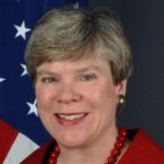
Rose Gottemoeller was sworn in as the Assistant Secretary of State for Verification, Compliance, and Implementation on April 6, 2009. A longtime expert in nuclear weapons proliferation and arms control, Gottemoeller will be personally responsible for negotiating the new strategic arms-control treaty that Presidents Baraack Obama and Dmitri Medvedev, of the United States and Russia respectively, have announced would further cut each nation’s long-range nuclear arsenal. Gottemoeller starts that task with considerable respect from her Russian counterparts, one of whom recently wrote that she “has been dealing with nuclear issues for quite some time and is known as a brilliant professional. It would be difficult, almost impossible to outplay her. For Russia a draw would be almost like a victory.”

 
Gottemoeller was born in Columbus, Ohio, circa 1953, the daughter of an insurance executive. A lifelong linguaphile, Gottemoeller earned a B.A. in Russian from Georgetown University in 1975 and an M.A. from the Elliott School of International Affairs at George Washington University in 1981. Shortly after graduation in 1975, Gottemoeller began work at the Department of Commerce’s National Marine Fisheries Service, where her work concerned the Soviet fishing fleet, and where she met her husband, career State Department official Raymond Arnaudo. 
 
Leaving government service in 1979, Gottemoeller found employment as a social scientist at the RAND Corporation, where she worked on international relations generally and U.S.-Soviet relations in particular, and remained until 1993. Gottemoeller joined the Clinton administration in 1993, serving on the National Security Council (NSC) as director for Russia, Ukraine, and Eurasia Affairs, with responsibility for denuclearization in Ukraine, Kazakhstan, and Belarus. She left the NSC in 1994, and worked for three years as Deputy Director of the International Institute for Strategic Studies in London. Returning to government in November 1997, she served for three years at the Department of Energy, dealing with issues of nuclear nonproliferation, eventually rising to be Deputy Undersecretary of Energy for Defense Nuclear Nonproliferation, a post she vacated after the election of George W. Bush. 
 
In 2000, she joined the Carnegie Endowment for International Peace, where she worked as a senior associate in Washington, D.C., through 2005, as the director of the Carnegie Moscow Center from January 2006 to December 2008, and most recently as a senior associate in the Carnegie Russia & Eurasia Program in Washington, D.C., where she worked on U.S.–Russian relations and nuclear security and stability.
 
Gottemoeller has taught on Soviet military policy and Russian security at Georgetown University, and is fluent in Russian. She and her husband have two sons. A Democrat, Gottemoeller contributed $3,850 to Democratic candidates and causes from 2000 to 2008, including $850 to Secretary of State Hillary Clinton’s 2008 Presidential campaign, $800 to Barack Obama’s 2008 Presidential campaign, and $750 to Governor Bill Richardson’s 2008 Presidential campaign. 
 
Crossing the Line With Heightened Border Security (by Rose Gottemoeller, Los Angeles Times)
U.S. Must Help Russia Diminish Nuclear Risk (by Rose Gottemoeller, Los Angeles Times)
When She Talks Arms, Washington and Moscow Listen (by Philip Shenon, New York Times)
more
DeSutter, Paula
Previous Assistant Secretary

Paula Adamo DeSutter served as the Assistant Secretary for the Bureau of Verification, Compliance and Implementation from August 14, 2002, until the end of the administration of President George W. Bush. DeSutter earned a B.A. in Political Science in 1979 from the University of Nevada at Las Vegas (UNLV); a Master of Economics, also from UNLV, in 1983; a Master of Arts in International Relations from USC; and a Master’s of Science Degree in National Security Strategy from the National War College, which included a graduate internship at the U.S. Arms Control and Disarmament Agency (ACDA). She followed that with a series of senior staff positions in the Verification and Intelligence Bureau at ACDA, , including Foreign Affairs Specialist to the Chief of the Compliance and Implementation Division, Special Assistant for Verification and Compliance to the Assistant Director for Intelligence and Verification for the Bureau. Then she joined the U.S. Senate Select Committee on Intelligence, as a staff liaison to Senator Jon Kyl (R-Arizona), where she worked for more than four years. DeSutter was also a Senior Visiting Research Fellow at the National Defense University’s Center for Counter-Proliferation Research. Among DeSutter’s publications is the 1998 book, Denial and Jeopardy: Deterring Iranian Use of NBC Weapons. Her husband, R. Joseph DeSutter, is a Director at the National Defense University. In 2006, DeSutter contributed to the Senate campaign of Republican Virginia Senator George Allen.


more