Bookmark and Share
Overview:

The United States Secret Service (USSS) is a federal law enforcement agency headquartered in Washington, D.C. Established in the mid-19th century to fight counterfeiting, the Secret Service has evolved to serve a dual mission of investigating financial crimes and providing protection for the president, vice president, their families, and other political figures, both U.S. and foreign. Criminal investigations covered by the Service include computer and telecom fraud, identity theft and financial institution fraud - and recently, investigations into computer-based attacks on the nation’s financial and informational infrastructure, often under the auspice of anti-terrorist activities.

more
History:

Created in 1865 to suppress counterfeit currency, the Secret Service division was expanded two years later to include responsibility for “detecting persons perpetrating frauds against the government.” Subsequent investigations were launched into activities of the Ku Klux Klan, “non-conforming distillers, smugglers, mail robbers, land frauds, and a number of other infractions against the federal laws.” In 1883 the agency was officially acknowledged as a distinct organization within the Treasury Department. The following year, it began part-time, informal protection of President Grover Cleveland. Following the assassination of President William McKinley in 1901, Congress requested informal presidential protection, which the agency assumed full-time the following year, assigning two operatives to the White House. In 1906 the agency began investigations into western land frauds, resulting in the return of millions of acres of government land. In 1908, Service agents were transferred to the Department of Justice, forming the beginnings of the FBI. Over the next several decades, the Service was expanded to provide full-time protection for the president, his family, the vice president and president-elects - as well as a White House counter-espionage and police force. (Scope was again expanded to protect former presidents and their families, vice-presidential candidates and nominees, diplomatic missions in the capitol, visiting heads of state and other foreign officials).
 
Over the years the agency’s mission to counter fraud has also been expanded, notably through legislation granting authority to conduct civil and criminal investigations relating to federally insured financial institutions, and new kinds of fraud (computer, telemarketing, identity, etc.). In 2001, the US Patriot Act further expanded the agency’s role in countering computer fraud, authorizing the Director to establish “nationwide electronic crimes taskforces to assist the law enforcement, private sector and academia in detecting and suppressing computer-based crime.” It also increased statutory penalties for counterfeit crimes and allowed “enforcement action to be taken to protect our financial payment systems while combating transnational financial crimes directed by terrorists or other criminals.” As a result of the Homeland Security Act, the Treasury Department was gutted in 2003, losing its law enforcement divisions (Secret Service; Bureau of Alcohol, Tobacco and Firearms; and the Customs Service), and the Secret Service was transferred to the newly formed Department of Homeland Security.


Secret Service History Timeline


more
What it Does:

To carry out its dual mission of protection and investigation, the agency employs special agents and Uniformed Division officers. USSS special agents are responsible for both functions, and their investigative duties include various financial crimes such as counterfeiting; id, credit and debit fraud; computer fraud; federal forgery or theft; telecom fraud, etc. The USSS Uniformed Division is likened to a “specialized police force,” with officers on White House and other major details, the official residence of the vice president and foreign diplomatic missions in the Washington, D.C. area. Uniformed Division officers have support units (including Countersniper, Canine Explosive Detection Team, Emergency Response Team, Crime Scene Search Technicians and Special Operations) and a network of security posts as well as mobile patrol units.
 
Authority/ Statutory Mandate
By law, the Secret Service is authorized to protect:
  • The president, the vice president, (or other individuals next in order of succession to the Office of the President), the president-elect and vice president-elect
  • The immediate families of the above individuals
  • Former presidents, their spouses, except when the spouse re-marries
  • Children of former presidents until age 16
  • Visiting heads of foreign states or governments and their spouses traveling with them, other distinguished foreign visitors to the United States, and official representatives of the United States performing special missions abroad
  • Major presidential and vice presidential candidates, and their spouses within 120 days of a general presidential election
  • Other individuals as designated per Executive Order of the President
  • National Special Security Events, when designated as such by the Secretary of the Department of Homeland Security
 
Under Title 18, Section 3056, of the United States Code, agents and officers of the United States Secret Service can:
·         Carry firearms
·         Execute warrants issued under the laws of the United States
·         Make arrests without warrants for any offense against the United States committed in their presence, or for any felony recognizable under the laws of the United States if they have reasonable grounds to believe that the person to be arrested has committed such felony
·         Offer and pay rewards for services and information leading to the apprehension of persons involved in the violation of the law that the Secret Service is authorized to enforce
·         Investigate fraud in connection with identification documents, fraudulent commerce, fictitious instruments and foreign securities and
·         Perform other functions and duties authorized by law
 
The Secret Service works closely with the United States Attorney's Office in both protective and investigative matters.
 
Investigations
 
Protection
 
Department of Homeland Security
 
Reports

Assassination in the United States: An Operational Study of Recent Asassins, Attackers, and Near Lethal Approaches

(PDF)


more
Where Does the Money Go:

Top 10 Contractors
Motorola, Inc.                                                              $68,309,824
Paradigm Holdings, Inc.                                                           $39,048,829
Prudential Financial, Inc.                                             $33,681,000
Government of the United States                                 $22,620,840
Dell Inc.                                                                       $21,880,950
Verizon Communications Inc.                                      $20,509,426
Bearingpoint, Inc.                                                        $14,963,912
Lockheed Martin Corporation                                      $13,255,518
Integrated Solutions, LLC                                            $12,880,222
General Motors Corporation                                        $11,566,441
Motorola Inc. provides surveillance, identity management, information services, and executive protection for the Secret Service.
 
Dell Inc. provides the Secret Service with software-related services including asset management, installation, implementation, customization, training, support and maintenance.
 
Verizon Communications won a 10-year contract with the US Department of Homeland Security to create a consolidated backbone network and a secure Internet Protocol-based network that supports all Department of Homeland Security offices, including the Secret Service.
 
General Motors Corporation was awarded contracts to provide the Secret Service with armored and unarmored vehicles, including presidential limos.
 

House Hearing on FY 2008 USSS Budget

(AOL video)


more
Controversies:

Arrested for Approaching Dick Cheney
A scandal erupted in the agency after the 2006 arrest of a man who approached Vice President Dick Cheney in a public setting to denounce the war in Iraq. The man in question filed a lawsuit against five Secret Service agents for free speech and civil rights violations. USSS agents, called to testify under oath in court depositions, began leveling accusations of unethical and possibly illegal conduct at one another over the case, giving what reporters called a rare glimpse into the inner workings of a normally opaque federal agency.
Secret Service: Detailed Look at ’06 Turmoil (by Kirk Johnson, New York Times)
 
Interrogated for Asking Jesus to Smite George Bush
Protest Letter to the Secret Service (Reporters’ Committee for Freedom of the Press)
 
Secret Service and Monica Lewinsky
NBC Report Spins Into a Controversy (by Lloyd Grove, Washington Post)
 
Hiding the Names of Who Visited Bush and Cheney
White House challenges release of visitor logs (by Matt Apuzzo, Associated Press)
 
Controversial Domestic Surveillance


more
Suggested Reforms:

From the Left
According to the ACLU, pending Patriot Act reform will, in part, “expand the power of the Secret Service to limit access to so-called ‘national security events,’ whether or not security is needed to protect the president. And anyone who uses false credentials or violates a Secret Service perimeter can now be charged with a federal crime.”
 
From the Right
Reforming the Homeland Security Department Is Unlikely (by Ivan Eland, Independent Institute)

Homeland Security Grant Reform: Congressional Inaction Must End

(by James Jay Carafano and Jamie Metzl, Heritage Foundation)


more
Debate:

Debate over the USSS tends to focus on the PATRIOT Act and the Department of Homeland Security and issues surrounding the Bush Administration’s new anti-crime and anti-terrorist activities. The PATRIOT Act mandated the creation of a nationwide network of Electronic Crimes Task Forces to investigate and prosecute cyber- and other “new” crimes.
 
See organizations such as the ACLU for information on the threat to civil liberties posed by this new legislation, right wing groups for justification, and Libertarian organizations (e.g., Heritage, as in “Reforms” section) for criticism of spending.
 
Hackers and the U.S. Secret Service (by Benjamin J. Fox, UCLA Online Institute for Cyberspace Law and Policy)

Secret Service Data Compromised in T-Mobile Hack: Hack exposed information on 400 customers, including a U.S. Secret Service agent

(by Paul Roberts, PC World)


more

Comments

This Guy 2 years ago
If you've been contacted by Astrology.com and their "forecasts" have offered you a "terrifying" detailed description of your life (aka- your "profile"), then you've been targeted by a USSS covert investigation and been subsequently PSYOPS'ed by these goons. They obviously didn't like the fact that I had caught, red-handed, the Bush Family lawyer, one Alan Shapiro, both stealing and then subsequently ERASING my identity. How do you like me now, Shappy? I think that it's time that you...
John D Oliver private man 2 years ago
Please investigate the money laundering scheme the secretary of U.S.treasury and State of Hawaii has been commiting by alowing the open bonded probate accounts of thousands of hawaiian families to used in order to creat public tax liabilities from private assets held in a forign probate trust accounts.The heirs and judicial devisees have notified senator Daniel Inouye many times and he has continued use public tax funds derived from private estates in probates without notification t...

Leave a Comment

captcha

Founded: 1865
Annual Budget: $1.4 billion
Employees: 3,200 special agents, 1,300 Uniformed Division officers, and more than 2,000 other technical, professional and administrative support personnel.
United States Secret Service (USSS)
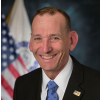
Sullivan, Mark
Director
A native of Arlington, Massachusetts, Sullivan received his bachelor's degree from Saint Anselm College in Manchester, New Hampshire in 1977. His career spans a total of 29 years in federal law enforcement, 24 of which have been in the Secret Service. He worked as a special agent in the Office of the Inspector General for the Department of Housing and Urban Development (HUD) for three years before joining the Secret Service as a special agent assigned to the Detroit Field Office in 1983. In 1990 Sullivan was transferred to the Fraud Division in Washington, D.C., where he coordinated and monitored multi-jurisdictional criminal investigations involving credit card fraud, bank fraud, and similar criminal activity. In 1991 he received his first assignment to the Presidential Protective Division, where he worked for four years. He entered the agency’s supervisory ranks in 1996 when he was promoted to Assistant Special Agent in Charge of the Office of Protective Operations. He returned to the field the following year as the Resident Agent in Charge of the Columbus Resident Office, overseeing all Secret Service activities in Central Ohio. Thereafter he was promoted and transferred back to Washington, D.C. as Deputy Special Agent in Charge of the Counterfeit Division, In July of 1999, he returned to the Presidential Protective Division, this time as an Assistant Special Agent in Charge. In 2000, Sullivan was promoted into the federal Senior Executive Service as a Deputy Assistant Director in the Office of Protective Operations. In 2002, he was reassigned to the position of Deputy Special Agent in Charge of the Vice Presidential Protective Division. A year later, he was reassigned to the position of Deputy Assistant Director, Office of Human Resources and Training. He was the Assistant Director for the Office of Protective Operations before being named Deputy Director, and then Director in 2006.
 
more